Matteo Franzoso, FIS and FISI mobilize for safety
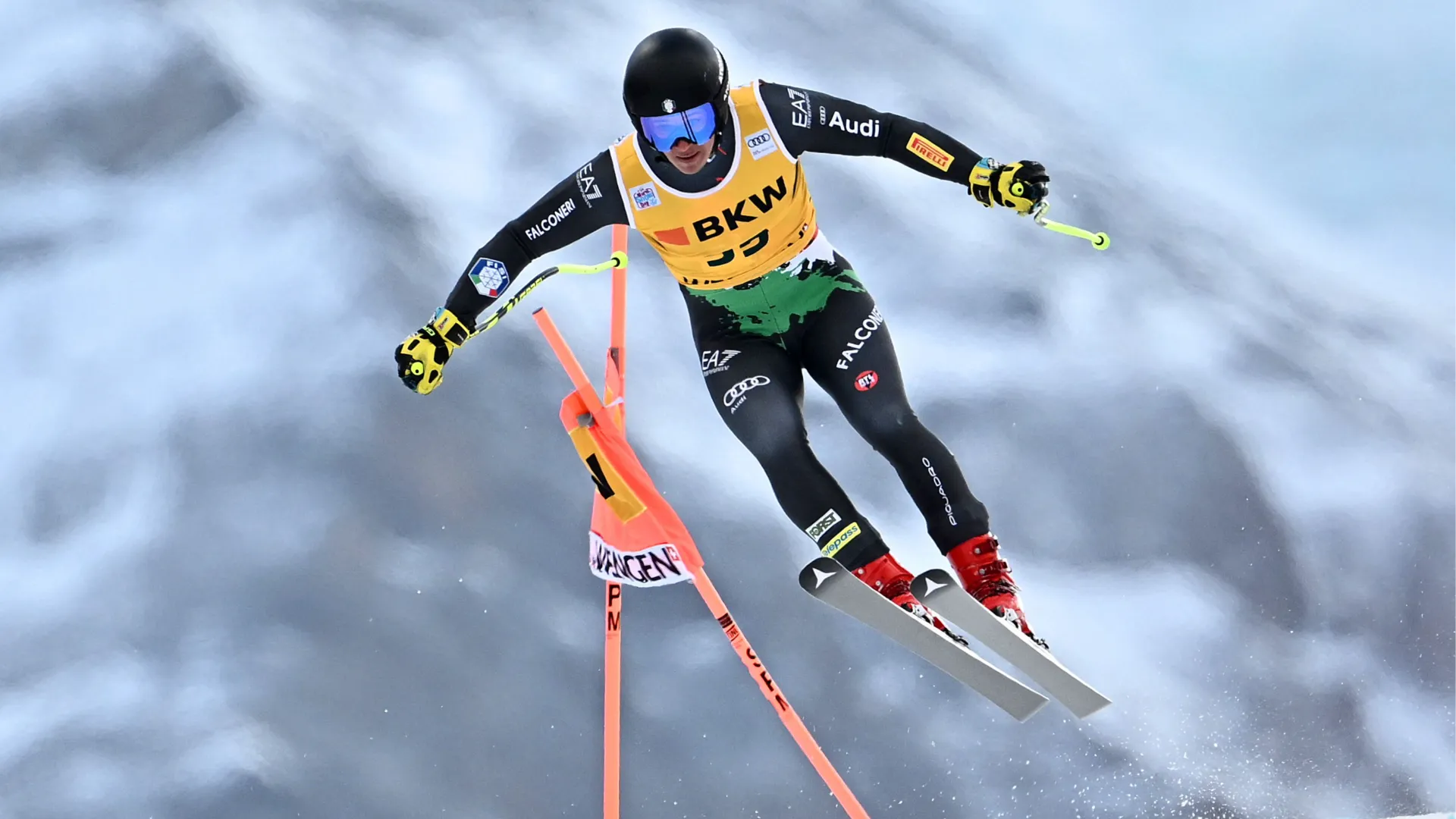
The FIS published today on its official website an open letter in which it expresses its condolences for the tragic death of Matteo Franzoso and in which it announces that it is aiming to improve safety conditions in Alpine skiing competitions and training. Here is the text.
“The International Ski and Snowboard Federation (FIS) is deeply saddened by the tragic death of Italian alpine skier Matteo Franzoso, following a fall during training in Chile. Our heartfelt thoughts are with his family, friends, teammates and the entire Italian skiing community, who are mourning this devastating loss.”
“Moments like this highlight the serious risks that are an integral part of our sport. They also remind us of the shared responsibility that all of us –athletes, coaches, organizers, associations and governing bodies – have to do everything we can to reduce those risks.”
“One thing is clear: the pursuit of performance must never eclipse the priority of safety. It is not possible to eliminate the inherent dangers of alpine skiing, but – by listening, raising awareness and promoting a dialogue that leads to collective action – we can mitigate the risks.”
“However, together with the National Ski Federations, Local Organizing Committees, coaches, partners and, most importantly, the athletes themselves, we need to identify where risks are greatest, address systemic challenges and support a culture where safety is an integral part of every decision. Safe training conditions and safeguarding competition require not only awareness, but also a firm and collective commitment from the entire ski community. Only by acting together can we create the conditions so that safety is not compromised.”
“Through the Athlete Health Unit (AHU), FIS is strengthening a scientific and systematic approach to athlete wellness, which will continue to expand in depth and scope in close collaboration with our partners. In this area, we are pursuing state-of-the-art innovation with airbags and electronic release bindings, as well as helmet technologies that can withstand multiple impacts.”
“In the coming weeks, FIS will further intensify its dialogue with its stakeholders, always with one guiding principle: the well-being and safety of athletes must come first.”
The Italian Winter Sports Federation also published a statement on its website making some proposals on the issue of safety. Here is the text.
“The President of the Italian Winter Sports Federation, Flavio Roda, and the Federal Council met Friday morning in an extraordinary session to make a series of concrete proposals and to activate immediate action in favor of athletes on the safety of training tracks. The session opened with a remembrance of Matteo Franzoso, and the entire Council observed a minute’s silence in memory of the young athlete who passed away.”
“It seems clear that the level of safety standards in the training phases needs immediate implementation, to ensure that athletes can do their work in total confidence and being able to rely on all the standard equipment that already exists in the World Cup.”
“It is equally clear that this proposal needs to be implemented, identifying a limited number of tracks (at least for speed) on which to work effectively and with the utmost care, in order to be able to obtain training grounds in which athletes feel confident that they can have all kinds of assistance.”
“The proposal is divided into two parts: an international one, which will be submitted for competence to the Council of the International Ski and Snowboard Federation (FIS), and one related to the Italian national territory, under the competence of FISI.”
“At the international level, it is necessary to identify some dedicated speed tracks for training for all the National Alpine Ski Teams.
The proposal could involve a couple of tracks in the Southern Hemisphere for summer training and a few tracks in Europe and North America for fall/winter training.”
“Expenses for securing training slopes at the international level should be the responsibility of the International Ski and Snowboard Federation (FIS).”
“By way of example and not limitation: the slope must have international homologation, there must be A, B and C nets, distributed with the same criteria used in the World Cup, there must be full medical service, there must be helicopter rescue, escape routes and any obstacles must be checked at all times, the bottom must be taken care of as it is in Cup races, athletes must wear all safety equipment required for the major circuit, etc.”
“Once the tracks have been identified and put in total safety, it should be mandatory for the National Teams of all countries to organize training only on those tracks, with a schedule that should be shared.”
“The tracks on which to conduct training of technical disciplines will also have to guarantee the same safety standards.”
“The same parameters should be used for speed training tracks in Italy. Again, a number of tracks located in various regions should be identified, which should be used exclusively for the training of all teams doing activities: from National Teams, to Regional Committee teams, to Sports Groups, to Ski Clubs. The safety equipment that these tracks must have is exactly the same as that required for international training tracks. The costs related to securing these tracks will be borne by the Italian Federation, with the support of the Ministry of Sport. Again, it will become mandatory for everyone to train only on the identified and secured tracks.”
“This proposal is strictly about training slopes, but the components of alpine skiing involved in a radical evolution of safety for athletes are many: they range from equipment, to protections, to a series of technical details that increase athletes’ performance on the slopes and that, often, are tested during training.”
“In a logic of improving training conditions and in the search for ever-increasing safety, even the companies producing the equipment and protections should embark on a path of analysis and research of technical solutions that can ensure better conditions for athletes of all levels. In particular, analysis should be focused on skis and edge equipment”.