Italy’s repechage to the World Cup, comes a protest from South America
FIFA has rejected Iran’s request to move World Cup group matches from the United States to Mexico. This was announced by Mexican President Claudia Sheinbaum, who told Al-Jazeera, “FIFA has finally decided that the matches cannot be moved from the original venues. Relocation would make the logistics too complicated, and this decision was made by FIFA.” The situation is thus at a stalemate, with Iran refusing to play in the U.S., a country it considers co-belligerent in the conflict along with Israel, and may soon announce its final forfeit at the World Cup.
Iran, among the first countries to qualify for the World Cup, is placed in Group G of the tournament along with Belgium, Egypt and New Zealand. The Iranians are expected to play all their matches on the West Coast of the United States: two in Los Angeles on June 15 and 21, and one in Seattle on June 26. Reiterating Tehran’s position was Sports Minister Ahmad Donyamali, speaking to Turkey’s Anadolu Agency: “The request to move our matches to Mexico is still valid, but we have not yet received a response. Trump’s statements are very contradictory and inconsistent: according to FIFA regulations, security must be provided by the country concerned. Under these circumstances, the likelihood of Iran participating in World Cup matches in the United States is very low.”
Complicating the picture further came news from Islamabad, where U.S. Vice President JD Vance stated that “the United States has not reached an agreement with Iran” and that “there is no commitment from Tehran to permanently abandon its nuclear program.” A different reading emerges from the Iranian version: according to Tehran, the talks broke down due to “unreasonable U.S. demands,” while pointing out that an understanding was not expected as early as the first round of negotiations anyway. Several unresolved issues remain on the table, including the issue of the Strait of Hormuz, Lebanon, the nuclear issue, the sanctions regime, and frozen assets.
With the World Cup set to kick off on June 11 with the Mexico-South Africa match, time is running out and FIFA will have to find a solution as soon as possible. And it is against this backdrop that media around the world have begun speculating on who could replace Iran: Italy’s name is prominent in international newspapers, with the Azzurri as the best-ranked team among the non-qualified teams — currently ranked 12th in the FIFA rankings — being candidates for repechage as “lucky losers.”
Giving clarity on the regulatory framework is Article 6.7 of the competition’s rules: “If a participating federation withdraws and/or is excluded from the 2026 FIFA World Cup, FIFA will decide on the matter at its sole discretion and take any action it deems necessary. FIFA may decide to replace the participating federation in question with another federation.” A rule that leaves any scenario open, but established practice would like the place to be awarded to a selection from the Asian continent itself.
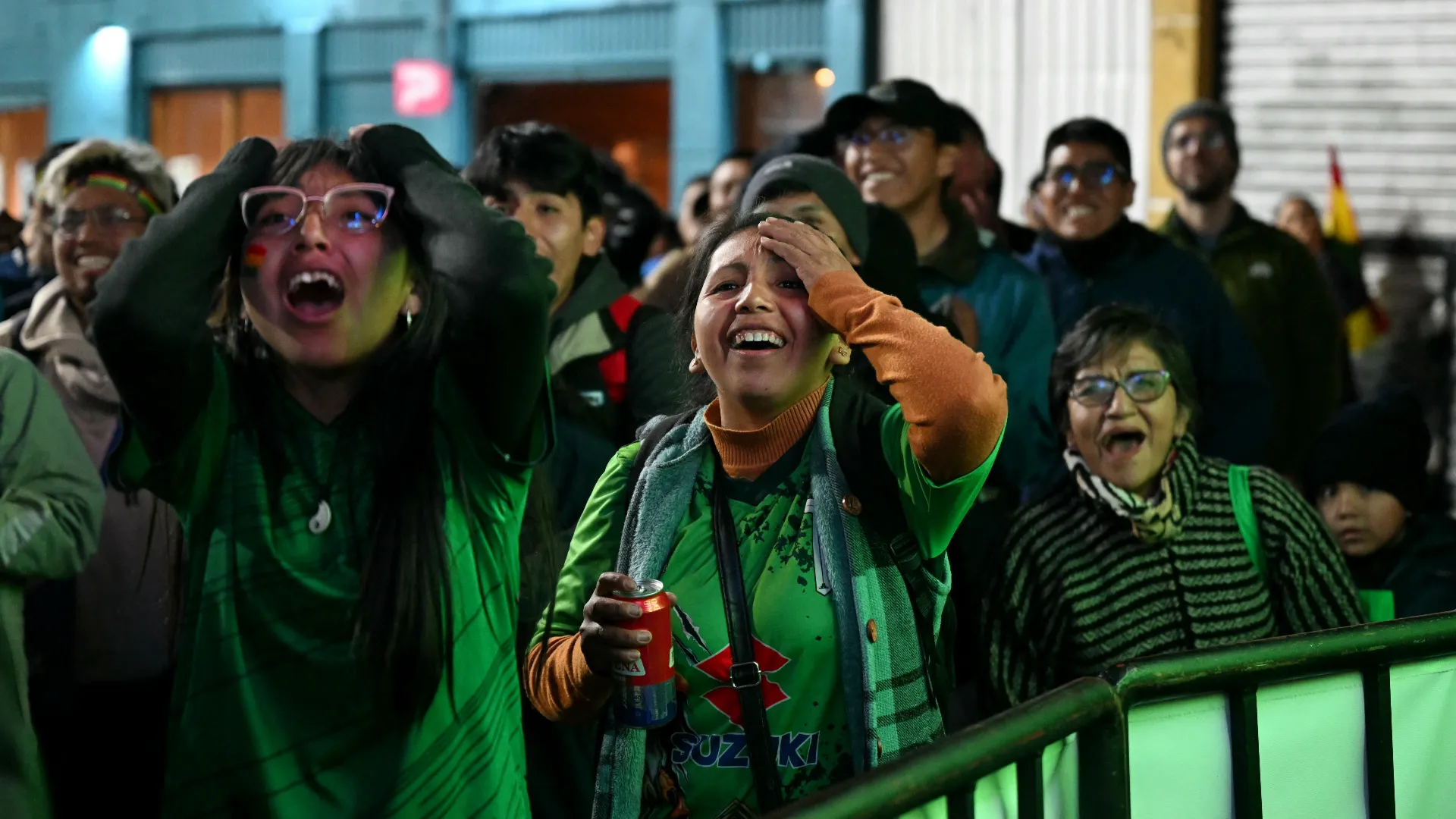
Among the hypotheses that have emerged is that of an intercontinental final between a European team, such as Italy, and an Asian one, with the United Arab Emirates among the favorites. There is also talk of a possible pre-World Cup mini-tournament with two European and two Asian selections. According to leaks from circles closest to the governance of world soccer, the hypothesized format would involve two semifinals and a final, probably at a neutral venue, with a single World Cup ticket up for grabs: in addition to Italy for Europe and the United Arab Emirates for Asia, Nigeria for Africa and Bolivia for South America would be involved. An idea that has already sparked an outcry from Bolivia, which was left out after its elimination at the hands of Iraq, with the federation in La Paz reportedly ready for an official protest.
The UAE, however, remains the most credible candidate for a direct replacement, by virtue of its membership in the same Asian confederation. For the UAE, this would be a historic return: its only participation in a final stage dates back, ironically, to Italia ’90, when the Arab country was placed in a prohibitive group with West Germany, Yugoslavia and Colombia, exiting with three defeats and an overall tally of ten goals conceded and two scored. On the Italian side, Minister of Sport Andrea Abodi commented on the matter with obvious embarrassment: “It seems to me difficult that a European can be repechaged, and I don’t even hope so.”
For now, however, no stance from Jamaica, which had no chance against Congo.