
Italy: So Many Unknowns Ahead of the Euro Qualifying Draw—The Best and Worst Possible Matchups
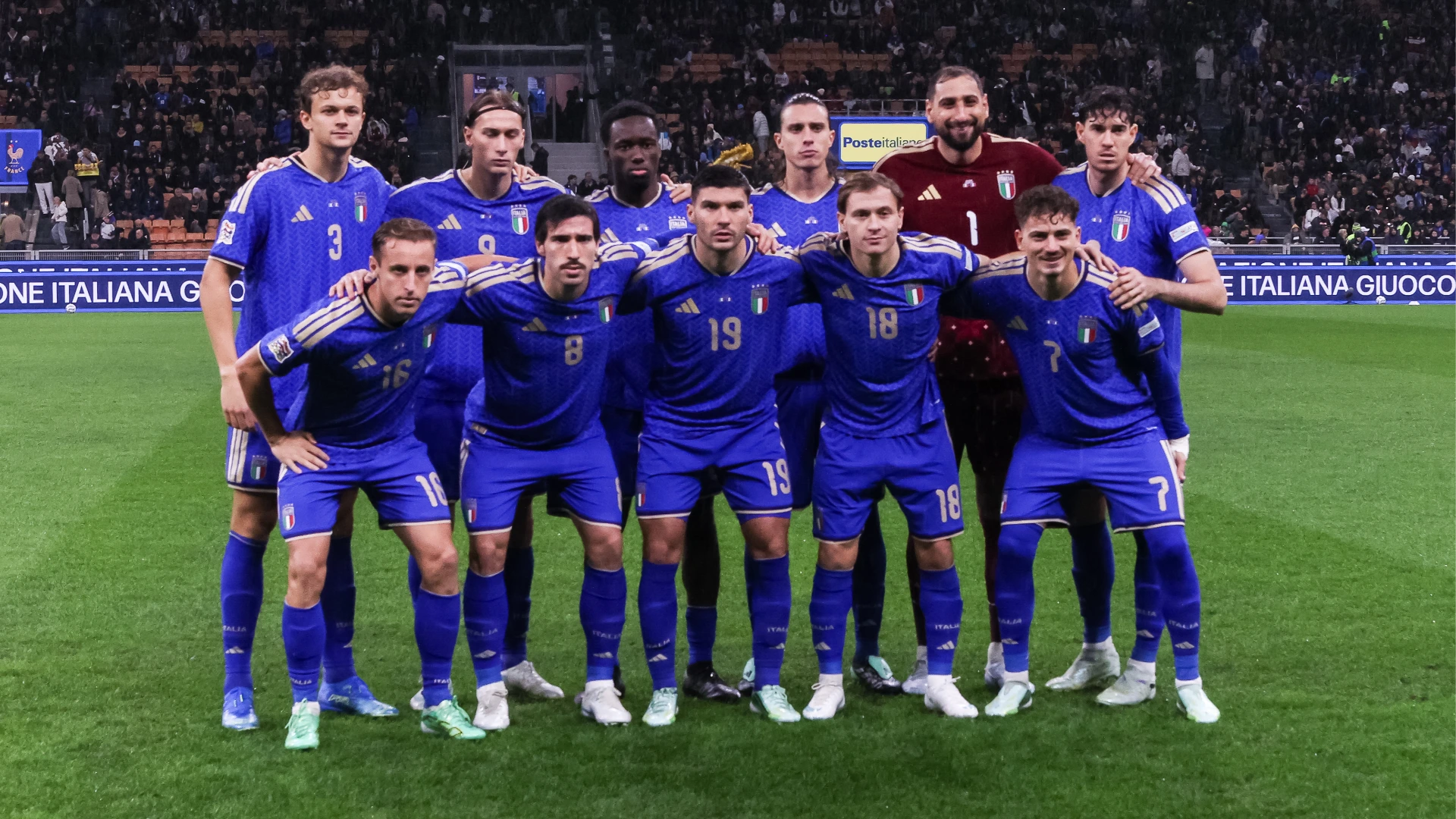
The national team finished the group stage of the 2026–2027 Nations League in third place and, although it did not qualify for the quarterfinals, it retained an important advantage: it will be seeded in the Euro 2028 qualifying draw, scheduled for Sunday, December 6, in Belfast. However, this advantage does not eliminate all risks: the other pots are filled with opponents capable of complicating Italy’s path.
The team’s placement in League A of the Nations League determined the draw pots, with the top three teams from each group placed in the first pot. Italy will therefore avoid Spain, England, Germany, France, Portugal, Belgium, the Netherlands, Norway, Greece, Croatia, and Denmark, all of which are in the same pot.
The second pot will include Wales, Serbia, Turkey, the Czech Republic, Switzerland, Sweden, Austria, Hungary, Northern Ireland, Slovenia, Bosnia, and Ireland. The third pot includes Scotland, Ukraine, Poland, Romania, Israel, Georgia, North Macedonia, Montenegro, Albania, Iceland, Slovakia, and Kosovo. The fourth pot includes Estonia, Belarus, the Faroe Islands, Cyprus, Finland, Moldova, Armenia, Bulgaria, Luxembourg, Kazakhstan, Latvia, and San Marino. Rounding out the fifth pot are Malta, Azerbaijan, Lithuania, Andorra, Gibraltar, and Liechtenstein.
The first threat comes from the second pot. Switzerland is a historically tough opponent: it eliminated Italy at Euro 2024 and, before that, denied the Azzurri a spot in the 2022 World Cup. Alongside the Swiss are Austria, Turkey, and a resurgent Sweden led by Isak and Gyökeres, as well as Bosnia and Herzegovina, which still represents an open sporting wound for Italy following what happened last March in Zenica.
The third pot should not be underestimated either: Ukraine, Scotland, and Poland could prove to be serious obstacles, while the level drops in the fourth pot but some danger remains, with Pohjanpalo’s Finland aiming to secure the qualification it missed in the playoffs during the last edition. Italy, which was eliminated in the group stage of the Nations League, will be placed in a five-team group and will therefore play ten matches (home and away), with the qualifiers scheduled to begin in March 2027.
Looking at the world rankings, the toughest group would pit the Azzurri against Switzerland (No. 12), Ukraine (36), Finland (75), and Azerbaijan (124). This group would combine a historically tough rival, a physically and technically strong team like Ukraine, and a Finland capable of causing trouble, with Azerbaijan as the only opponent that is theoretically more manageable. The easiest group on paper, on the other hand, would be the one featuring Northern Ireland (No. 63 in the world rankings), Kosovo (78), San Marino (211), and Liechtenstein (207).
Euro 2028 will be held in England, Wales, Scotland, and the Republic of Ireland (not in Northern Ireland). Two spots in the final tournament will be reserved for the host teams (based on a special ranking) in the event that they do not qualify directly through the group stage. Should one or both spots remain unfilled by the host teams, they will be reassigned to other contenders through the playoffs.
The playoffs—another major source of anxiety for Italy—will complete the picture: two to four spots will go to the lowest-ranked second-place finishers in the groups, while the remaining spots will be awarded to the group winners from Leagues A, B, and C of the 2026–27 Nations League who have not yet qualified.
For Italy, the draw in Belfast will therefore be a decisive step: being in the first pot reduces the risk of facing the powerhouses, but it does not guarantee a path free of pitfalls. With a five-team group and ten matches to play, the Azzurri will need to turn their seeding advantage into a concrete path toward Euro 2028.