
Power rack, squat rack, or rig: Which piece of equipment is really best for those who lift weights?
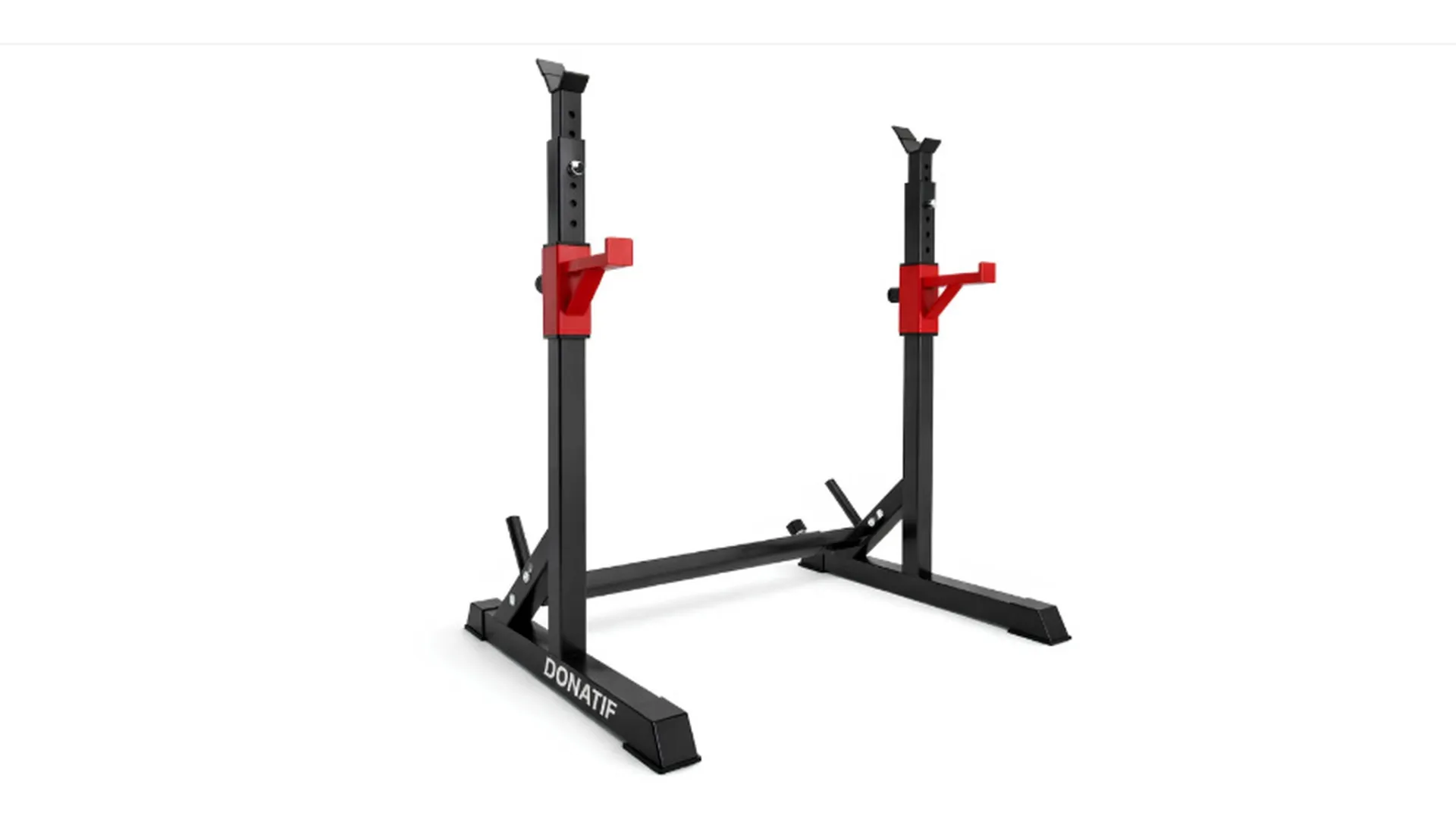
Anyone who takes up barbell weightlifting soon realizes one thing: without the right equipment, you’ll train poorly and, more importantly, unsafely. Squats, bench presses, and deadlifts require a support structure where you can load and unload the barbell without needing anyone’s help. This is the purpose of the rack—a term that, in common parlance, encompasses structures that vary greatly in size, price, and function. Understanding these differences helps you avoid buying too much—or, worse, too little.
What a Rack Actually Does
The basic function is simple: to support the barbell at an adjustable height so you can easily pick it up and set it down, and to provide safety stops that hold it in place if a rep fails. Anyone who trains alone with heavy weights knows how important this is. A set of squats that is interrupted midway without a safety bar can turn into a serious accident, whereas with the safety stops positioned at the right height, the barbell rests securely and the athlete can exit the position without any consequences.
In addition to safety, there’s convenience. A rack allows you to set the starting height according to your height, attach accessories such as hooks, pull-up bars, and weight plate holders, and build an entire training area around the structure. It’s no coincidence that in powerlifting and cross-training gyms, the rack occupies the center of the room.
The Main Types
The first distinction concerns the number of uprights. The squat stand, or two-upright rack, is the most compact solution: two columns that support the barbell, often with an H-shaped base or independent legs. It takes up little space and can be moved relatively easily, but it offers limited protection, as the side stops do not always cover the entire path of the barbell. It’s suitable for those who lift moderate weights and prioritize open space.
The power rack with four uprights, also known as a cage, is the most comprehensive structure. The four posts form an enclosed perimeter within which the athlete can move safely; the horizontal crossbars, which are height-adjustable, act as safety stops along the entire path. Stability is superior because the structure rests on a wide base and distributes the load evenly. The trade-off for this safety is the space it takes up, as it requires a dedicated area and a sufficiently high ceiling.
Finally, there are the rigs, modular structures with multiple uprights designed for functional training and cross-training. Unlike the enclosed cage, the rig extends lengthwise and allows multiple people to train together, featuring pull-up bars, rings, ropes, and anchor points for resistance bands and straps. With custom versions, you can specify the height, length, and number of stations based on the space available—a feature particularly suited to larger boxes, gyms, and garage gyms.
Height, Space, and Maximum Load
Before choosing a model, you need to measure the space. Height is the factor most often overlooked: a 2.3-meter cage installed in a garage with a low ceiling prevents you from doing pull-ups and makes exercises like the overhead snatch impossible. It’s best to leave at least thirty centimeters of clearance above the structure and ensure that doors, beams, and fixtures do not interfere with the barbell’s movement.
The second factor is the maximum rated load. For home use, a rack rated for 500 kilograms is more than sufficient, but those aiming for heavy loads or planning intensive use should look for higher ratings and carefully check the tube diameter, steel thickness, and weld quality. The load rating stated by manufacturers typically refers to static weight, so safety margins must also account for drops and dynamic loads.
Materials, Hole Patterns, and Accessories
Sturdiness depends largely on the profile cross-section: tubular profiles measuring 50×50 millimeters or larger with generous wall thicknesses ensure a level of rigidity that thinner profiles cannot match. The hole pattern in the uprights, with a pitch of 50 or 75 millimeters, determines how precise the adjustment of the supports is: the denser the holes, the finer the positioning of the crossbars and clamps. The fastening system is also important, as high-quality bolts and a durable powder-coat finish reduce wear and protect against rust.
Accessories are worth considering, as they transform the structure. An adjustable bench paired with a rack allows you to perform bench presses safely, disc hooks reduce clutter, and pull-up bars add a second function. Before purchasing, it’s a good idea to verify that the range of accessories is compatible with your chosen model and will remain available over time, so you can expand your equipment as your needs change.
Where and How to Buy
The market for gym racks is flooded with options that vary widely in quality. Companies such as professional gym racks brings together two- and four-post solutions in a single list, with comparable prices and technical specifications.
Those with specific space or customization needs can inquire about custom-made solutions, a field in which Italian manufacturers are very active. For a general overview of the product range, you can also visit the website www.donatif.com, where categories are organized by type of equipment. Whatever your choice, it’s always a good idea to ask about the warranty, delivery times, and availability of replacement parts.
Safety First
A well-chosen rack is no substitute for caution. Safety stops must be adjusted before each session to a height slightly below the lowest point of the movement; the structure must be anchored or weighted down if it is expected to bear heavy loads; the floor must be flat and sturdy. A rubber or wooden platform protects both the equipment and the floor, absorbs some of the impact during deadlifts, and reduces noise—a detail that shouldn’t be overlooked in a shared building.
Before starting a new weight cycle, it’s good practice to check bolts and welds, verify that the safety stops show no signs of wear, and replace any parts that appear worn. Training safely also means knowing your limits: beginners should learn the movements with light weights—preferably under the guidance of a qualified instructor—before increasing the weight.
How to Decide
The best choice comes down to three questions. How much space is actually available—in width, depth, and height? Which exercises will be performed most often, and with what weights? How many people will use the equipment? Those with limited space and moderate weights can start with a good-quality squat stand. Those who train alone with heavy weights will benefit from the safety of a four-post cage. Those seeking versatility and with ample space can opt for a modular rack, perhaps one that can be expanded over time.
In any case, it’s better to choose a rack that’s slightly oversized for your current needs than one that’s too small and will need to be replaced after just a few months. Strength training is a long-term journey, and the equipment you build your routine around must be able to support that journey.