True Volleyball Next, first sports supply chain of Lombardy Region
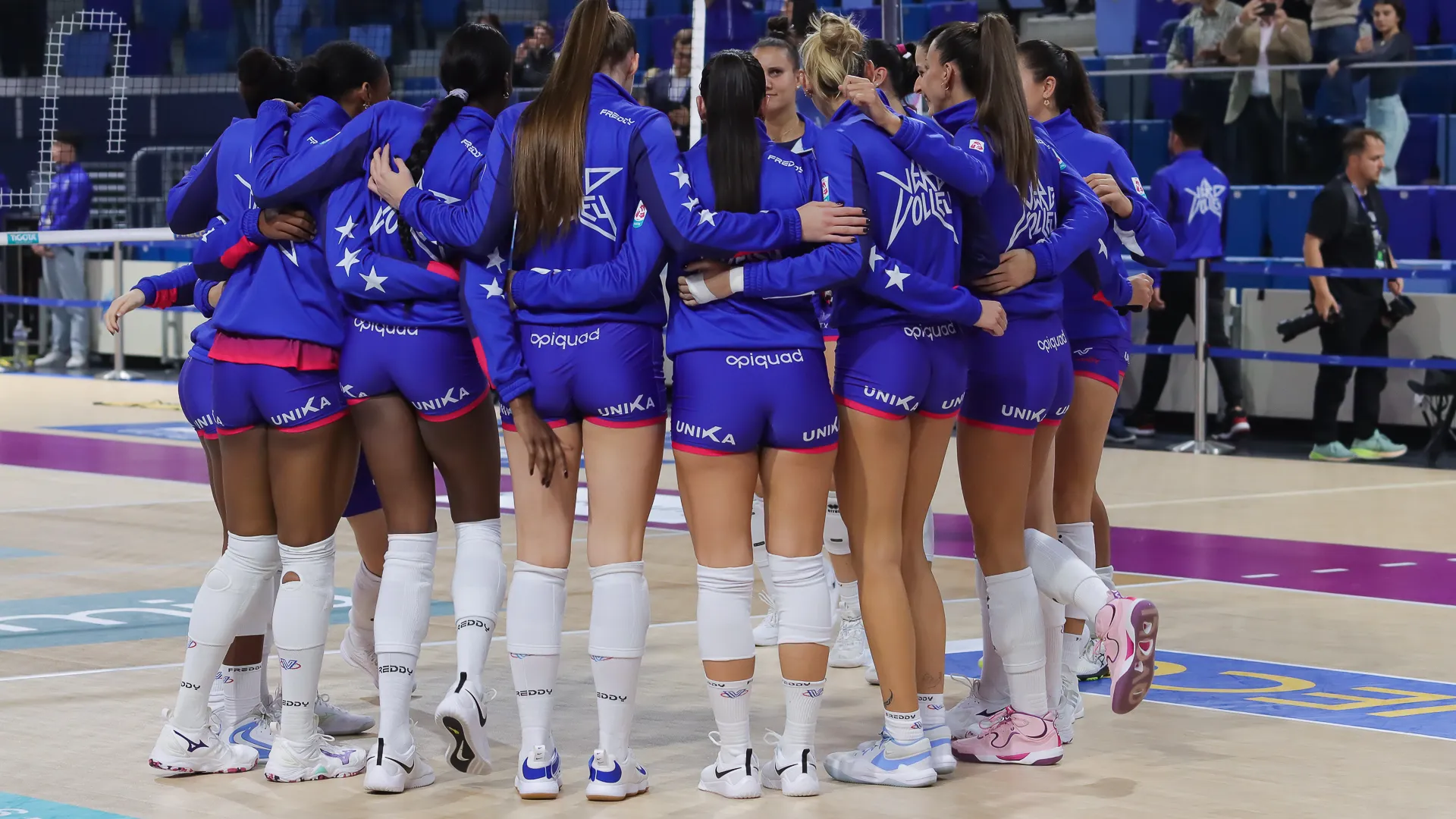
Last year, 25.4 percent of Italians said they “dropped out,” meaning they left a sport discipline at some point in their lives. Reasons include family and work commitments, study, loss of interest or, according to industry experts, lack of adequate facilities. In response to this phenomenon, Vero Volleyball in the summer presented the sports supply chain project to the Lombardy Region, a project approved on October 30, 2025. The initiative, data on the main youth and adolescent issues, social impact activities and economic sustainability were illustrated at Vero Volley Next, an event held on November 6 at Duomo Space Milan, which was attended by insiders and important institutional figures, such as the Councillor for Sport, Tourism and Youth Policies of the City of Milan. “The union allows sustainability, comparison and innovation. The goal is to generate value and foster synergies between the different organizations, aiming to maximize the social return,” said Alessandra Marzari, President of Vero Volleyball.
“Mens sana in corpore sano,” said the Latins. An aphorism that perfectly expresses the profound link between body and mind and reminds us how crucial physical activity is for overall well-being. Today, however, this balance seems to no longer be a priority for many. According to data released by ISTAT in its latest report on sports practice in Italy, last year 25.4 percent (14.6 million from age 3 and up, just over one in 4 people) of the Italian population said they had stopped continuous physical activity at some point in their lives. The phenomenon of so-called “sports drop-out,” the report points out, already emerges at a young age: more than 1.5 million young people between the ages of 10 and 24 have stopped playing sports. Dropping out mainly affects girls (21.6 percent) compared to boys (15.1 percent), with an average age of discontinuation of 14 for the former and 15 for the latter. The reasons are varied: from lack of time to loss of interest, via study, laziness or, according to experts, even lack of facilities. A picture that highlights the need for targeted interventions, particularly in the school and territorial sphere, to combat early dropout and encourage the spread of a culture of movement, which has multiple positive effects. For some sports, on the other hand, the drop-out phenomenon also has deleterious implications from a more strictly economic point of view: because young people who drop out of a sport also mean, very often, fans who move away and who do so at the very moment when they become “spenders.” Adding to this worrying picture are the data reported in the Coni 2024 report that see in Italy, in comparison with other European countries, levels of sports practice among the lowest in the area. In particular, compared to Germany, France and Spain, our country shows a marked delay with reference to both the share of so-called “super-sportsmen” (who train at a daily pace) and the percentage of sedentary people.
For this very reason, among those in the field, there are those who believe that, the protagonists of a revival of sports practice at all levels and peculiarly in the territories of reference, should be the most competitive associations, regardless of the discipline, personally affected by this wave of dropouts. A choice that, for example, a competitive reality such as Vero Volleyball has wanted to put in place, which has formed and will be the leader of the “sports supply chain,” recently approved by the Lombardy Region: this is the first case of its kind in the Italian sports scene. This project was presented at Vero Volley Next: let’s talk about the future, held on Nov. 6 at the Duomo Space Milan, during which topics such as economic sustainability, new revenue models and the social impact of sport were discussed together with institutions and partners of Vero Volley. The event, moderated by Carola Desimio, Forbes Italia journalist, after the greetings of Michele Belingheri, Forbes Italia commercial director, saw speeches by Alessandra Marzari, President of Vero Volley, on the picture of the new generations and the vision of Vero Volley, as well as on international perspectives; Gianpaolo Martire, Marketing Director of Vero Volley, focused on impact and economic sustainability; Martina Riva, Councillor for Sport, Tourism and Youth Policies of the City of Milan, on the topic of large sports facilities in Milan and the importance of the proximity gym; Filippo Giordano, lecturer at SDA Bocconi University, on Social ROI and Social Bond developments; Andrea Boaretto, lecturer at Politecnico di Milano and founder Personalive, delved into business trends on prevention and education on healthy lifestyles; Ada Rosa Balzan, founder ARB S.B.p.A and independent expert at the United Nations, spoke about Social ROI and ESG from an international perspective; Fabio Pugini, managing director and general manager of Numia SPA, and Director Martire himself, spoke about positioning and new profitability in the world of sports.
“According to Coni data, if between soccer and volleyball the ratio by number of registered members is about 3 to 1, that of turnover is enormously more unbalanced, if we consider the top clubs, sometimes exceeding the ratio of 50 to 1 – Director Martire himself explained – Why does this happen? We dissipate an important value that is almost one million youngsters who every year enroll in courses between federation and sports promotion bodies and who for 15 years play volleyball, after which, around the age of 20, for various reasons they stop playing and, therefore, sometimes stop following the sport even as mere fans or enthusiasts. One of the main reasons for this abandonment is the absence of proximity facilities: by participating in a tender as a supply chain, rather than as a single entity, we could make the project of, for example, renovating a school gym more efficient. Such a model would generate important social value, making sports practice more sustainable and accessible. The purpose of the supply chain is, in fact, to generate impact, enabling greater sustainability, comparison and innovation, through synergies, which can maximize the Social ROI, the social return on investment, thus going beyond the simple financial dimension.”
The supply chain becomes, thus, a network of companies that cooperate with each other: the different realities that will be part of it will be able to access dedicated calls for proposals, intended for innovation, internationalization, sustainability and social cohesion projects. In this way it becomes not only a chain of realities, but also a real tool for growth, capable of transforming ideas into concrete and sustainable projects. “The chain is a living network in which collaboration and trust become the real engines of development. Entering this project means helping to generate value for the territory: only by uniting ideas, resources and visions will we be able to build a more innovative, solid economy capable of looking far ahead,” adds Alessandra Marzari, President Vero Volleyball, who just inside the event announced the approval of the supply chain.