USSI 2025 Award to the documentary "Stand there"
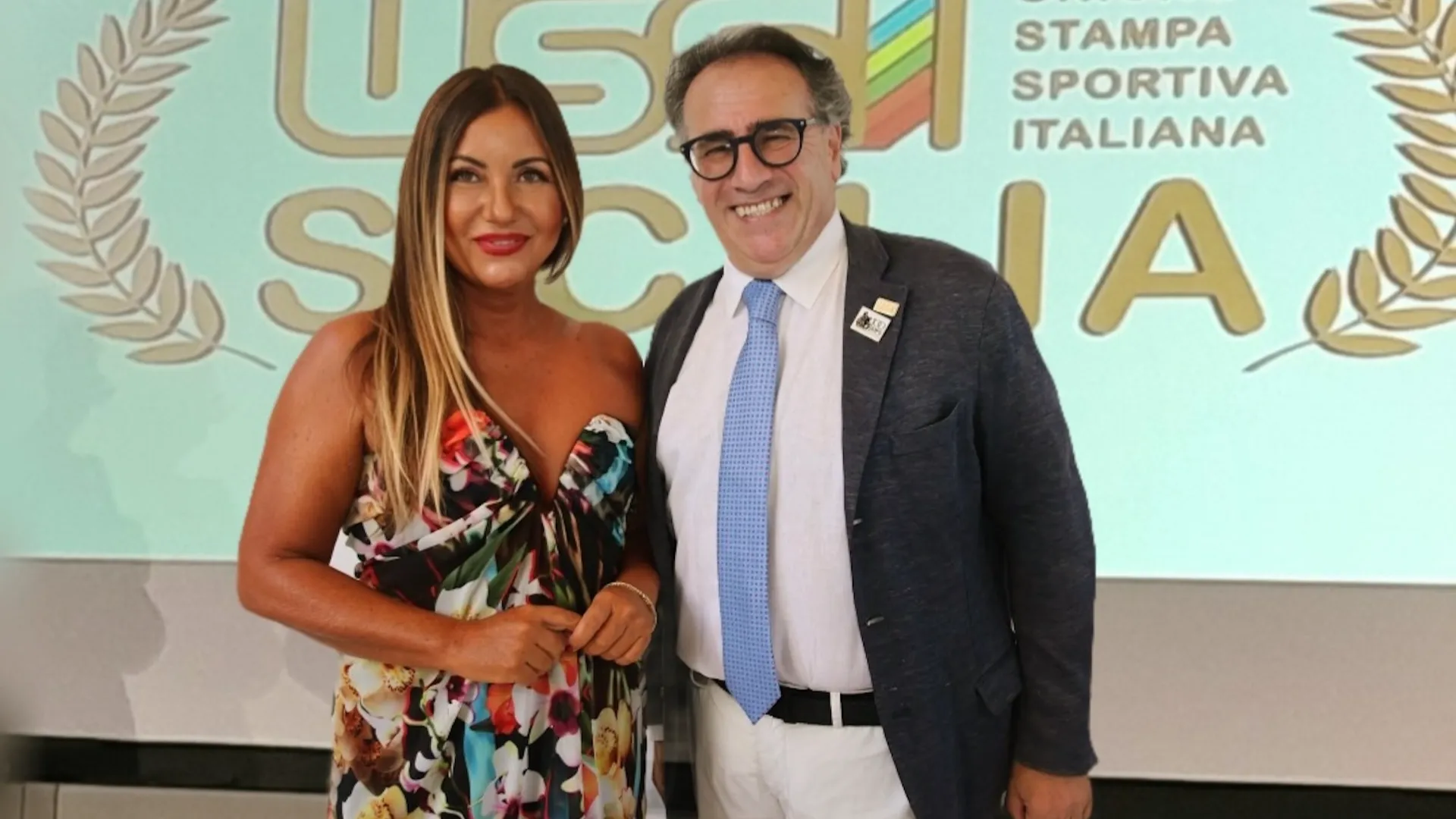
We are in Sicily, in the green of the Public Gardens of Aci Sant’Antonio, where the USSI Summer 2025 Awards were awarded in the ultra-modern arena. These are awards that sports journalists who are members of the body give for sporting merit, career, and sports-related solidarity. “It is a tradition that is renewed in the sign of continuity and in the sign of the attention that the Italian Sports Press Union has towards sporting excellence and is also aimed at those who work on the margins of sport and I am referring to people who are involved in social work through sport,” explains President Rizzo.
This is the case with the special mention to Clementina Speranza for her documentary “Stand Still There.” The film is a firsthand account, talking about the persecution Babak Monazzami suffered in Iran, his successful integration in Italy, and the injustices still suffered in Germany.
“Stand there” is a documentary with a journalistic slant in which the protagonist, a young multifaceted Persian artist who is passionate about soccer and a well-known face in Italy for his music video with Giusy Ferreri, talks about himself. It is subtitled in English, French and Korean because he flew all the way to Ulsan (South Korea). It has already received important awards such as the Peace Prize awarded by the Swiss Embassy in Italy within the Naples Human Rights Film Festival and as Best Film CineMigrare 2024 within the Via dei Corti Festival.
“Our colleague Clementina Speranza is the plastic representation of how we journalists have an obligation to take into consideration even the aspects that are marginal compared to sports because here the goal, the cross is worth little. It is worth the story that she managed to achieve through the script, the images to cover, an important work even as editing. And that is why Clementina scored a goal on behalf of Babak, the protagonist of a story that he surely would have lived without like this,” said USSI Sicilia President Gaetano Rizzo during the award ceremony.
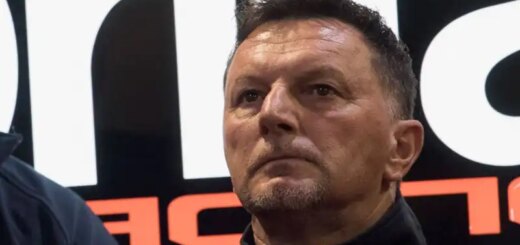
“The documentary in the 60-minute version features new editing. It is divided into stories and 3 of them are about sports: one about badminton and 2 about soccer,” explained the director. A 90-second excerpt was screened, in which Babak recounts that he loved Italian soccer, so much so that he had learned some Italian by following, in Iran, the telecasts of Serie A matches. “Babak imitated the footballers of those years: he had hair like Nesta and Maldini, and a goatee in the style of Roberto Baggio, his favorite player, so I would like to be able to give a moment of joy to Babak who is going through a very difficult time, by having him meet his idol, and I ask for help from colleagues to track down the great Robby Baggio,” says Clementina. Hope.
In the film Babak says his physical education teacher (Yazdan Parast), one of the most famous referees in all of Asia, advises him to pursue a football career. He introduces him to one of the most famous coaches in that city, Hossein Charkhabi, a very famous scout. He discovered Ahmadreza Abedzadeh, the most important and most famous goalkeeper in all of Iran’s football history. Hossein Charkhabi introduced Babak to the coach of the national under-eighteen team, Hamid Derakhshan, and around 2001 he had moved to Tehran to play soccer with the national under-eighteen team, but he was ejected before entering the field because he did not have short hair and had a goatee. In fact, a federation manager for whom Islamic values were paramount was present that day and objected to his “too Western” appearance. And sent him home…
The film then recounts another incident involving soccer. In 2008, the young Persian flees Iran, and that is how he is saved. He arrives in Milan, where he is supported by Dr. Italo Siena founder of Naga-Har, a shelter for refugees and victims of torture. And there Babak organizes a soccer tournament. “The project, which involved sport-therapy as an aid to refugees in depression, was liked by Inter and Juve and they supported us,” Babak says in the documentary.
In agreement with the President of the Italian Badminton Federation, we will make a screening in Milan in Badminton courts and there is in the pipeline the idea of a screening of the documentary in a soccer field with a team, to make Babak relive happy moments.
How did the idea for this documentary come about? “To give Babak a voice. The idea of releasing the documentary we had been working on for some time was born when Babak was heavily attacked during “woman, life, freedom,” in Berlin while demonstrating for his country’s freedom.
On this occasion the press organs did not report it in Italy and it seemed right to provide a testimony. Moreover, the spotlight oriented on the discrimination suffered by women, neglected the other types of violence,” responded Clementina Speranza.
Babak was 3 years old during the bombing by Iraqi planes when he and his family took refuge in the mountains. Babak’s life began by running away and unfortunately still continues that way. Today he has German citizenship, lives in Germany, continues to fight for his rights, and following a recent attack near his home was forced to leave the city where he lived.
Marco Biagianti, the former captain of Calcio Catania soccer team, now a coach, was among those honored for Sicilian sports and was given a lifetime achievement award. Special awards were given to the regional president of CONI, Enzo Falzone, the president of the national amateur league Federcalcio Sicilia, Sandro Morgana, and soccer coach Alfio Torrisi, who picked up the Year 2024 award.
Awards also went to journalist Michele Amato, who chronicles the world of Sicilian athletics and beyond; to photojournalist Davide De Maida, who follows Catania beach soccer but is passionate about everything that links photography to the sports world; to the Futsal Aci Sant’Antonio 5-a-side soccer team; to the rising Stella soccer school of the Femiano brothers; to kart driver Domenico Cubeda; to the Athletic Palermo 11-a-side soccer team for the promotion of the men’s lineup to Serie D and for the successes in women’s and 5-a-side soccer. And, again, to Lucio Fugazzotto, a protagonist at high levels in rowing; to the pair of beach soccer players Orazio Campagna and Gabriele Barbagallo; and to beach volleyball players Geri Ndrecaj and Franco Arezzo. Lifetime Achievement Awards went to Orazio Trovato, a pioneer in skating who played a leading role as an athlete, technician and manager in even the national arena, and to former soccer player Salvatore Avola who, after hanging up his shoes, established himself as a business executive in prominent contexts. To emphasize the relationship between sports and faith, then, award to Don Raffaele Aprile, who successfully returned to tread the volleyball courts combining Christian vocation and sports vocation.
During the course of the evening there were also messages of greetings from the president of the Order of Journalists of Sicily, Concetto Mannisi, and the president of Inpgi, Roberto Ginex, as well as speeches on stage by the regional vice-president of the Order of Journalists, Laura Simoncini, the deputy regional secretary of the Sicilian Press Association, Filippo Romeo, who also represented the president of the regional council, Tiziana Tavella, and the regional secretary, Giuseppe Rizzuto, and the regional president of the Italian Catholic Press Union, Domenico Interdonato.