“Privatized” FIFA World Cup: U.S. Soccer Joins the Backlash Against Gianni Infantino and Donald Trump
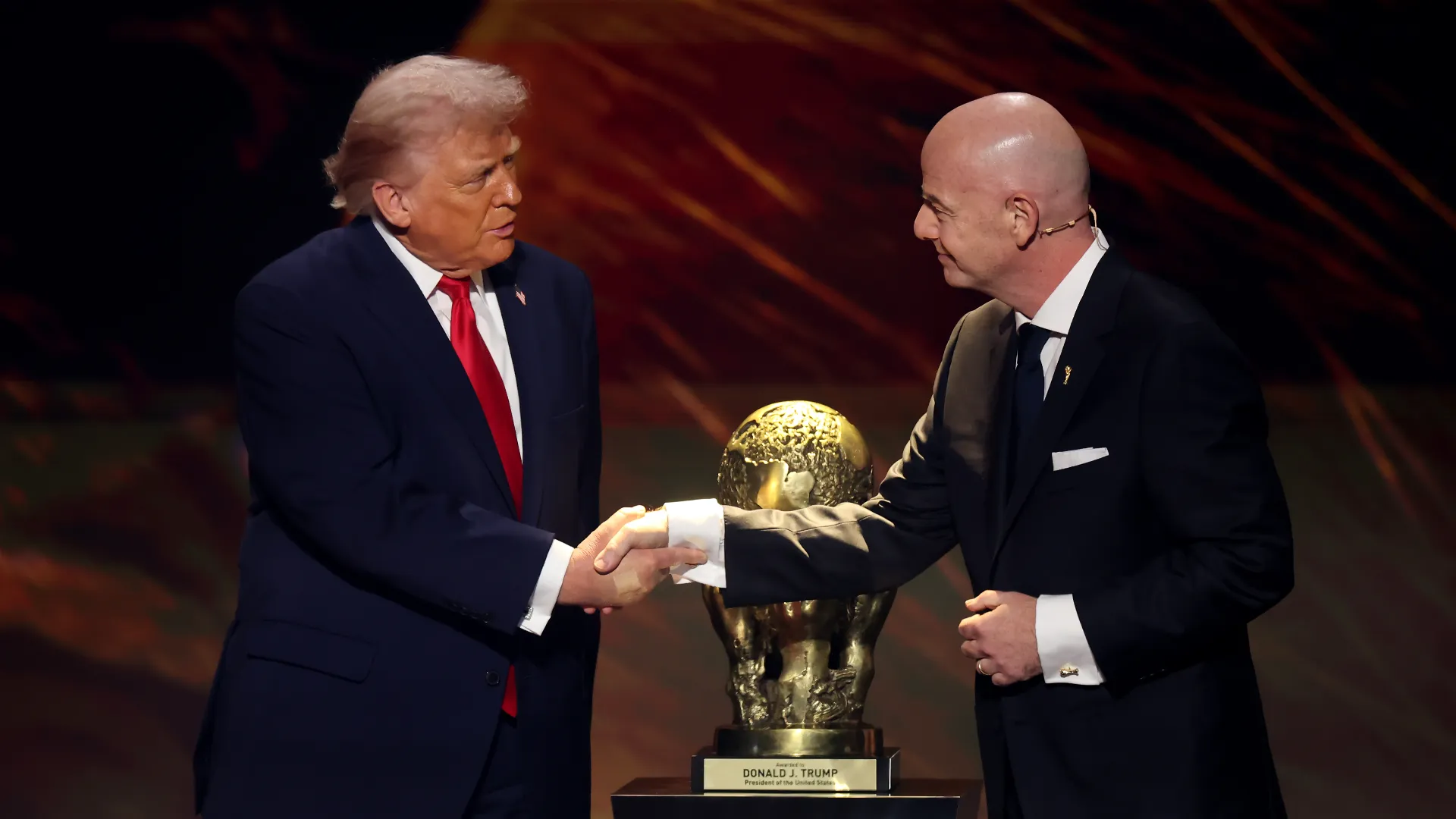
It’s not just Europe; North American soccer is also taking a stand against Gianni Infantino and Donald Trump. And so, in a paradox that’s actually not all that surprising, the United States itself is doing the same. After the FIFA president announced a plan to open up the management of the World Cup to private capital (specifically to the Kushner family, Trump’s son-in-law’s family), an outraged UEFA immediately distanced itself from the proposal. However, in the meantime, it has found some high-profile allies.
In addition to the English equivalent of the national soccer federation, the Football Association (FA), and prominent European political figures such as Glenn Micallef, the European Commissioner for Sport, none other than CONCACAF has now taken a stand against Infantino and Trump’s plan. That is, the “Confederation of North, Central American, and Caribbean Association Football,” effectively the “UEFA of North America.” Not coincidentally, its member federations include the U.S. federation: the United States Soccer Federation (USSF). Among the most contested aspects, according to ‘RaiNews’, is “the lack of a proper decision-making process.”
Specifically, the plan calls for the creation of a new company called FIFA Forward Enterprise, controlled by FIFA but 20% owned by external investors. Prominent among these is Thrive Capital, the fund managed by Joshua Kushner, brother of Jared, who is Donald Trump’s son-in-law. The overall project is valued at $20 billion, with the 211 member federations called upon to vote by September 19: those who approve it will have access to a funding package totaling $10 billion, while those who refuse will remain tied to the Forward project, whose budget is capped at $2.7 billion. Infantino, following the conclusion of the World Cup on July 19 with Spain’s victory, sent a letter to the federations that his critics did not hesitate to describe as a veritable ultimatum.
The harshest reactions came from UEFA, which not only contested the merits of the proposal but also raised a procedural issue: The European confederation complained that it had not been consulted prior to the public announcement, and its president, Aleksander Ceferin, has already convened an extraordinary assembly with the 55 member federations. UEFA’s position is clear: “The soul and governance of soccer are not commodities to be bartered, especially in the absence of clarity on who stands to benefit financially. None of us owns soccer. It is not up to FIFA to sell it.” According to reports by ‘Sky News,’ even the extreme possibility of a World Cup boycott is reportedly on the table.
The political issue, after all, is inseparable from the economic one. The new external company would manage some of FIFA’s major competitions—the World Cup, Club World Cup, and Intercontinental Cup, among others—and this is perceived as an attempt to reduce the role of the confederations and the main stakeholders in world soccer, shifting the center of power toward figures very close to Trump. This fear is far from unfounded, considering that the U.S. president himself had already informally proposed Infantino as the new UN Secretary-General. The institutional rift, which was already deep even before the plan was made public, now risks widening further: the battle, as is now evident, concerns not only a financial plan but the very governance of global soccer.