FIFA: The Storm Is Growing: Gianni Infantino Takes a Hard Line on the Phone Call with Donald Trump
The storm is brewing between FIFA, Gianni Infantino, and Donald Trump. After the various continental federations (UEFA, AFC, and CONCACAF leading the way) had distanced themselves from the head of world soccer, rumors had spread around the globe about a possible phone call he made to his friend, the U.S. president, in search of lost political support—support that, according to the same rumors, was no longer guaranteed even by the White House. In the meantime, however, another chapter has been added to the story.
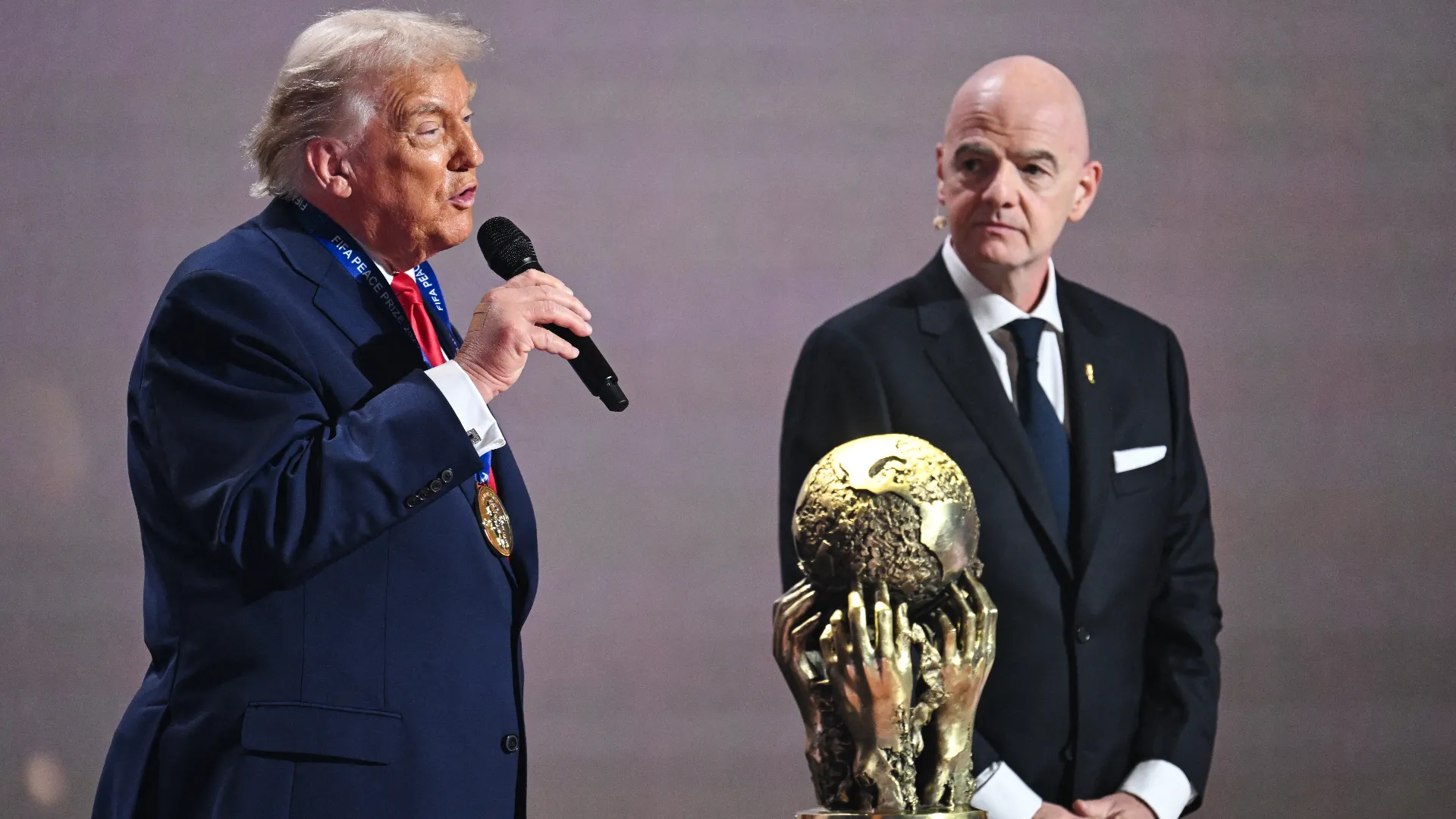
Infantino himself addressed the matter in a statement released on Tuesday. “The FIFA president has not made any phone calls to the U.S. president, nor to any member of his administration, in recent days. This is pure fabrication,” the document states. Such a move was to be expected, given the extremely negative spotlight that has been shining on the Swiss executive week after week—including regarding his personal and long-standing close relationship with Trump.
Yet, according to reports in the *New York Post*, the facts tell a very different story. Infantino is said to have attempted a desperate move in recent hours: directly involving the U.S. government to secure political support and try to remain in office. Specifically, he reportedly requested a private meeting with Secretary of State Marco Rubio in an attempt to present soccer as a form of “soft power” beneficial to American interests. The State Department, however, has publicly denied any such meeting: “There are no plans for a call with Infantino,” it explained in a brief statement. This account contrasts with that of a FIFA executive who spoke directly with the editorial staff of the *NY Post*, according to whom the meeting was canceled precisely because of the media attention generated by the revelations published on the newspaper’s online portal.
Sources at the U.S. newspaper are following up and claim that Infantino tried several times to contact Trump directly, without success. The U.S. president reportedly did not respond to calls from the FIFA president, who now finds himself in a position of growing isolation. This isolation had already become unmistakably clear when Trump, during a press briefing, responded with a curt “No” to those asking if he had spoken with Infantino about the plan to privatize the World Cup: a single syllable as heavy as a boulder, uttered while people very close to him were being identified as key players in the entire operation.
It is worth recalling that it all began with a revelation by *The Times*, which exposed the plan for FIFA Forward Enterprise: a new company controlled by FIFA but 20% owned by external investors, including the U.S. bank JP Morgan and the Thrive Capital fund led by Joshua Kushner, brother of Jared, Donald Trump’s son-in-law. The overall project was valued at $20 billion, with the 211 national federations called upon to vote by September 19: those who approved it would have had access to a $10 billion funding package, while those who refused would have remained tied to the Forward project, whose budget was capped at $2.7 billion. Infantino had also promised each participating federation a one-time bonus of $20 million. These incentives were particularly tempting for smaller countries, but his critics did not hesitate to call it a veritable ultimatum.
The project’s failure sparked a full-blown revolt even within FIFA itself. Kevin Lamour, the federation’s Chief Operating Officer, told the Associated Press that he felt “duped” by what had come to light in recent weeks, claiming he had not been informed of the secret negotiations. An anonymous executive, however, spoke to the *New York Post* about an internal movement dubbed “Project Kill The Monster,” with the stated goal of pushing Infantino to resign. Devastating signals had also come from Carlos Cordeiro, the president’s right-hand man and chief advisor, who had announced his resignation in a scathing statement, declaring himself “categorically opposed” to the plan and calling it “bad for FIFA’s member associations, bad for soccer, and bad for the long-term future of soccer.”
With the elective congress scheduled for March 18, 2027—the day Infantino aims to secure his fourth reelection as FIFA president—increasingly credible candidates are emerging to succeed him. There has been much talk of Nasser Al-Khelaifi, president of Paris Saint-Germain and head of European Football Clubs. From the same geographic region comes the head of the AFC, Salman bin Ibrahim Al Khalifa. From CONCACAF, the name being mentioned is Victor Montagliani, who is rapidly rising in prominence and apparently holds an edge over Aleksander Ceferin: The UEFA president has regained credibility in recent weeks, but in Europe he could face competition from Dariusz Mioduski, who is cited as the preferred candidate by influential federations such as Norway, Sweden, Bosnia, and above all Spain and Germany. The united front against Infantino—ranging from continental confederations to national governments, and even his own staff—suggests that the path to a fourth reelection is now more difficult than ever.