Carlo Ancelotti Under Pressure in Brazil: Controversy and Tense Nerves—A Surprising Turn of Events
Carlo Ancelotti’s Brazil is going through an increasingly difficult period. After the disappointment of the World Cup in the U.S., which ended with elimination in the round of 16 against Norway, the Seleção suffered another setback: a 3-2 loss to Japan in a friendly match played at the National Stadium in Kallang, Singapore. This result reopens the wounds from the World Cup and reignites criticism of the coach from Reggiolo.
Five months earlier, it was Brazil itself that had eliminated Japan from the World Cup thanks to a last-minute goal. This time, however, it was the Samurai Blue who came out on top, with Tatsuhiro Sakamoto scoring the decisive goal in stoppage time. Japan had taken a 2-0 lead with goals from Kubo and Nakamura, scored between the 15th and 19th minutes. Brazil got back into the game thanks to a two-goal performance by Vinícius Junior, who tied the score at 2-2 and seemed to have reopened the match.
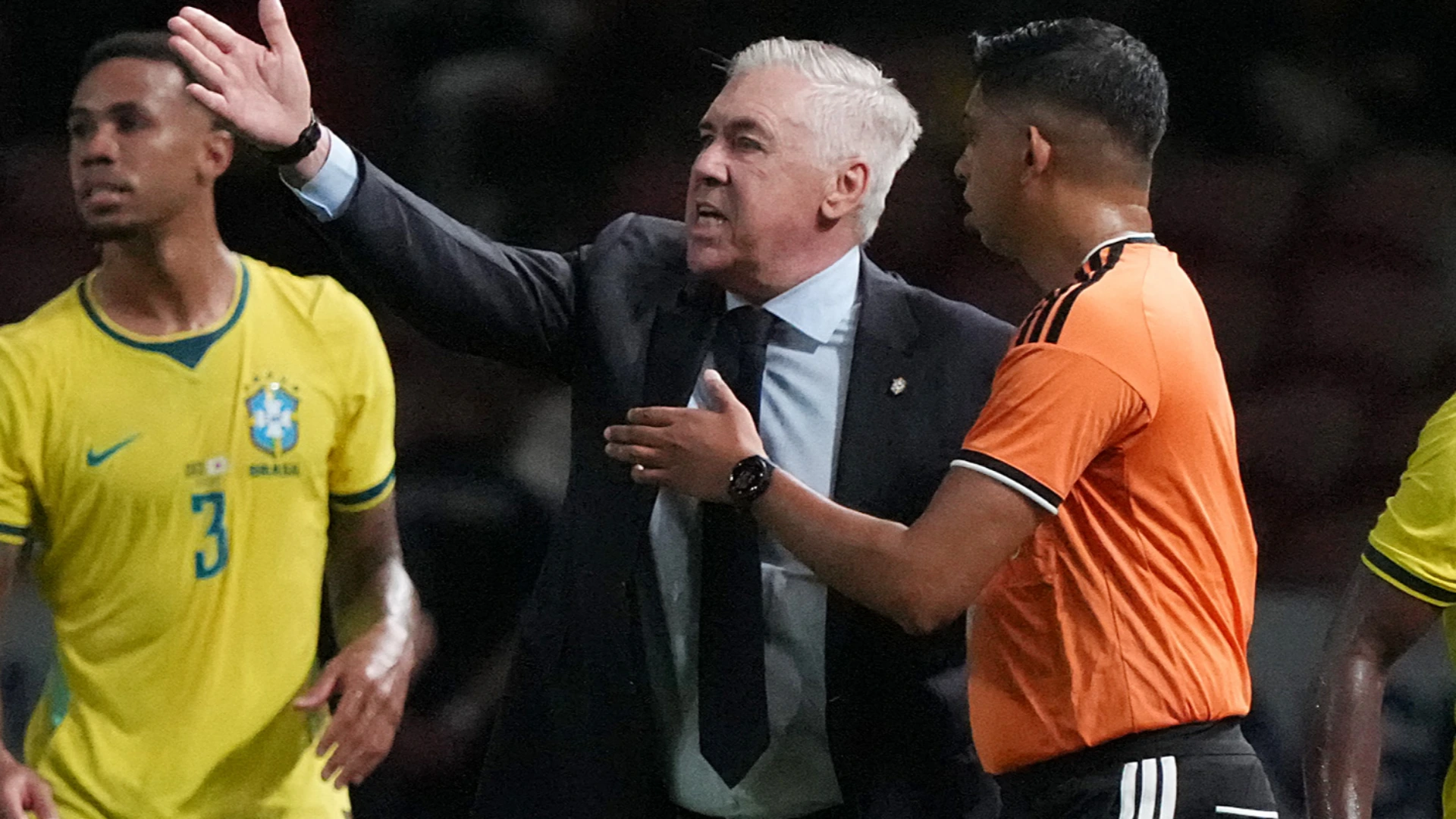
But in the 91st minute, the final blow came: Sakamoto scored the 3-2 winner, a goal that sparked protests from the Verdeoro, who were convinced that Takumi Minamino had fouled Joao Gomes during the play. Tensions flared all the way to the bench. Ancelotti and Raphinha—who had already been substituted—entered the field to contest the referee’s decision and were both sent off. A finale that captures a Brazilian atmosphere rife with nervousness, controversy, and growing concern.
For Ancelotti, the pressure stems not only from the loss in Singapore. His tenure began anew after a disappointing World Cup, with Brazil eliminated early and a fan base that has begun to question his tactical choices, results, and even his continued tenure as head coach. Some voices, even after the elimination, had already called for an immediate change of course.
The Italian coach has sought to respond by focusing on generational renewal: the roster for the Asian tour included 15 players under 23, with the goal of building a competitive team for the 2028 Copa América and the 2030 World Cup. Ancelotti had also stated that the experimental phase would end with this international window, with the roster set to shrink at the next training camp in March.
The problem is that, in a country like Brazil, the time available to build a winning national team is not infinite. Results matter right away, and the loss to Japan risks further fueling discontent. Ancelotti has a contract through 2030, but in sports, nothing is ever a foregone conclusion: if the disappointments continue, even the federation’s confidence in him could begin to waver. It’s not yet a concrete possibility, but in Brazil, Ancelotti’s early departure is no longer an unthinkable scenario: if results don’t materialize, the CBF might be forced to consider a change of course well before his contract expires.