Marco Pantani, 22 years ago the death of the Pirate
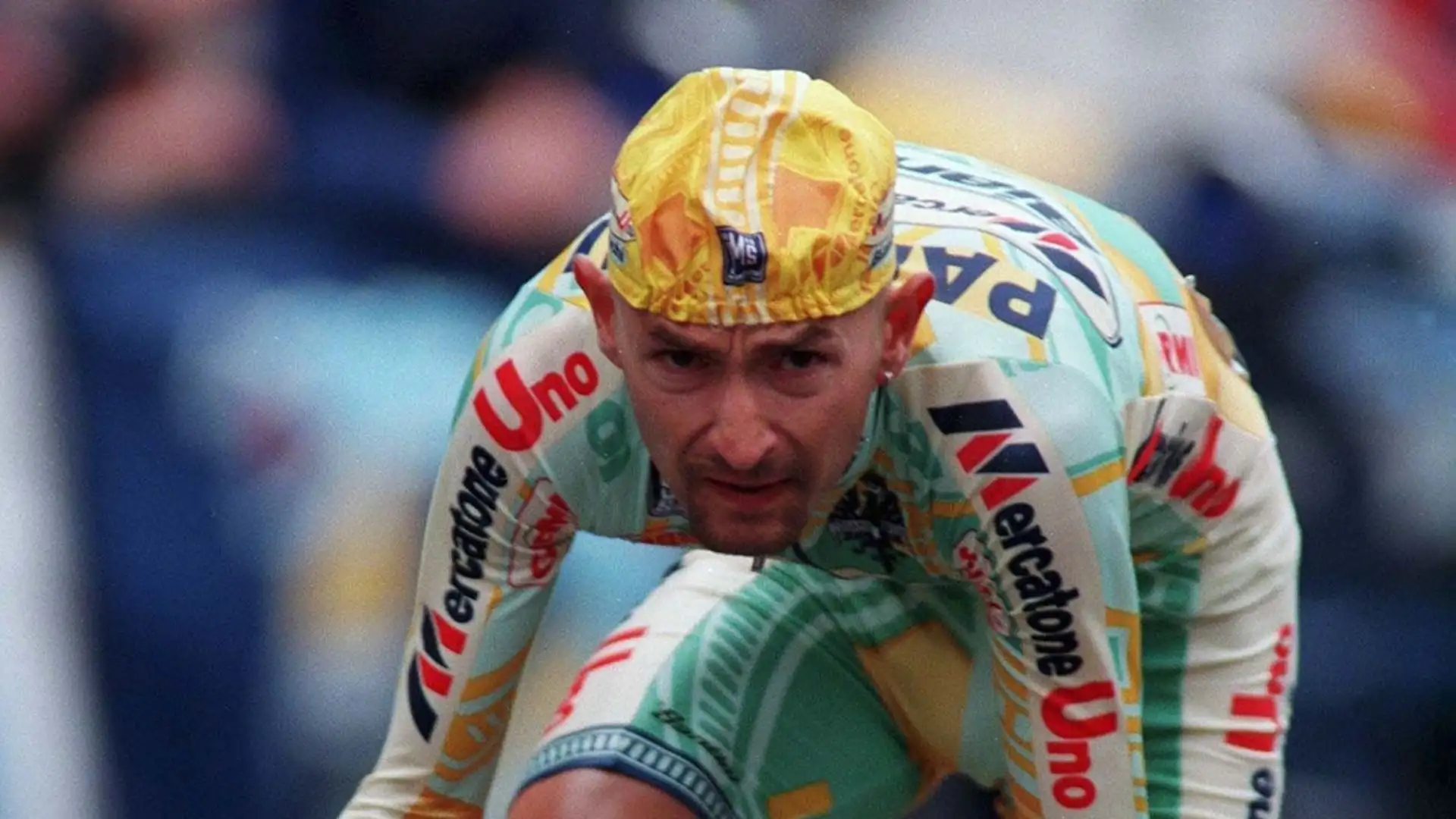
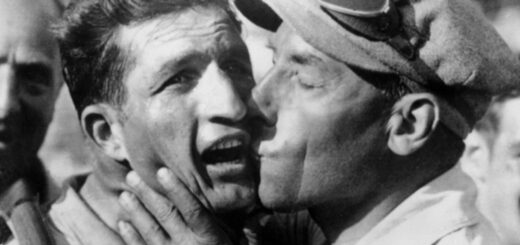
It has already been twenty-two years since that tragic February 14, 2004, the day when Marco Pantani’s lifeless body was found in a Rimini residence. One of the strongest and most beloved cyclists ever, in Italy and beyond, died at only 34 years of age in circumstances never fully clarified, to the sadness and anger of those who had loved him. Born on Jan. 13, 1970, in a region, Emilia-Romagna, where cycling is a religion, the Pirate, as he was later nicknamed by his fans for the bandana with which he covered his completely bald skull, from an early age showed that he had the pace of a climber. Before turning pro, he won an amateur Giro d’Italia.


In 1994, the Pantani myth was born: in fact, at the age of 24, the first great successes arrived, with the unforgettable shots on the Mortirolo, his mountain, in the stage of the Giro d’Italia with the finish line at Aprica and on all the other roughness of the pink race (closed in second place behind Berzin) and at the Tour de France (podium in the fourth edition won by Miguel Indurain). It seems like the beginning of a predestined career, but unfortunately luck turns its back on him: in 1995 during the Milan-Turin he is hit by an off-roader, which causes him to fracture his fibula and tibia. Doctors fear he may not even return to cycling, but he recovers, before another accident. In 1997 he is involved in a group crash caused by a cat. New long stop and comeback through gritted teeth.
Already at the Tour de France of the same year, however, he manages to return to the peloton and although without winning the yellow jersey he takes two great satisfactions, in the Alpine stages: unforgettable the arrival of Morzine, record-breaking the one at Alpe d’Huez, another of his favorite climbs, covered in just 37 minutes and 35 seconds, pulling away from Virenque and Ullrich. 1998 is finally the right year, the only one in which everything seems perfect: it starts at the Giro d’Italia, where Marco has no rivals. Zulle raises the white flag by losing more than half an hour in Montecampione, while Tonkov, the last to surrender, can’t resist his opponent’s impressive series of sprints, who will later limit the damage in the time trial.
The team was not able to resist the race.
Two months later, at the Tour, reigning champion Ullrich got off to a good start and built up a five-minute lead over the Pirate, who, however, on stage 15 sprinted without looking back into the blizzard on the Galibier and crossed the finish line at Les Deux Alpes with more than nine minutes ahead of the German, arms raised for a photo that will remain the most beautiful of his career. In Paris, on the Champs-Élysées, he completes his feat, donning the yellow jersey in front of the Arc de Triomphe, for a victory that in the general classification of the Grande Boucle had been missing from an Italian since Felice Gimondi. He’s still the last cyclist to hit the Giro-Tour couplet in the same year.
On June 5, 2000, while he is launched toward the conquest of the second consecutive Giro d’Italia (memorable a few days before the comeback after the chain jump to the sanctuary of Oropa), comes another blow, after which unfortunately his life will never be the same: in Madonna di Campiglio he is stopped for a hematocrit rate slightly above normal. Pantani says it openly right away: “I have fallen so many times, but this time it will be difficult to get back up”. He will make it, but as mentioned, he will no longer be the true Pirate capable of moving oceanic crowds and sprinting on repeat: in 2000, he even accepts the role of domestique and helps teammate Stefano Garzelli win the pink jersey.
At the Tour of the same year, Marco struggles on the Pyrenees, gambling his chances for the yellow jersey, but on Mont Ventoux he hits his last great feat: Lance Armstrong, the cowboy whose seven Tour triumphs were later taken away from him in 2012, is the only one to resist the Romagnolo’s sprints and at the finish line he sportingly leaves him with the stage win. It will be Pantani’s last high point, and when he gets off the bike he finds himself weak and helpless: friends, not the real ones, slowly abandon him and he falls into depression. Attempts to get out of it prove fruitless, and his last sporadic appearances in the saddle are not memorable.
Pantani in the last weeks of his life closed in on himself, spending more and more time alone, until on Feb. 14 he died in a room at the “Le Rose” residence in Rimini. The day after his passing, the sports world rallies around Pantani’s family. Even in soccer, a minute’s silence is observed on all fields, starting with the one in Lecce, where Milan, his favorite team, is on stage. Many tributes are paid by the cycling world, with monuments erected on the Mortirolo and Galibier, while each year at the Giro and Tour stages and hairpins are dedicated to his memory.