World Cup: All of North America, Including the U.S., Puts Infantino and Trump on the Spot
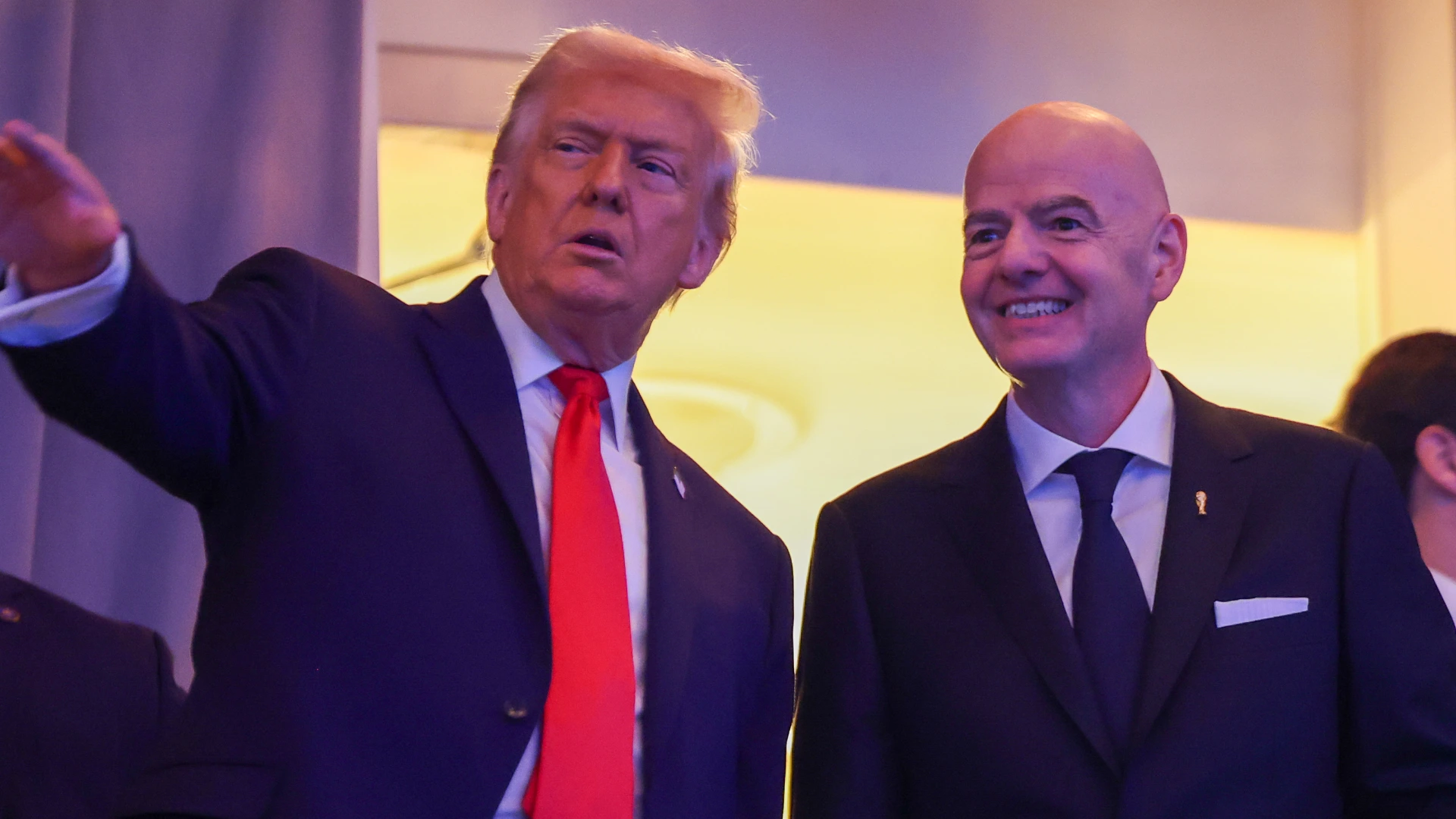
All of North America, including the United States, is distancing itself from Gianni Infantino and Donald Trump regarding the controversial plan to privatize the World Cup. This is made abundantly clear by the statement issued by CONCACAF as a whole in a press release on Saturday. The statement makes it clear that the step back already announced by FIFA is not enough for the various soccer federations, which also include the U.S. Soccer Federation (USSF).
“CONCACAF and its 41 member associations,” the statement reads, “welcome the withdrawal of the FIFA Forward Enterprise proposal (FFE). The Confederation also congratulates its 41 member associations and the entire soccer family for the courage and unity demonstrated this week. At a time that called for principled leadership, our members united to defend the long-term interests of soccer and the principles of good governance. This unity has prevailed.”
This is followed by the most direct attack on Infantino and, more or less directly, on Trump himself. “The events of the past few days,” CONCACAF continues, “have brought to light something that can no longer be ignored: the future of the FIFA World Cup, world soccer’s most precious asset, has been decided outside any established governance framework, without transparency, consultation, or adherence to established procedures. A proposal of this magnitude does not reach this stage by chance. It is symptomatic of a leadership that has ceased to put soccer first. This recent unilateral and shameful act of mismanagement and poor leadership is part of a series of missteps and similar behaviors. A thorough review of this presidency is imperative.”
“FIFA is not a private enterprise. It is a body that operates on behalf of soccer and its members. Those appointed to serve it have a fiduciary duty—a duty of service, not of power. Where that duty is not fulfilled, accountability cannot be optional,” CONCACAF further emphasizes. It concludes without explicitly mentioning Infantino, but attacking him in the clearest possible terms: “The unity demonstrated by our member associations this week has reaffirmed that, when guided by courage, integrity, and sound governance, soccer will remain where it belongs: in the hands of soccer itself, not of a single individual.”
CONCACAF was not the only organization dissatisfied with Infantino’s formal step back. UEFA echoed this sentiment, thanking in its own statement the fans, leagues, clubs, players, federations, confederations, and even heads of state and prime ministers who opposed the project—while carefully avoiding any mention of the FIFA president: “We cannot continue this way, with secret projects pushed through on an accelerated timeline, orchestrated by faceless individuals and offering dubious benefits for the sport.” The European confederation then raised the stakes even further, stating in no uncertain terms that “FIFA’s current leadership has not only lost the trust of UEFA, but also that of many other members of the soccer family” and announcing its intention to launch, in the coming days and weeks, an “in-depth and radical” analysis in which “no option should be ruled out.”
To understand the scope of the crisis, it is worth noting how rapidly the situation has unfolded over the past few days. It all began with a revelation in *The Times* that exposed the plan for FIFA Forward Enterprise: a new company controlled by FIFA but 20% owned by external investors, including the U.S. bank JP Morgan and the Thrive Capital fund led by Joshua Kushner, brother of Jared, Donald Trump’s son-in-law. The overall project was valued at $20 billion, with the 211 member associations asked to vote by September 19: those who approved it would have access to a $10 billion funding package, while those who refused would remain tied to the Forward project, whose budget was capped at $2.7 billion. Infantino had also promised each participating federation a one-time bonus of $20 million, with annual contributions for the following four-year period set to jump from $2 million to $5 million: compensation that was irresistible, especially for smaller countries, but which his critics did not hesitate to label a full-fledged ultimatum.
With the elective congress scheduled for March 18, 2027—the day Infantino aims to secure his fourth reelection as FIFA president—increasingly credible candidates are emerging to succeed him. There has been much talk of Nasser Al-Khelaifi, president of Paris Saint-Germain and head of European Football Clubs. From the same geographic region comes the head of the AFC, Salman bin Ibrahim Al Khalifa. From CONCACAF, the name being mentioned is Victor Montagliani, who is rapidly rising in prominence and apparently holds an edge over Aleksander Ceferin: The UEFA president has regained credibility in recent weeks, but in Europe he could face competition from Dariusz Mioduski, who is being touted as the preferred candidate by influential federations such as Norway, Sweden, Bosnia, and above all, Spain and Germany. The united front against Infantino—ranging from continental confederations to national governments, and even his own staff—suggests that the path to a fourth reelection is now more difficult than ever.