How is Tadej Pogacar doing after his shocking crash and injury: his condition following medical tests
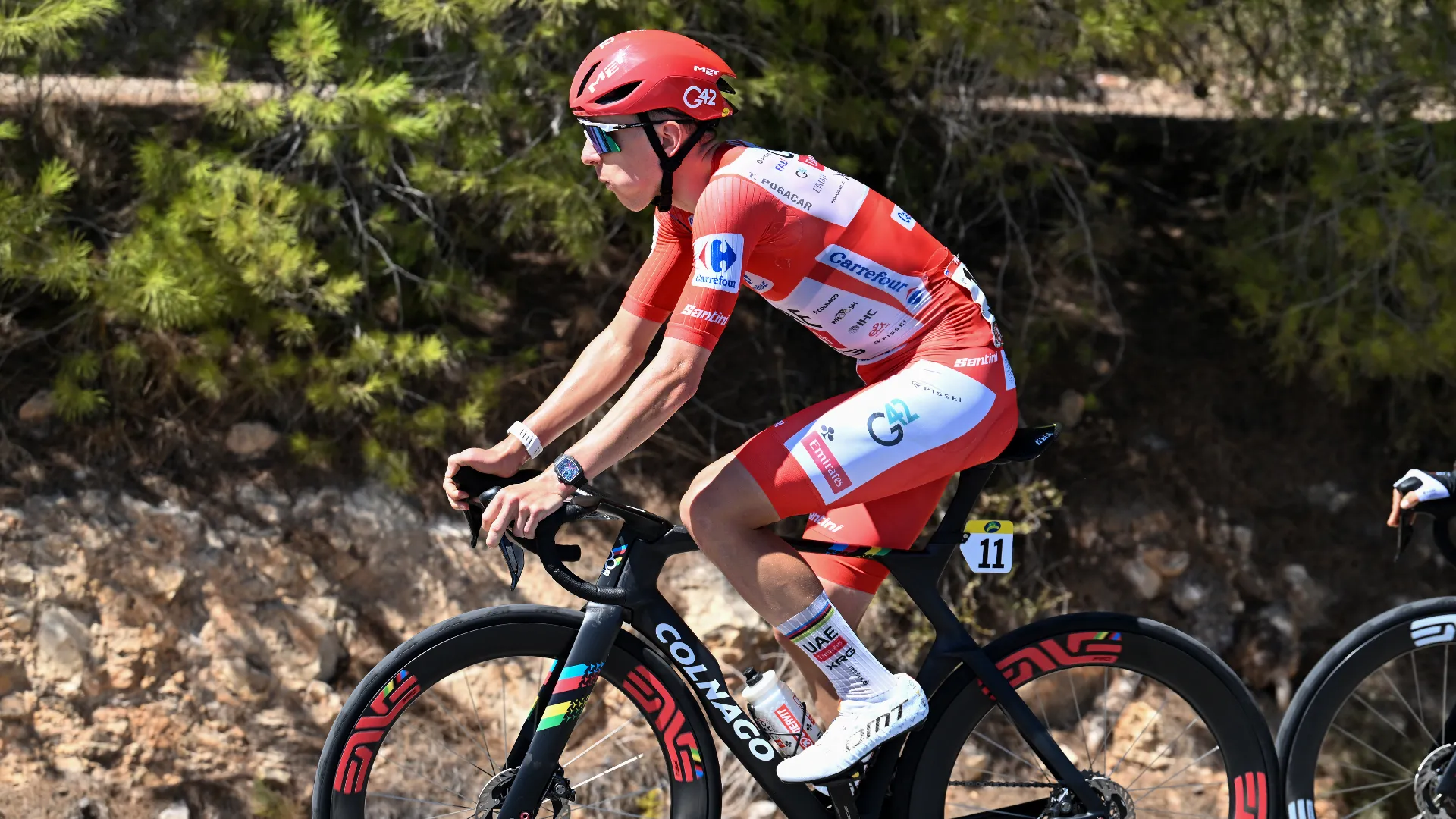
The UAE Emirates team has provided an update on Tadej Pogacar’s condition following the shocking crash that forced him to withdraw from the Vuelta. During the eighth stage, the Slovenian star lost control of his bike due to a boulder that had landed in the middle of the road; he struck his left arm violently and withdrew from the race in pain. Unfortunately, medical tests confirmed initial concerns: the champion will have to miss the World Championships on September 27, where he was aiming for his third consecutive world title.
“Unfortunately, Tadej was the victim of a bad crash during today’s stage and was unable to continue the race. His condition is stable, and following a thorough medical evaluation at the hospital, Tadej was diagnosed with a concussion, a comminuted fracture of the left clavicle, a stable C7 cervical fracture, and multiple abrasions. Fortunately, there are no other serious injuries or neurological consequences,” according to a statement from UAE Emirates team doctor Dr. Adrian Rotunno.
“Surgery on the collarbone will be necessary, but it will be postponed due to precautions related to the concussion. Tadej remains under the care of our medical team, and we will provide further updates after the surgery.” Pogacar’s season is therefore over. The Slovenian had been dominating the Vuelta, where he had led since the first stage, and just a month ago he had won his fifth Tour de France.
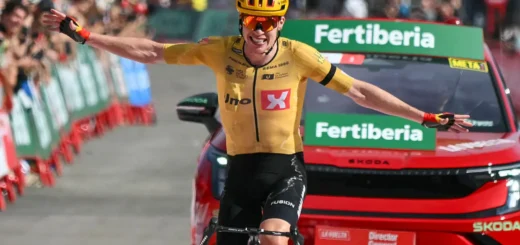
The crash occurred 33 km from the finish line of the eighth stage, shortly after the intermediate sprint in Simat de la Valldigna. Pogacar hit the ground along with Ben Tulett (Visma-Lease a Bike) and Magnus Cort Nielsen (Uno’X Mobility), getting back up with visible injuries to his face and bloodied before being loaded into an ambulance. This marks the first time in his career that the world champion has withdrawn from a stage race, a fact that makes the conclusion of this 2026 Vuelta all the more sensational.
At the time of his withdrawal, the Slovenian had built a lead of nearly four minutes over Enric Mas, second in the general classification, and appeared poised for another display of strength all the way to the finish line in Granada, the site of the final time trial on September 13. In the first seven stages, he had already claimed three stage victories, dominating the mountain stages in particular—such as the spectacular 104.8-kilometer stage in Andorra, where he beat all his rivals by more than two and a half minutes. He was also leading the points classification, the mountains classification, and the most aggressive rider classification: a complete and across-the-board dominance rarely seen in a Grand Tour.