Franco Baresi: Beppe Bergomi’s Heartfelt Letter
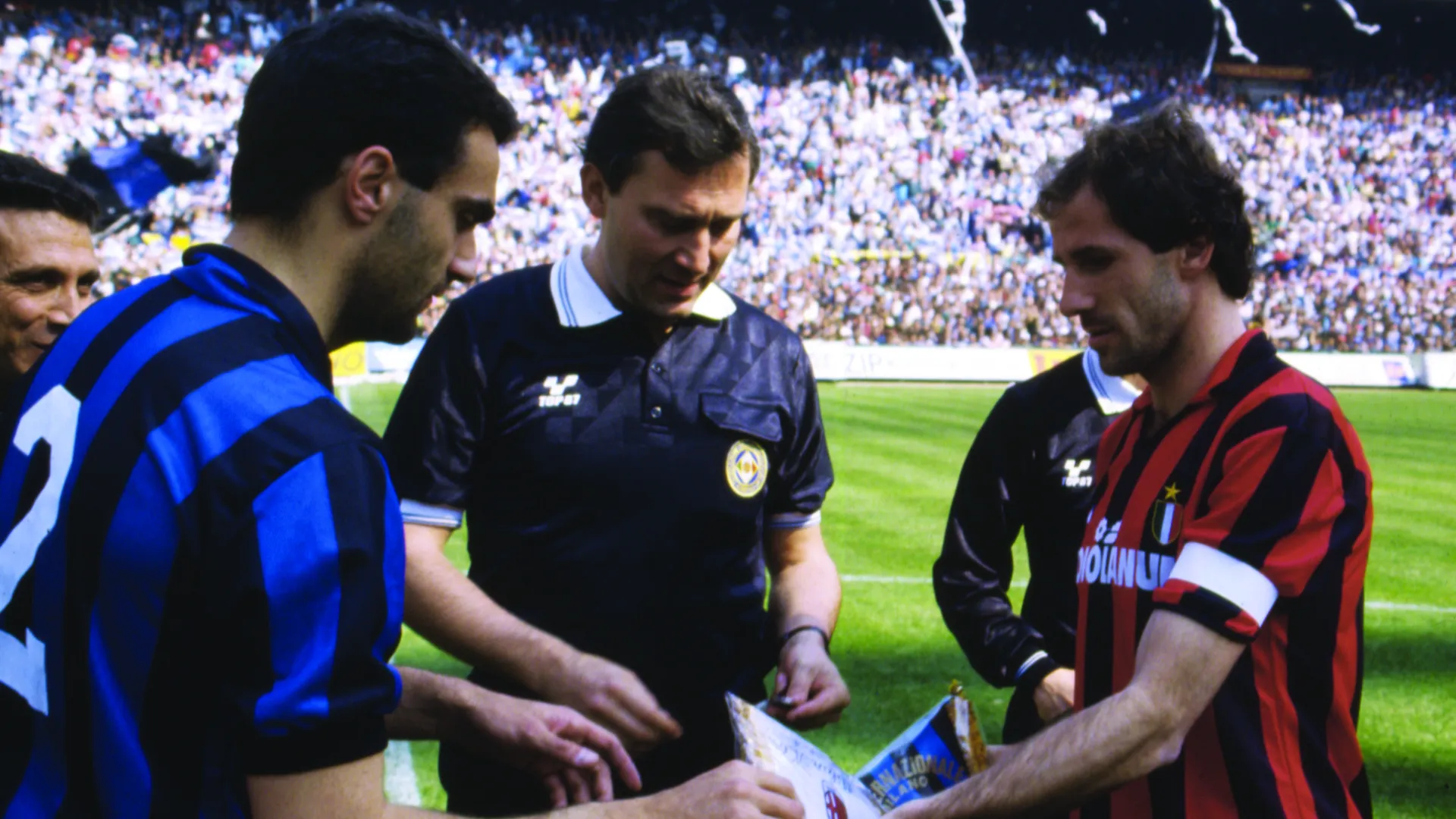
For years they faced off in derbies, and for years they were teammates on the national team: Beppe Bergomi and Franco Baresi shaped the history of Italian and Milanese soccer. The Inter icon wrote an open letter dedicated to the Milan legend, who passed away Friday morning at age 66 following an illness. The former Nerazzurri captain shared a unique moment with Baresi during the opening ceremony for Milan-Cortina 2026 at San Siro, where he served as a torchbearer: “That image has become history; it will forever remain among the most beautiful moments of our lives,” Bergomi wrote proudly.
“He was never one for many words, but I could see he was moved. At one point, they told us they had to put an earpiece on him, but he wanted only me to guide him: we were both hooked up, close together in a beautiful moment. He’d asked me to keep the torch as a memento, and I gave it to him at the end of June, in a bar near his home—a hangout for Inter fans where he felt right at home. Unfortunately, that was the last time we saw each other.”
“In my first derby, on September 6, 1981—a 2-2 draw in the Coppa Italia—I even scored, and Franco was on the other side. On the field, though, we were always worlds apart: we’d just exchange a handshake and a hug at the start—especially when we were captains—but then we’d never cross paths again, each defending our own half. I’ll never forget his farewell match, though. He called me personally and said, ‘You’re coming!’ I replied jokingly, ‘You’re going to get me booed so badly…’ And he said, ‘Don’t worry about it…’.”
Our time together on the national team: “In ’82, we became world champions together. We supported each other throughout the tournament: we were the youngest in the group, and we were always together. We played in the ’88 European Championship and the ’90 World Cup together: I wore the captain’s armband, but playing alongside him made me feel protected.”
“Today I think we’ve always been very similar: both unassuming, polite, children of another era, bound by sincere respect. I like this description: captains without rhetoric. And then, think about our nicknames: he was ‘Piscinin,’ a child forever; I was ‘Zio,’ a boy who already seemed like an adult. Together, two traveling companions, with a soccer ball at our feet and a torch in our hands.”