Amalia Ercoli Finzi and the amusing story about Diego Armando Maradona
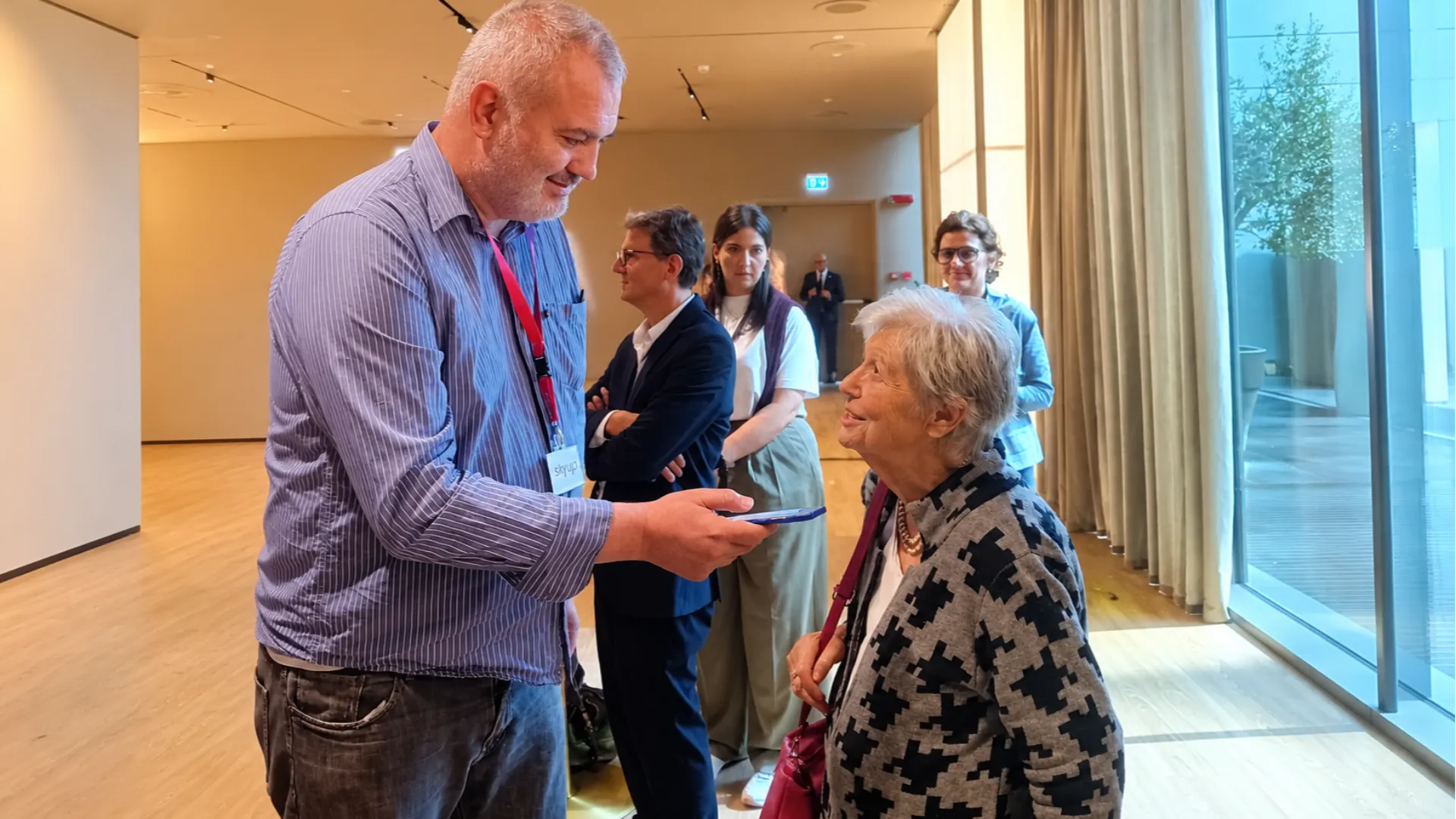
Amalia Ercoli Finzi, the first Italian woman to earn a degree in aeronautical engineering and professor emerita at the Politecnico di Milano, spoke alongside Minister of Sports and Youth Andrea Abodi during the debate that kicked off the fifth edition of Sky Up The Edit. Sky’s project, aimed at schools, seeks to promote teamwork and the acquisition of new digital skills through the creation of multimedia content.
On the sidelines of the event, the brilliant and ingenious 89-year-old spoke to Sportal.it, granting an exclusive interview in which she addressed various topics.
We cover sports, so let’s start with a curious story involving Diego Armando Maradona. You met him in Naples without recognizing him. What happened?
“It was a completely chance encounter. I had gone to Naples because I was teaching courses for engineers, and I arrived at the hotel where I usually stayed—a beautiful hotel across from Castel dell’Ovo. Usually, there was a well-dressed person at the entrance who greeted me and took my suitcase. That time, however, I found a young man with curly hair standing there waiting.”
And you thought he worked at the hotel?
“Exactly. I gave him my suitcase and asked him to take me to the front desk. He took the suitcase and carried it for me without saying a word.”
The funniest part, though, comes next.
“Yes, because I also gave him a tip. He took it and said to me, ‘Thank you, ma’am.’ At that point, a woman from the hotel asked me, ‘Do you know who he is? It’s Maradona.’ I hadn’t recognized him at all.”
Let’s move on to space. Why is it so important today to return to the Moon?
“It’s extremely important to go to the Moon because we’ll turn it into a sort of laboratory. There, we’ll be able to learn how to do many of the things we’d like to accomplish on Mars in the future. But that’s not all. Various activities and technologies developed on the Moon could yield results that are also applicable on Earth, helping to improve our lives.”
Mars, on the other hand, represents a far more complex challenge. Why is that?
“Because Mars is far away. Even today, a trip to Mars takes about six or seven months. On top of that, there’s another problem related to astronomical conditions.”
How much do these conditions affect the overall duration of a mission?
“A great deal. We have to launch when Mars’s position relative to Earth makes the journey most favorable, and we have to wait again for the right conditions for the return trip. This situation occurs roughly every two years.”
So a human mission to Mars would take a very long time.
“Yes. You have to allow about six months to get there, another six months to return, and a long stay on Mars while waiting for the right window for the return trip. This is precisely one of the aspects that makes a mission to Mars much more difficult than one to the Moon.”