Tyrrell 6-wheelers, never any so bold in F1
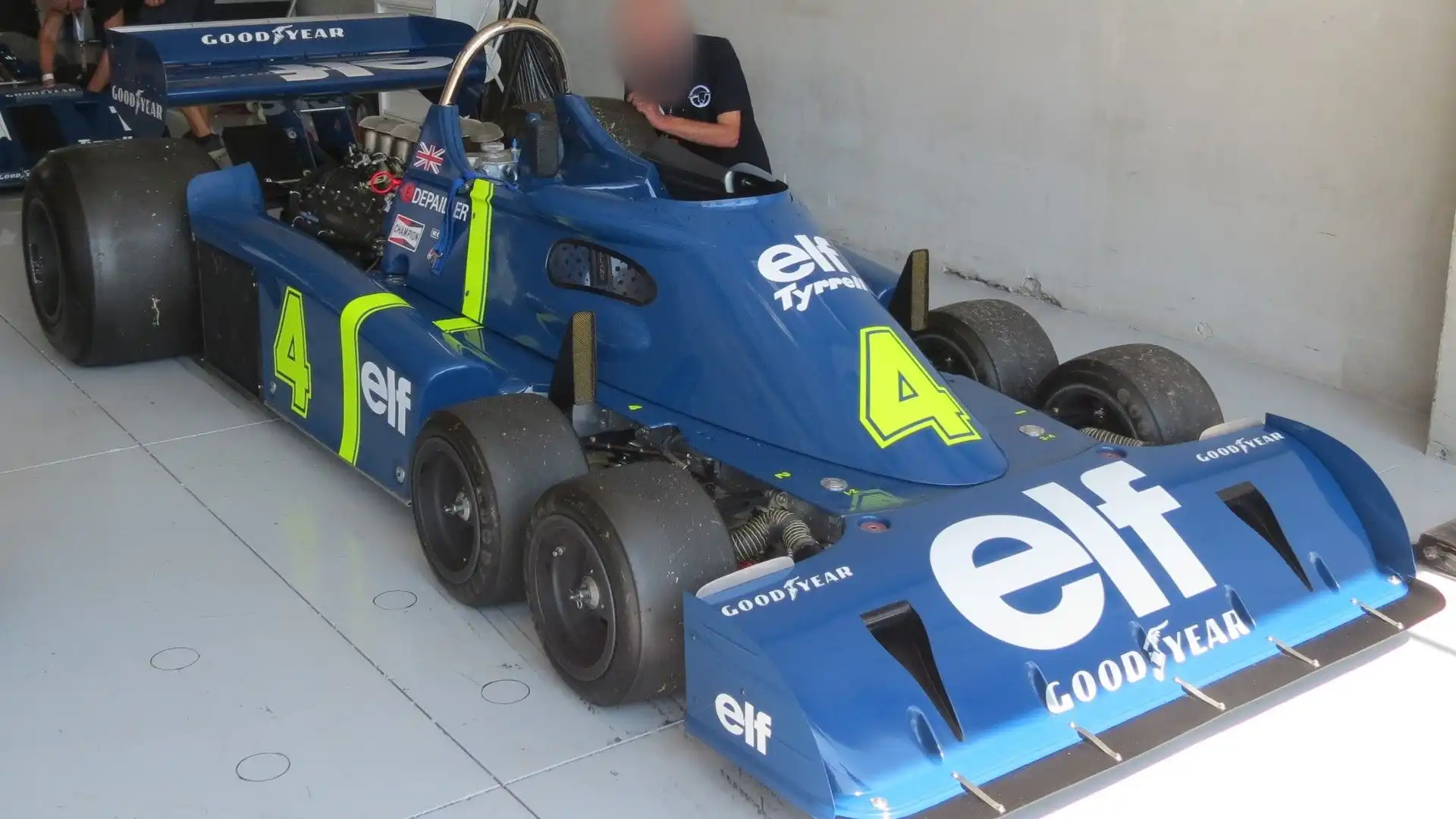
Few cars, probably none, were as daring as the Tyrrell P34, the only six-wheeled single-seater ever seen racing in Formula 1. To this day it remains one of the most curious and debated designs in motorsport history, and at races reserved for historic cars they are among the most admired and photographed models.
As was often the case in the fabulous 1970s, it all stemmed from an ingenious interpretation of the regulations. However, the rule limiting the width of the front wing to 1.5 meters left the wheels uncovered, exposed to the air and thus penalizing aerodynamically. Designer Derek Gardner took the opportunity to change the rules of the game. The idea was to reduce the size of the front wheels to hide them behind the wing, compensating for the smaller contact area by adding two more wheels in front.
A brilliant, but complex solution. Only one pair of wheels was directly connected to the steering, while the other was synchronized via a mechanical system. The front suspension was bulkier, and portholes in the bodywork were also needed to allow drivers to see the wheels and set trajectories.
The P34 was unveiled in 1975: at first it looked like a normal single-seater, but when the shroud was removed, the four small front wheels left everyone speechless, including the drivers, South African Jody Scheckter and Frenchman Patrick Depailler.
Doubts about a possible publicity stunt vanished in 1976, when the car debuted in competition. Despite the misgivings associated with such a revolutionary design, it immediately proved competitive: Depailler qualified third, behind the two who would play for the World Championship until the last race, the Fuji race in Japan, James Hunt and Niki Lauda.
The first chance to score points, however, faded due to a brake-related retirement. However, a surprising result came in Monaco, with both Tyrrell cars on the podium. The high point, however, was the Swedish Grand Prix: Scheckter started on pole and, after the retirement of ‘Bigfoot’ Mario Andretti, the team scored a historic one-two. At the fourth race, the P34 became the only six-wheeler to win a Grand Prix.
At the end of the season, good results came in the standings, but there was no shortage of criticism. Depailler appreciated the car’s originality, while Scheckter, despite successes and podiums, judged it negatively and left the team.
There was no shortage of limitations. The P34 worked well on fast tracks, but suffered on bumpy tracks, where the grip of the four front wheels became erratic. Braking was also effective on straights but unpredictable in corners, due to the variable behavior of the front end.
In 1977 came an updated version, the P34B, wider and heavier, but less effective. Grip and braking problems led to disappointing results. Attempts at improvement, such as increasing the track width, ended up undermining the original concept. A further obstacle was the insufficient development of the small front tires, which created an increasingly obvious imbalance with the rear end. Eventually, Tyrrell abandoned the project, returning to a traditional configuration in 1978.