Startups and research, 'Seven Ideas to Change Italy' raises curtain on second edition
Starting today, May 7, 2026, the call for proposals for the second edition of ‘Seven Ideas to Change Italy,’ an initiative promoted by ‘L’Espresso’ aimed at startups and companies in the very early stages of development, is open. The context in which the initiative is set is that of a growing ecosystem: according to Cribis/CRIF data updated to January 2026, 11,090 innovative startups are registered in Italy, realities that in the first five years of activity show a 229 percent increase in employment, more than double that of new non-innovative companies (+113 percent, source ISTAT).
The initiative makes available 280,000 euros in advertising credit to be divided among seven selected projects. Applications are open at setteidee.com until 11:59 p.m. July 8, 2026. “Often there are no resources left to communicate, and thus enhance, that same idea. Our initiative wants to contribute to the entrepreneurial fabric of the country, supporting the new levers of entrepreneurship,” explained the editor of ‘L’Espresso,’ Emilio Carelli.
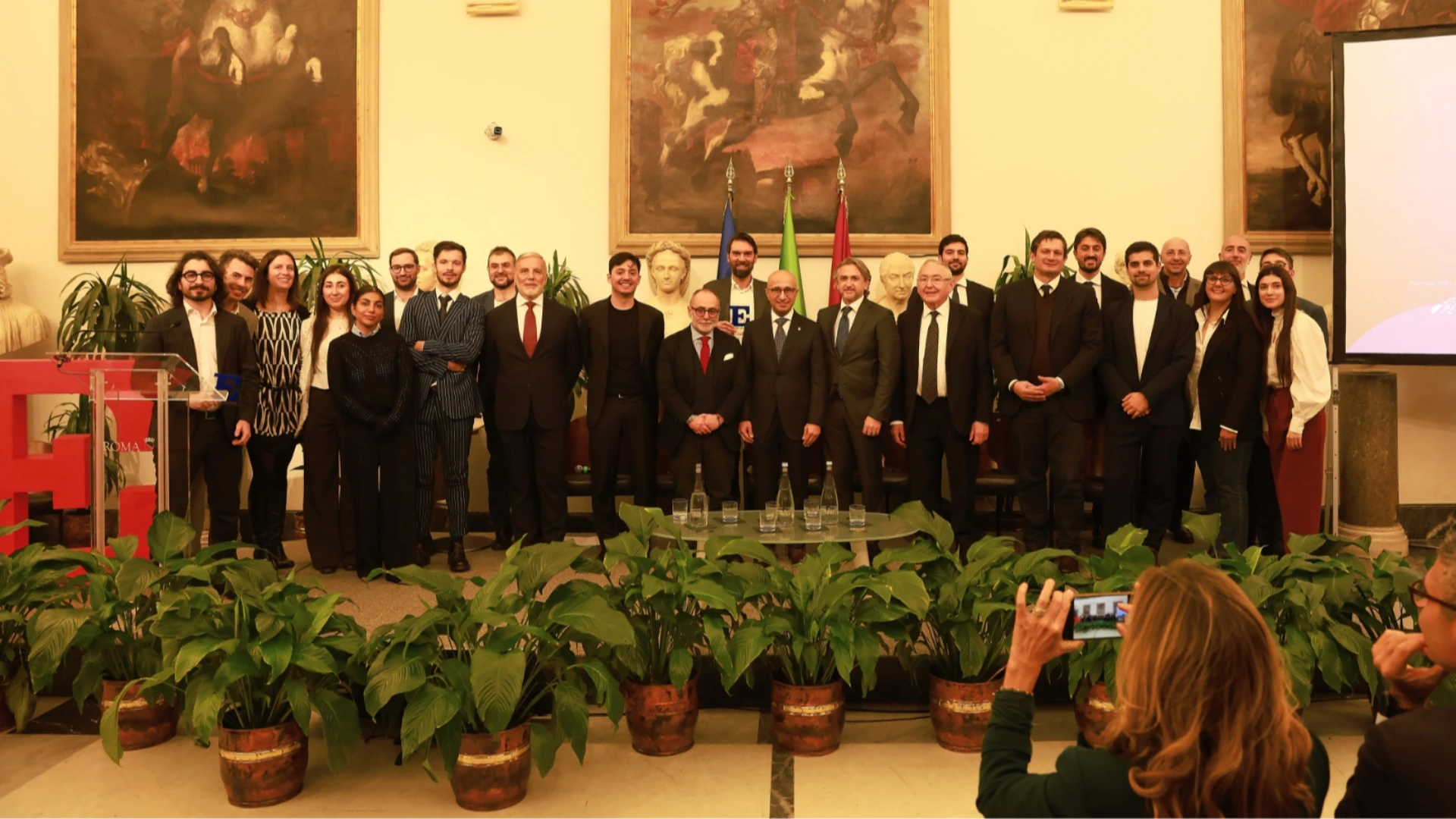
The 2026 edition is sponsored by the Ministry of Environment and Energy Security and involves several industry partners. Several public events are also scheduled, including the Pitch Competition on Sept. 16 and 17 at STEP FuturAbility District in Milan and the Final Award on Dec. 9 in the Sala della Protomoteca in Campidoglio.
Nominations can be submitted in seven thematic areas: Design, Living & Hospitality; Future Mobility & Transport Systems; Energy, Infrastructure & Critical Assets; Tourism & Food/Wine Supply Chains; AI, Industry 5.0 & Space Economy; Finance, Fintech & Insurtech; and Education, Health, Wellbeing & Longevity. Projects will be evaluated by independent juries according to five criteria: social and environmental impact (30 percent), innovation of the model (25 percent), soundness of the business model (20 percent), team skills (15 percent), and scalability (10 percent).
The second edition also opens up to academia: in addition to startups and innovative companies, teams of researchers, professors, doctoral students and fellows from universities, polytechnics and public research institutions can participate. Among the institutions involved is the University of Naples Parthenope, which stresses the importance of the link between research and the production system.