Tour de France: The Real Danger Isn’t on a Bike—Emergency Protocol Is in Place
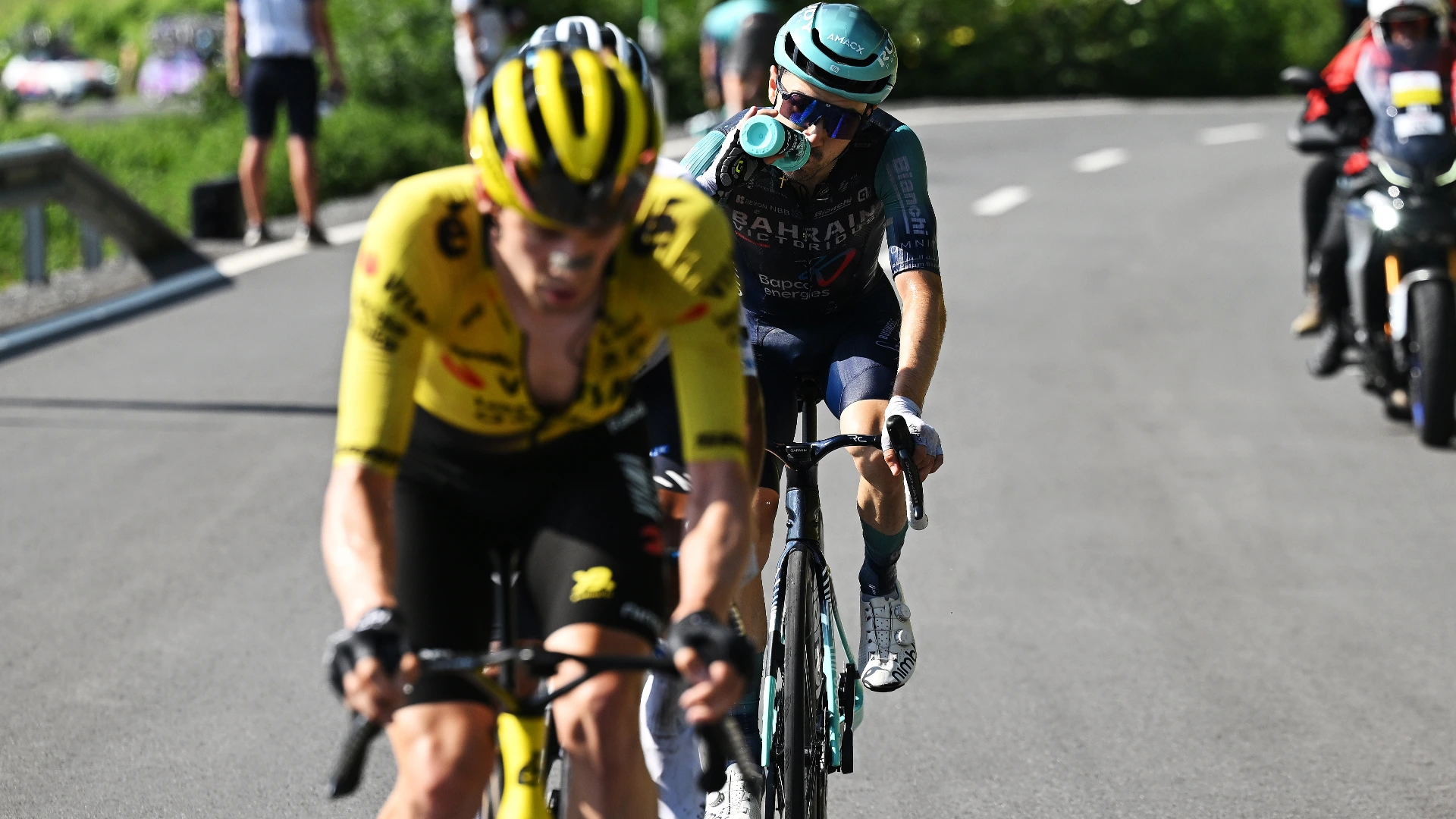
The 2026 Tour de France hasn’t even started yet, but a rather serious threat is already looming over the Grande Boucle. The extreme heat currently affecting Europe makes the possibility of major changes—not only to the route but also to the schedule—not so far-fetched, with very little notice: Moreover, a new surge in the heat wave that is causing difficulties across Europe is forecast for the very first week of the race and risks putting riders, staff, and organizers under pressure.
Speaking to ‘L’Equipe’, the Tour de France’s technical director, Thierry Gouvenou, made no secret of his concern: “It’s an issue that worries us,” he told the French daily without mincing words. The month of July could turn into a meteorological minefield, and the 2026 edition risks becoming the first to face the UCI’s emergency protocol.
Introduced in 2024, the protocol outlines a five-color risk scale based on the WBGT index (Wet Bulb Globe Temperature, the benchmark for assessing heat stress and its effects on the human body). White indicates a very low risk, yellow a moderate risk, orange a moderate-to-high risk, and red a high risk: if confirmed, the latter may allow the organizers to shorten, neutralize, or even cancel the stage.
The critical threshold is set at 28°C WBGT (between 38° and 45° C depending on humidity, wind, and UV rays): beyond this limit, the runners’ safety can no longer be guaranteed. The organizers have already defined a series of measures based on risk conditions: from early refreshment stops starting at km 0 to additional motorcycles carrying water and ice for the athletes, from shaded areas at the start to extending time limits to avoid eliminations due to the heat. Many of these measures, incidentally, have been implemented in the French national championships.
The Union of French Professional Cyclists (UNCP) had proposed moving the start of each stage up to 9 a.m. so that riders would not finish later than 2:30 p.m., but Christian Prudhomme, the head of the Tour de France, had ruled out this possibility, explaining that the Tour involves over 28,000 people—including police officers, firefighters, and gendarmes—whose permits are tied to specific times. Rescheduling everything is technically impossible, except for minor adjustments.