2026 World Cup: Donald Trump and Gianni Infantino Shake Hands
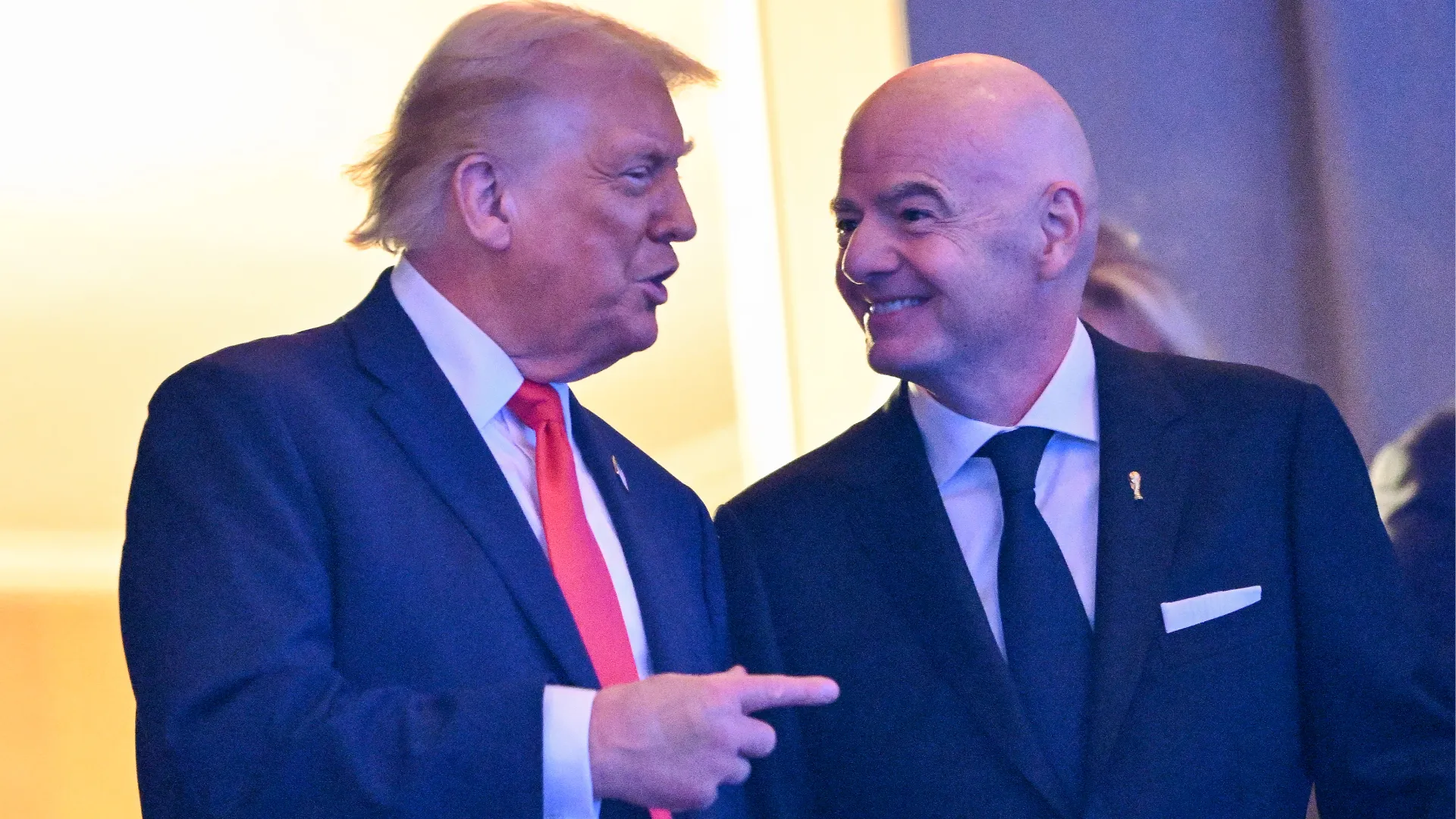
What happened last night in Italy doesn’t seem to bode well for U.S. President Donald Trump (who also found time to attack Giorgia Meloni once again) and, consequently, for his friend Gianni Infantino, the head of FIFA.
Of the three host countries for the World Cup, two have already given up hope of lifting the most coveted trophy: first, Canada was eliminated from the competition, overwhelmed by a Moroccan team that was in a different league compared to Jonathan David and his teammates, and then Mexico was knocked out by England.
The United States, which has almost magically rediscovered Folarin Balogun, will face Belgium, coached by Rudi Garcia—a familiar face in Italian soccer—a team that seemed to be on the ropes but turned the tables against a naive Senegal: good things come in threes, and both Trump and Infantino are rubbing it in.
Balogun’s presence on the field, however, is not the result of sporting luck, but rather of a decision as sensational as it is controversial. FIFA has suspended the Monaco forward’s suspension by applying, for the first time in World Cup history, Article 27 of its Disciplinary Code, which allows a suspension to be converted into a sort of “probation.” Balogun had been sent off in the match against Bosnia for a tackle on Muharemovic, and it seemed certain he would have to sit out the next game. But that’s not the case: he will be able to take the field against Belgium as usual, with his suspension suspended during a probationary period.
The decision has inevitably fueled suspicion and controversy, especially in light of Trump’s public thanks to FIFA on social media: “Thank you to FIFA for doing the right thing and righting a great injustice!” According to the New York Times, the FIFA Disciplinary Committee’s decision was reportedly influenced by a direct phone call between the White House and the organization’s leadership. In the days leading up to the decision, Senator Marco Rubio had also called the red card “an injustice,” calling for intervention.
Belgium, for its part, did not take the decision lying down. The Belgian Football Association said it was “stunned” by the decision and announced that it was evaluating all possible options, including legal action. According to the association, FIFA’s decision would conflict with Article 66.4 of the Disciplinary Code, which stipulates automatic disqualification in the event of a red card—a principle also reaffirmed by Article 10.5 of the Competition Regulations and a circular sent to all federations prior to the tournament. The Belgian press, without mincing words, has openly spoken of favoritism toward the home team.