World Cup: A U-turn Isn’t Enough—Names Are Already Being Considered to Succeed Gianni Infantino at FIFA
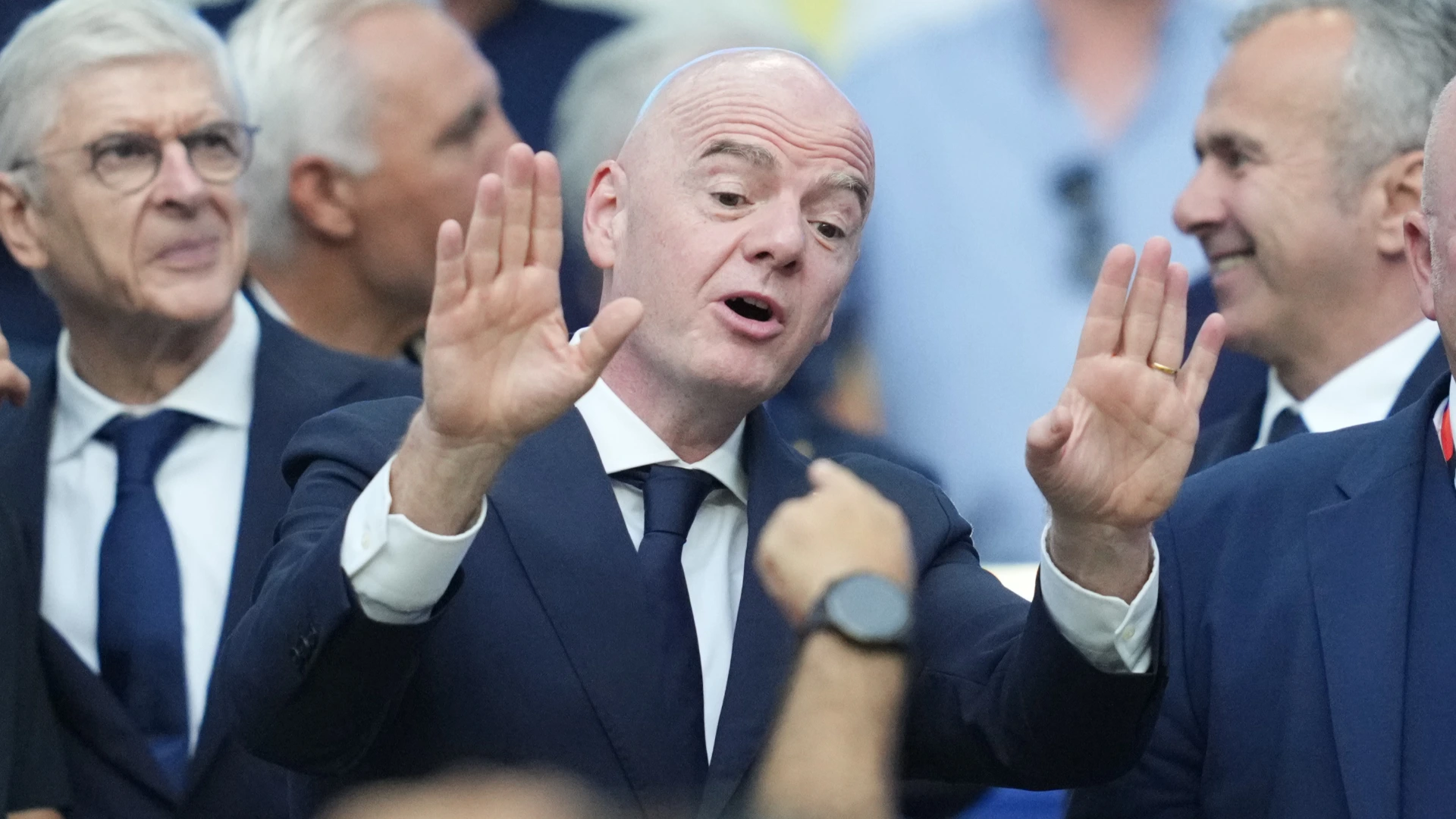
FIFA and Gianni Infantino are backing down from the heavily criticized plan to “privatize” the World Cup, but that may not be enough. In a statement, UEFA expressed its relief that the plan has been shelved, thanking practically everyone except the head of world soccer himself. With just over six months left in his term, he is more on edge than ever. In fact, there is no shortage of names of those who could replace him.
“UEFA,” the statement reads in its opening lines, “thanks all the fans, leagues, clubs, players, individual citizens, federations, and confederations who opposed this project, along with the many prime ministers, heads of state, and commentators who demonstrated to the FIFA president that soccer is not for sale. We cannot continue like this, with secret projects pushed through on an accelerated timeline, orchestrated by faceless individuals and offering dubious benefits for the sport.”
And that’s not all. The statement, in fact, takes an even stronger stance against Gianni Infantino, though it does not explicitly name him: “We must identify those responsible and hold them accountable for their actions. It is only right that, in the coming days and weeks, UEFA work with its member associations and in close cooperation with other confederations to reflect on how this could have happened and to develop a plan to ensure it cannot happen again. This analysis must be thorough and far-reaching. No option should be ruled out. FIFA’s current leadership has lost not only UEFA’s trust but also that of many other members of the soccer family.”
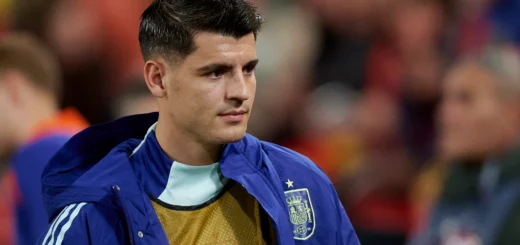
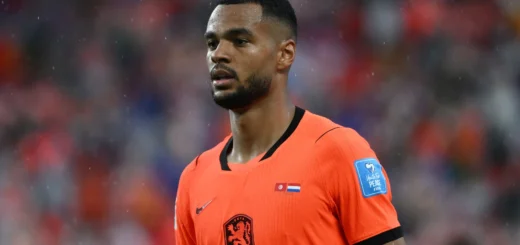
As March 18, 2027, approaches—the day Infantino aims to secure his fourth re-election as FIFA president—increasingly credible candidates are emerging to succeed him. There has been much talk of Nasser Al-Khelaifi, who, in addition to being president of Paris Saint-Germain, heads European Football Clubs. From the same geographic region comes the head of the AFC, Salman bin Ibrahim Al Khalifa, but the rest of the world is also mobilizing. Enter Victor Montagliani from CONCACAF, a rising star who appears to have the edge over the evergreen Aleksander Ceferin. The UEFA president has “regained ground” in recent weeks, but in Europe he could face competition from Dariusz Mioduski, who, according to AdnKronos, is favored by influential federations such as Norway, Sweden, Bosnia, and above all Spain and Germany.
To understand the scope of the crisis that has engulfed Infantino, it’s worth retracing the key stages of a story that unfolded in just a few days. It all began with a revelation in *The Times* that exposed the plan for FIFA Forward Enterprise (FFE): a new company controlled by FIFA but 20% owned by external investors, including the U.S. bank JP Morgan and the Thrive Capital fund led by Joshua Kushner, brother of Jared, Donald Trump’s son-in-law. The overall project was valued at $20 billion, with the 211 national associations asked to vote by September 19: those who approved it would have had access to a $10 billion funding package, while those who refused would have remained tied to the Forward project, whose budget was capped at $2.7 billion. In addition, Infantino had promised each participating federation a one-time bonus of $20 million, with annual contributions for the following four-year period set to jump from $2 million to $5 million—an irresistible offer, especially for smaller countries. A proposal that his critics did not hesitate to describe as a veritable ultimatum.
The response from the soccer world was virtually unanimous and immediate. UEFA convened an emergency council meeting with all 55 European federations, threatening to boycott all FIFA tournaments—the World Cup foremost among them—if the proposal were not withdrawn in its entirety. CONCACAF and the AFC joined Ceferin in his stance, the latter led by none other than Salman bin Ibrahim Al Khalifa, now among the frontrunners to succeed Infantino. Only the African CAF had sided with FIFA, while the South American CONMEBOL remained on the sidelines. Even from within the international federation itself, devastating signals had emerged: Carlos Cordeiro, the president’s right-hand man and chief advisor, had announced his resignation in a scathing statement, declaring himself “categorically opposed” to the plan and calling it “bad for FIFA’s member associations, bad for soccer, and bad for the long-term future of soccer.” FIFA’s COO, Kevin Lamour, had also distanced himself from the plan.
On the political front, the figure of Donald Trump had loomed large throughout the crisis, given the Kushner family’s involvement in the operation. The U.S. president, however, when asked during a press briefing whether he had spoken with Infantino about the project, replied with a curt “No”—a single syllable that left FIFA’s top official even more exposed and alone in the midst of the storm. Infantino himself, for his part, had attempted to defend himself publicly via a video on his Instagram profile, describing the FFE as “a proposal, an opportunity—not an obligation,” and emphasizing how the initiative could unlock “the potential of our sport in every corner of the world.” But he had carefully avoided addressing the Trump issue—a silence that had not gone unnoticed.
Now that the project has been formally shelved, Infantino’s official statement refers to “divisions” that arose around the proposal and reaffirms the intention to “bring all stakeholders together in the spirit of shared interests.” These words, however, sound like a belated attempt to mend rifts that are now deep. UEFA has been explicit: “The current FIFA leadership has not only lost the trust of UEFA, but also that of many other members of the soccer family.” With the elective congress scheduled for March 18, 2027, Infantino still has a few months to attempt a political comeback. But the united front that has formed against him—from continental confederations to national governments, and even his own staff—suggests that the path to a fourth reelection is now more arduous than ever.