Italy, Too, Distances Itself from Gianni Infantino’s FIFA: The FIGC’s Statement
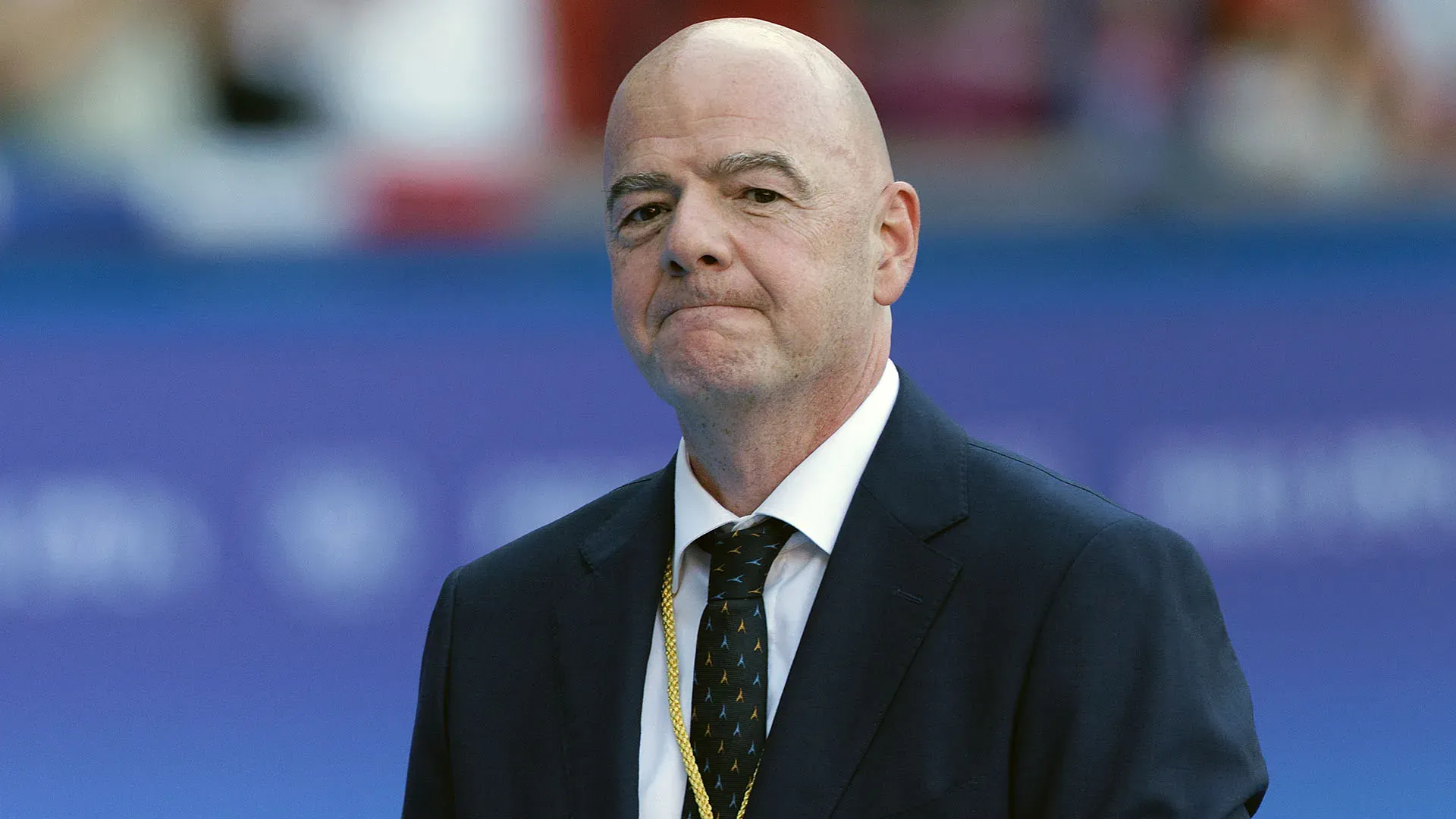
Italy, too, is turning its back on Gianni Infantino’s FIFA—a move already seen in recent weeks by other federations and confederations. The Italian Football Federation itself made this official in a statement released on Wednesday, which clearly states its intention not to support the Swiss executive’s re-election to the helm of world soccer.
“The Italian Football Federation,” the statement reads, “has decided to withdraw its support for Gianni Infantino’s candidacy in the FIFA presidential election scheduled for March 2027. This decision is intended to clearly and transparently express the FIGC’s position—in full agreement with UEFA and its president, Aleksander Ceferin—regarding recent initiatives promoted by the FIFA president concerning the governance and development of international competitions.”
“We will continue to work alongside UEFA and the other European federations to promote a vision of soccer based on merit, solidarity, sustainability, and the central role of fans,” said FIGC President Giovanni Malagò, as quoted in the press release. “We identify with a model of dialogue, listening, and shared responsibility that has, until now, allowed soccer to grow, innovate, and at the same time defend its founding principles.”
The FIGC’s stance comes amid growing isolation for Infantino, who in recent weeks has seen his base of supporters gradually crumble. As early as the beginning of August, UEFA, CONCACAF, and the AFC had signed a scathing joint statement, asserting that “soccer does not belong to any individual” and accusing the FIFA president of betraying the federations’ trust “through deception.” According to the three confederations, the World Cup privatization plan—which was later abandoned—was not the result of a communication oversight, but rather “a strategy aimed at limiting oversight,” pushed through on a tight timeline and without adequate consultation.
At the heart of the dispute lies the failed FIFA Forward Enterprise plan: a new company controlled by FIFA but 20% owned by external investors, including the U.S. bank JP Morgan and the Thrive Capital fund led by Joshua Kushner, brother of Jared, Donald Trump’s son-in-law. The overall project was valued at $20 billion, with the 211 member associations required to vote by September 19: those who approved it would have had access to a $10 billion funding package, while those who refused would have remained tied to the Forward project, whose budget was capped at $2.7 billion. A plan that Infantino’s critics did not hesitate to describe as a veritable ultimatum.
The revolt was not limited to the continental confederations. New Zealand, too, officially withdrew its support for Infantino, calling for an independent review of his leadership. “After careful consideration, the NZF believes that certain decisions and actions within FIFA have contributed to a loss of trust and exacerbated divisions in international soccer,” stated the New Zealand federation, emphasizing the need for “stronger governance, greater accountability, and greater transparency”. The FIGC is thus the latest, in chronological order, on a rapidly growing list of federations.
Donald Trump, however, has come to Infantino’s defense, calling the idea of forcing the FIFA president to resign a “terrible mistake” on Truth Social and arguing that the organization “would never have had the same success or the same profits without Infantino.” This support, however, does not seem to have changed course, partly because the President of the United States himself, when previously asked about the plan to privatize the World Cup, had responded with a blunt “No” to those who asked if he had been informed: a single syllable that weighed like a boulder on the entire affair.
With the elective congress scheduled for March 18, 2027, the names of Infantino’s possible successors are becoming increasingly concrete. Among the frontrunners are Nasser Al-Khelaifi, president of Paris Saint-Germain; AFC President Salman bin Ibrahim Al Khalifa; and CONCACAF President Victor Montagliani. Aleksander Ceferin’s name has not been ruled out either, although in Europe he could face competition from Dariusz Mioduski, who has been named the preferred candidate by influential federations such as Norway, Sweden, Spain, and Germany. The path to a fourth re-election for Infantino now appears more arduous than ever.