Photo Finish: Controversy Erupts Over the Ciccone-Evenepoel Case
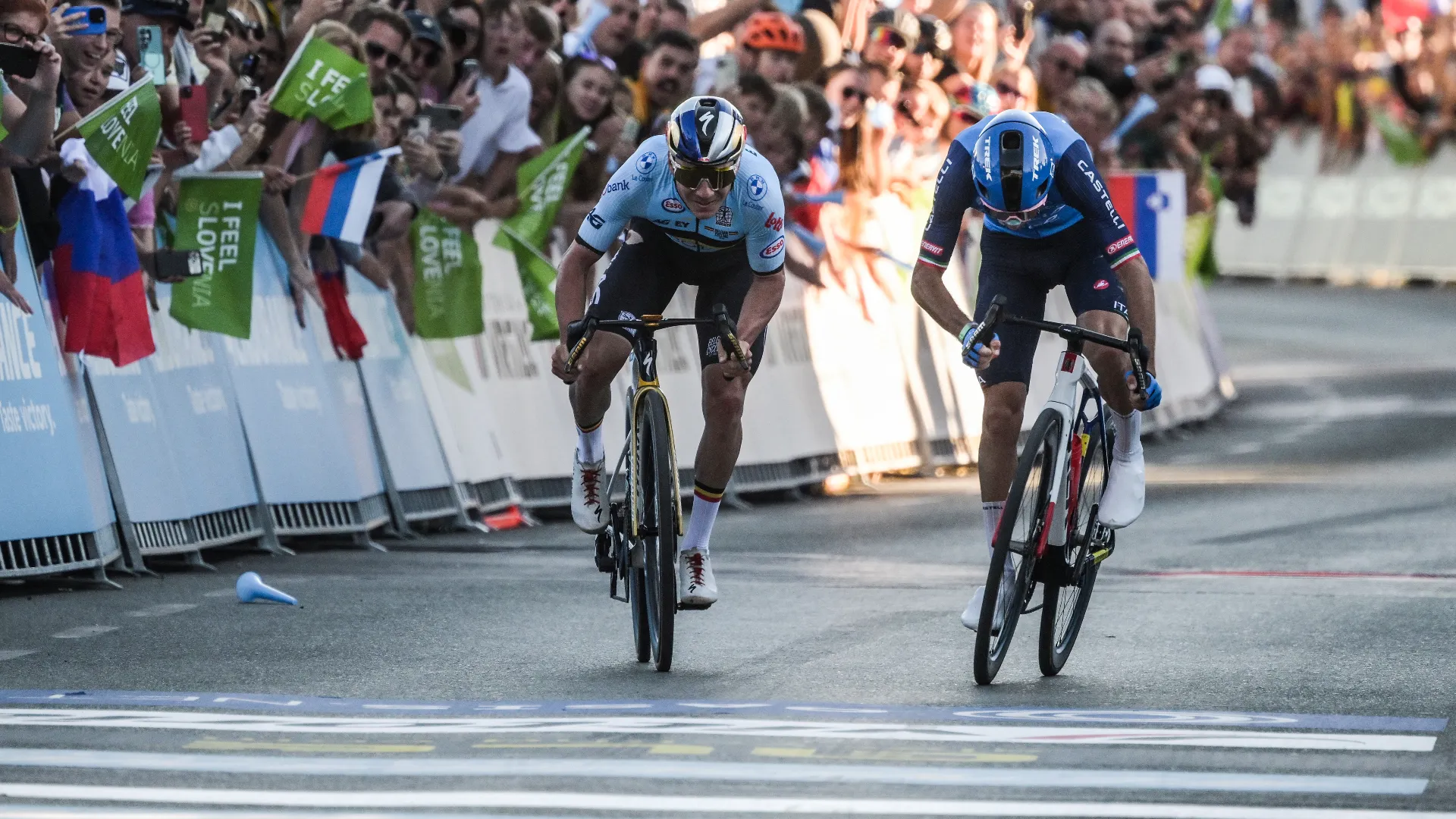
A finish decided by a matter of millimeters was bound to spark debate. The photo finish that awarded the victory to Remco Evenepoel ahead of Giulio Ciccone sparked hundreds of comments on social media, ranging from those who accept the verdict without reservation, to those who question the image shown, and those who, quite simply, would have preferred a tie.
The point that has fueled the controversy the most is the photo-finish line. Some users claim that in the image it appears tilted or, at any rate, unconvincing compared to the road’s perspective. ““There’s something strange,” writes one fan, while another openly refers to an “incorrect perspective.” There are also those who wonder why the usual white finish line markings aren’t clearly visible in the images that have circulated—markings that, according to the most skeptical observers, would have helped interpret the finish more accurately.
On the other hand, however, there are many who reject any suggestion of error or manipulation. The point is repeated several times: the photo finish is not a normal photograph of the finish and cannot be interpreted simply by observing the perspective as one would with a television still image. “There are judges, and that’s enough for me,” writes one user. Another cuts to the chase: “The photo finish speaks for itself.” And there’s no shortage of irony, with a barrage of “Conspiracy!” directed at those who suspect irregularities.
In reality, reading through the comments, the discussion quickly shifts from the photo finish to Ciccone’s own sprint. For many, the real regret isn’t the line drawn on the image, but the late surge. According to this interpretation, Evenepoel handled the very last centimeters better, managing to get his wheel in front at the exact decisive moment. “He timed his final surge wrong and lost—there’s not much else to say,” is one of the most common assessments. Some also point out that Ciccone stopped pushing too early, allowing the Belgian to complete a comeback that had seemed hopeless by then.
Then there’s a third camp—those who don’t call it a steal but propose a rule change. Faced with virtually imperceptible time gaps, several fans are calling for the possibility of awarding a joint victory. “They could have given it to both of them,” writes one commenter, while another suggests introducing a minimum threshold below which two winners would be declared. This is probably the proposal that best captures the sentiment of those who accept the verdict but are left with a bitter taste in their mouths.
On one thing, however, most of the comments agree: Evenepoel didn’t steal anything, and Ciccone rode a great race. The Belgian is recognized by many as the rider who did the most work and as the strongest of the day. The Italian, on the other hand, is left with the immense regret of having come within a few millimeters of a prestigious victory.
And perhaps this is precisely the most accurate summary of the flood of reactions: when it takes a photo finish and a handful of pixels to separate first from second, the result goes down in the record books. The debate, however, continues for much longer.