Carlos Alcaraz pursues Jannik Sinner but doubts grow after candid admission
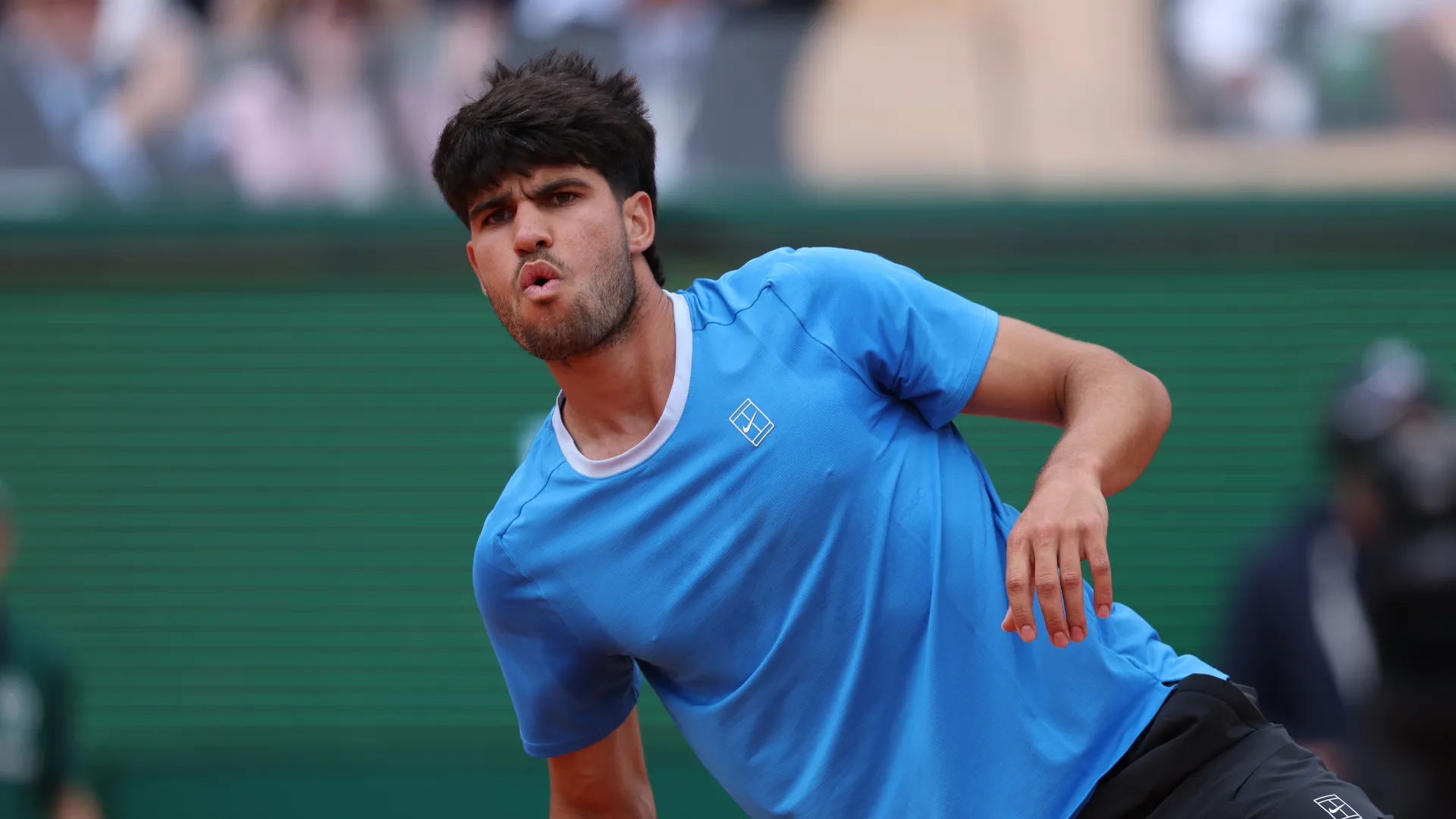
Was it worth it? Carlos Alcaraz admitted without hesitation that perhaps this week would have been ideal to stop, while stressing the special value Barcelona has for him. The Spanish tennis player stated this after his debut victory at the Conde de Godó tournament against Otto Virtanen, a match in which he had suffered a problem with his right wrist. Initially, the sensations did not seem worrisome, but subsequent examinations showed a more serious injury than expected, forcing him to withdraw from the ATP 500 in Barcelona.
This episode is part of a now-recurring trend: since he has steadily entered the tennis elite, Alcaraz has always tried to play the entire season on clay, which includes Monte Carlo, Barcelona, Madrid, Rome and Roland Garros. However, for the past five years, physical problems have systematically held him back during this period.
As early as 2022, after a complicated start in Monte Carlo, he managed to win in Barcelona and Madrid, but had to forfeit Rome due to an ankle injury, still making it to the quarters in Paris. In 2023, between hand and back problems, he skipped Monte Carlo, won again in Barcelona and Madrid, but at Roland Garros he stopped in the semifinals due to cramping against Djokovic. In 2024 a forearm injury forced him to skip his first tournaments on clay, and despite less than optimal conditions he still managed to win Roland Garros. Even in 2025, after a good start, he was stopped by a muscle problem in the Barcelona final, before returning to winning ways between Rome and Paris.
These episodes were compounded by other injuries, such as those suffered in Rio de Janeiro in 2023 and 2024. In essence, every clay court season has presented at least one physical problem for the Spanish tennis player.
One of the main reasons is the particularly tight schedule. About a week passes between the end of the Miami tournament and the beginning of Monte Carlo, and from there on tournaments follow one another without significant breaks. In 2026, for example, Alcaraz played the final in Monte Carlo and was already in Barcelona the next day for commitments and training, taking the court after just one preparation session. In some cases, going all the way in tournaments, a player can play up to 10 matches in less than two weeks.
The entire clay season can last up to six consecutive weeks of competition, followed by Roland Garros, which adds another two weeks. In an extreme scenario, a tennis player reaching all the finals could get to play about 35 matches in two months, a load that is difficult to sustain. In fact, some rivals, such as Jannik Sinner, choose to reduce the number of tournaments to better manage their energy.
In addition to the calendar, the rapid transition from hard surfaces to clay also affects the schedule. This change alters the biomechanics of movements, supports, and muscle load. Clay is softer and reduces direct impact on joints such as knees and ankles, but requires more muscle effort to stabilize the body. The slides typical of this surface particularly stress adductors and joints, increasing the risk of minor physical problems.
In addition, clay involves longer exchanges and longer matches than other surfaces. Points require more strokes, and matches can easily exceed three hours in major tournaments. This means more energy expenditure and greater exposure to injury.
All in all, Alcaraz’s case highlights how difficult it is to go through the entire season on clay without interruption. Between the tight schedule, surface characteristics and high physical exertion, the risk of physical problems is high. For this reason, his goal of playing and winning all tournaments on clay remains very ambitious and, in fact, extremely difficult to achieve.