Italy’s repechage to the World Cup: "Better to stay home"
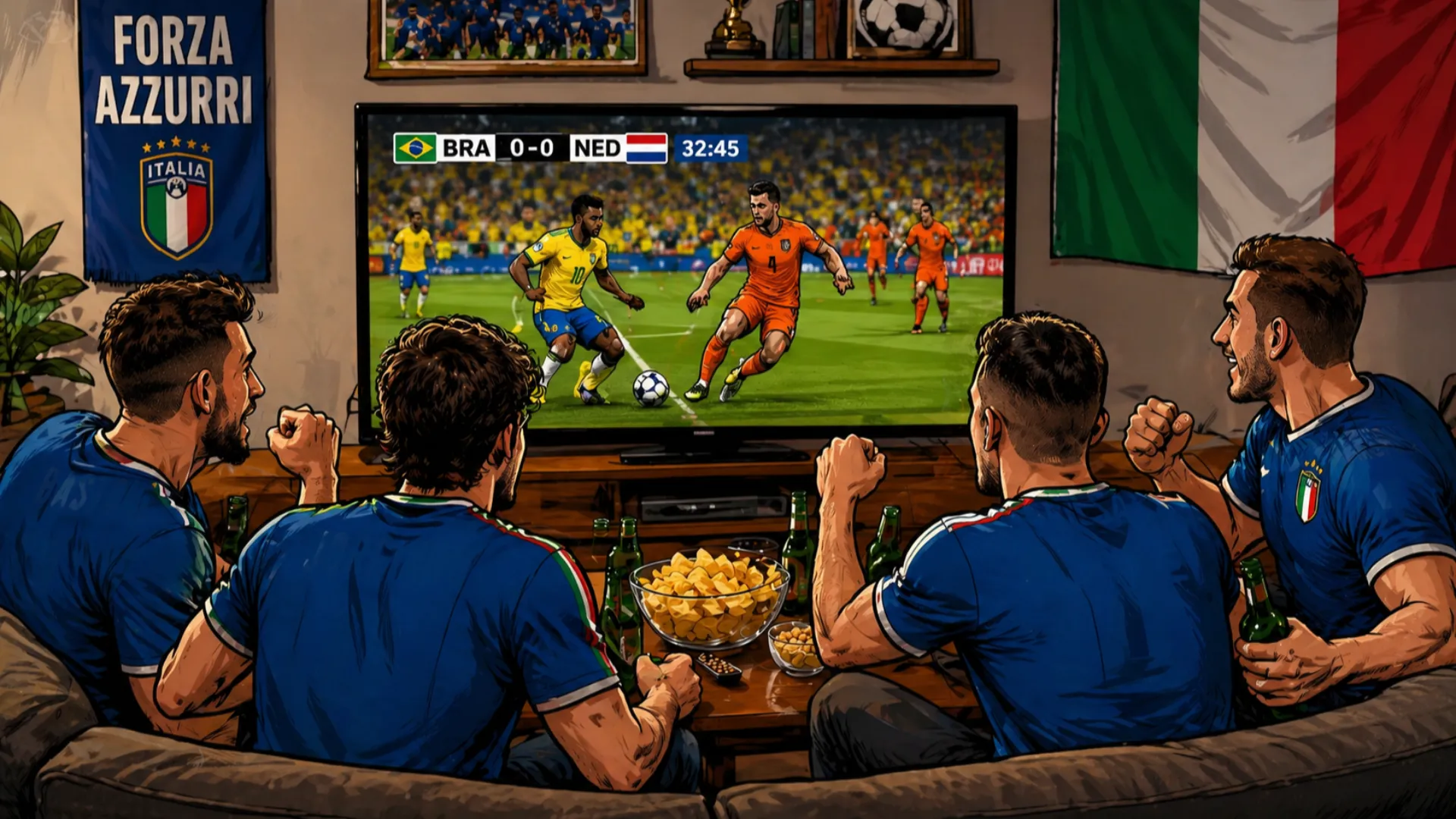
The evening at the Parc des Princes left its mark, not only in the history of the Champions League but also in the mood of Italian fans. While Paris Saint-Germain and Bayern Munich resulted in a pyrotechnic 5-4 worthy of a video game, in Serie A the most anticipated challenge of the last round, Milan versus Juventus, ended with a 0-0 poor in emotions. The confrontation on social media was immediate, harsh and without discount. And it also fueled the discontent of those who would not even want Italy’s eventual repechage to the World Cup: “Better to stay home.”
The numbers confirm the difference, especially in terms of pace and intensity. According to UEFA data, PSG players attempted 28 dribbles, succeeding 11, while Bayern players attempted 27 times, completing 17. In Serie A, by contrast, the average is much lower: 14.4 dribbles attempted and 6.2 successful per team per game. The same applies to touches in the opponent’s box: 72 total in Paris (including 52 by Bayern), compared to an average of 43.7 in the Italian league.
In Paris we saw an open game, made up of continuous tilts, accelerations and high-level individual plays. In San Siro, on the contrary, a cautious, blocked, almost fearful soccer was staged. On social media, the judgment was stark: “Abroad they really play,” “They make 5-4, we don’t shoot on goal,” “In Champions is another sport, in Italy you only think about not losing.”
The criticism is not only about the result, but mostly about the attitude. The impression is that many Serie A bigs, with few exceptions, approach these challenges with excessive caution, more focused on avoiding mistakes than on building play. The Paris semifinal was the opposite: nine goals, comebacks, individual duels and high pace throughout the match. Players like Khvicha Kvaratskhelia, Ousmane Dembélé, Michael Olise, Harry Kane and Luis Díaz tried to decide the race without fear of making mistakes.
“It’s not about expecting a 5-4 every week,” observed one fan under an official Champions League post. “The problem is to understand why our teams can no longer offer lively, intense and spectacular matches. They lack courage, quality in their choices and freedom to take risks.”
In this sense, PSG-Bayern almost becomes a symbol of modern soccer: fast, technical and unpredictable. A perhaps unique case, but enough to ignite increasingly insistent questions about the state of Italian soccer.