“Privatized” FIFA World Cup: Europe, Asia, and the Americas Corner Gianni Infantino
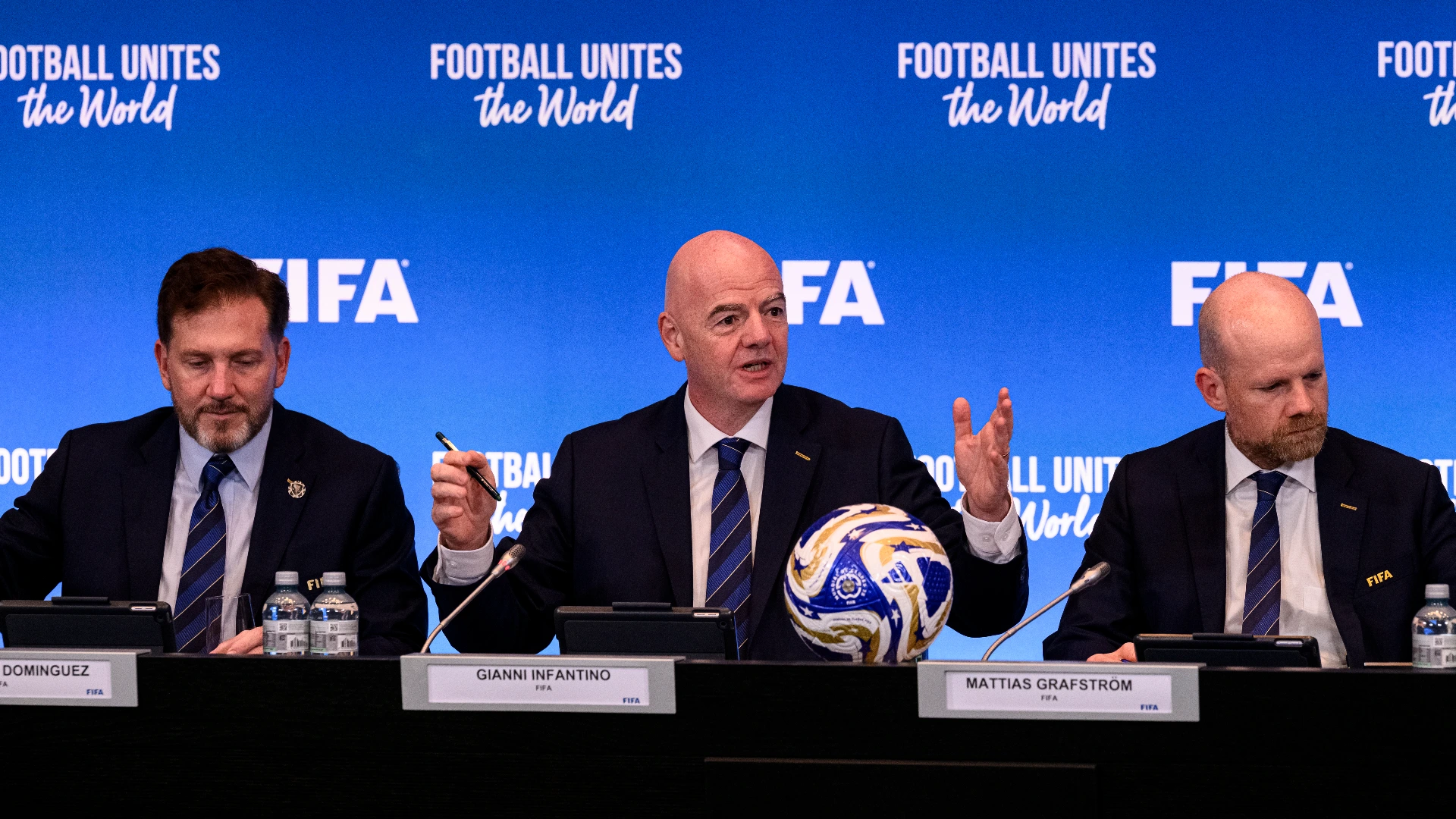
Gianni Infantino and FIFA are increasingly isolated, particularly regarding the controversial plan to privatize part of the World Cup by selling a stake to private investors. As has already come to light, these investors are clearly linked to the Kushner family and, by extension, to Donald Trump. After several statements and press releases, Monday marks a new chapter in the saga. According to ANSA, Europe, Asia, and North America have joined forces to “paralyze” the ambitions of the head of world soccer once and for all.
ANSA cites *The Times*, which reports that the presidents of UEFA, CONCACAF, and the AFC are determined to remove FIFA’s current leadership and have already devised strategies to be implemented should Infantino decide to run for a fourth term in the March 2027 elections. In this regard, the idea of a systematic boycott—not only of World Football Council meetings but also of the actual events themselves—is gaining traction. Starting with the possible creation of parallel international tournaments.
“Everyone is firmly convinced that Infantino must go, and if he doesn’t, we will take all necessary measures to remove him from power. This also includes the organization of future international competitions. Would the major South American national teams prefer to face France or Spain, or perhaps Lebanon or Djibouti?” commented a source close to the initiative’s promoters to ANSA, not without a certain amount of sarcasm.
The pressure on the FIFA president is therefore becoming increasingly suffocating, even on the legal front. According to a report in *The Telegraph*, UEFA has sent a formal letter to Infantino stating that it is “actively considering legal action, arbitration proceedings, and/or complaints to regulatory authorities” in connection with the FIFA Forward Enterprise project. Similar letters are said to have been sent to some of the key partners involved in the operation, including American entrepreneur Joshua Kushner, TripAdvisor CEO Greg Maffei, and JP Morgan. UEFA has also reportedly ordered FIFA to preserve all documents and electronic data related to the case to prevent any risk of destruction or alteration of evidence that could be used in potential future proceedings.
On the confederation front, CONCACAF — which brings together the 41 federations of North and Central America, including the U.S. Soccer Federation (USSF) — issued a statement in which, while welcoming the formal withdrawal of the FFE proposal, it further escalated its criticism of Infantino’s leadership: “The events of the past few days have brought to light something that can no longer be ignored: the future of the FIFA World Cup, the most precious asset of world soccer, has been decided outside any established governance framework, without transparency, consultation, or respect for established procedures. A proposal of this magnitude does not reach this stage by chance. It is a symptom of leadership that has ceased to put soccer first.” The statement concluded with a direct jab, though without explicitly naming Infantino: “The unity demonstrated by our member associations has reaffirmed that, when guided by courage, integrity, and sound governance, soccer will remain where it belongs: in the hands of soccer itself, not of a single individual.”
It’s worth noting how rapidly the crisis has unfolded over the past few days. It all began with a revelation in *The Times* that exposed the plan for the FIFA Forward Enterprise: a new company controlled by FIFA but 20% owned by external investors, including the U.S. bank JP Morgan and the Thrive Capital fund led by Joshua Kushner, brother of Jared, Donald Trump’s son-in-law. The overall project was valued at $20 billion, with the 211 member associations required to vote by September 19: those who approved it would have access to a $10 billion funding package, while those who refused would remain tied to the Forward project, whose budget was capped at $2.7 billion. Infantino had also promised each participating federation a one-time bonus of $20 million — with annual contributions for the following four-year period set to jump from $2 million to $5 million — incentives that were particularly hard to resist for smaller countries, but which his critics did not hesitate to label a full-fledged ultimatum.
With the elective congress scheduled for March 18, 2027—the day Infantino aims to secure his fourth reelection as FIFA president—increasingly credible candidates are emerging to succeed him. There has been much talk of Nasser Al-Khelaifi, president of Paris Saint-Germain and head of European Football Clubs. From the same geographic region comes the head of the AFC, Salman bin Ibrahim Al Khalifa. From CONCACAF, the name being mentioned is Victor Montagliani, who is rapidly rising in prominence and apparently holds an edge over Aleksander Ceferin: The UEFA president has regained credibility in recent weeks, but in Europe he could face competition from Dariusz Mioduski, who is cited as the preferred candidate by influential federations such as Norway, Sweden, Bosnia, and above all Spain and Germany. The united front against Infantino—ranging from continental confederations to national governments, and even his own staff—suggests that the path to a fourth reelection is now more difficult than ever.