Jannik Sinner at Roland Garros as a heavy favorite: the main unknowns
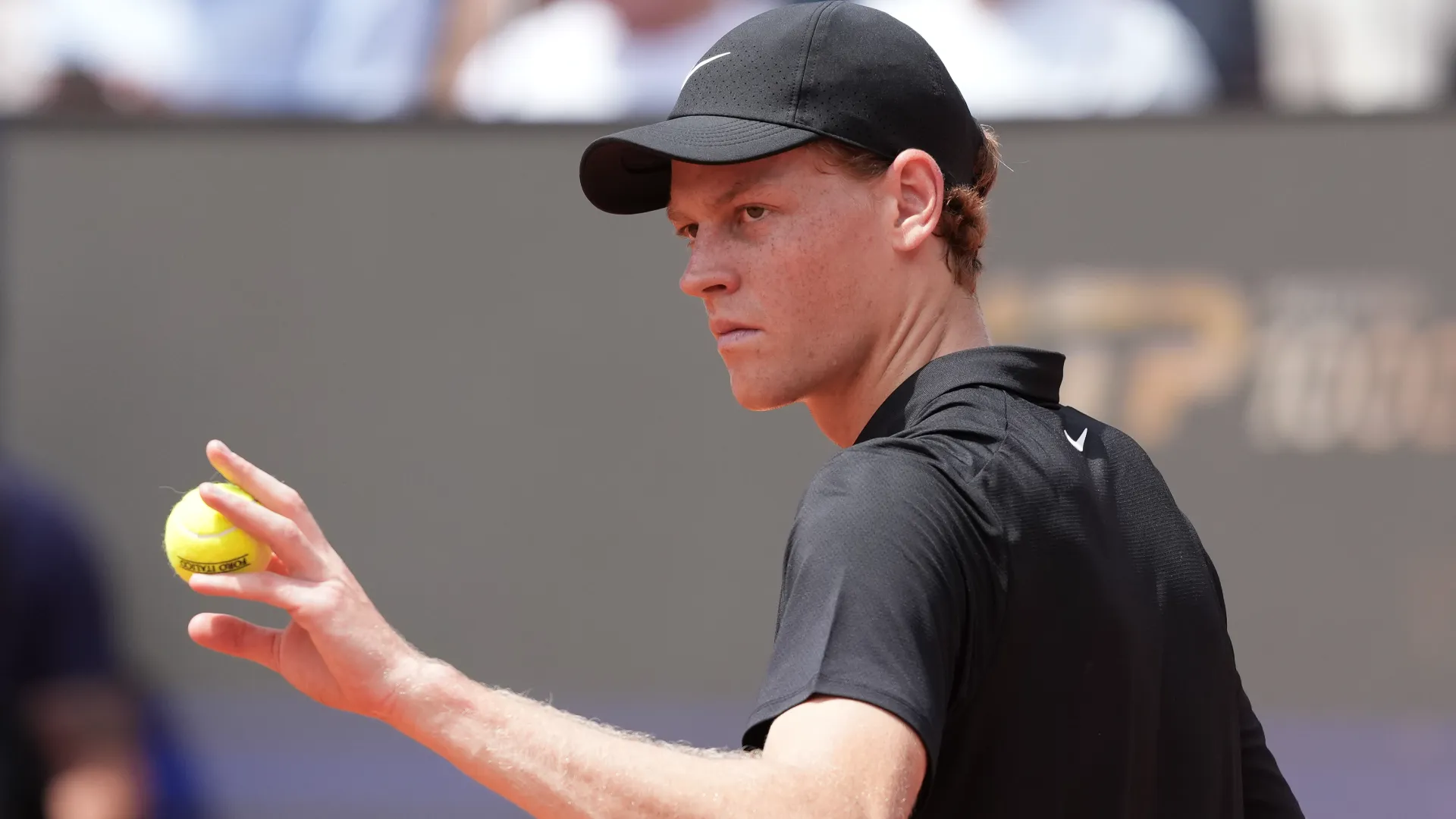
Jannik Sinner comes to Roland Garros 2026, where he will make his debut on Tuesday, May 26, against French wild card Clement Tabur, on the strength of impressive numbers and a particularly favorable slate. Indeed, the South Tyrolean is fresh off 29 consecutive victories, an unblemished path to 2026 on clay, and with the knowledge that he could face either Alexander Zverev or Novak Djokovic only in the final, with Carlos Alcaraz out of action due to injury. Yet there are aspects of the transalpine Grand Slam that the champion from Sesto Pusteria will have to keep an eye on in order to continue his dream season with another triumph.
In the meantime, already in the closing stages of the Rome Internationals, Sinner denounced a certain need for much-needed rest after months always at the forefront. At Roland Garros, as is well known, the game is played to the best of five and not three sets, an aspect that could derive a not inconsiderable specific weight. Especially since, to date, the Italian has won six of the matches so far in his career that have been resolved in the fifth set, while losing eleven. Of them, moreover, as many as three occurred precisely at Roland Garros: against Daniel Altmaier in 2023 and Carlos Alcaraz in 2024 and 2025. The latter case occurred in a very tense final, complete with a 7-6 win by the Spaniard in the deciding set after the three match points not taken advantage of by the South Tyrolean in the fourth.
The issue of physical management is, after all, at the center of the debate among insiders. Boris Becker, a six-time Slam champion, pointed out that the real challenge for Sinner is not technical but energetic: “This is the biggest challenge. I think he did well to go back to the mountains, to Sesto Pusteria. It is the best way to recharge his energy, stay away from the noise and choose to be with family and friends.” The German has no doubt that he needs a break even after Paris: “No matter the result: he needs to stop. What he is doing is almost inhuman; he is not a machine. He needs time to recover, physically and emotionally.” A line also confirmed by coach Simone Vagnozzi, who revealed how the schedule calls for a three-week break after Roland Garros before returning directly to Wimbledon, skipping preparatory tournaments on grass.
On the possible opponents front, it is Daniil Medvedev who is the one pointed to by many as the most concrete danger before a possible final. The Russian, who could cross paths with Sinner in the semifinals, has already shown in Rome that he can put the Italian in trouble, and he lucidly explained the complexities of facing him: “In a way, you already know what he will do. There is no formula against Jannik. You just have to hit the ball very well, preferably hard, run a lot and be ready for anything, because he is capable of making any shot.” Mats Wilander added further food for thought, singling out the evening sessions in Paris as a potentially tricky context: with the slower court and Medvedev’s shots being particularly heavy, accumulated fatigue could prove to be the deciding factor.
There is no shortage of voices outside the chorus in the eve’s context. Frances Tiafoe chose to go against the grain of the dominant narrative, urging the circuit not to give up psychologically before even taking the court: “He’s an amazing player, that’s beyond question. But I’m not going to be the one to add myself to those who put him on a pedestal. We players must first convince ourselves that beating him is possible: right now we are helping to create an aura around him, and that weighs too.” Words that take a good picture of the climate around the azure, now perceived – to use John McEnroe’s words – as “Sinner against the rest of the pack.”
Making the historical backdrop of this Roland Garros even more evocative is the comparison drawn by ‘ESPN Research’ analysts with Rafael Nadal in 2009: the only other player since 1990 to date to have come to Paris with a bookmakers’ quote lower than Sinner’s current one. Nadal arrived that year with 31 consecutive wins and four consecutive titles at Roland Garros, only to be resoundingly eliminated in the round of 16 by Robin Soderling. It is Nadal himself, when questioned by the ‘Gazzetta dello Sport,’ who extols the qualities of the Italian albeit with a note of caution: “It is always difficult to imagine a similar level of success and continuity. What he is doing is extraordinarily complicated: he has incredible consistency.” A veiled warning, that of the Manacor champion, which Sinner’s fans prefer to read as a tribute – in the hope that the similarities with 2009 will stop well before the round of 16.