Jannik Sinner sends a message to everyone: “It seems normal, but it isn’t.”
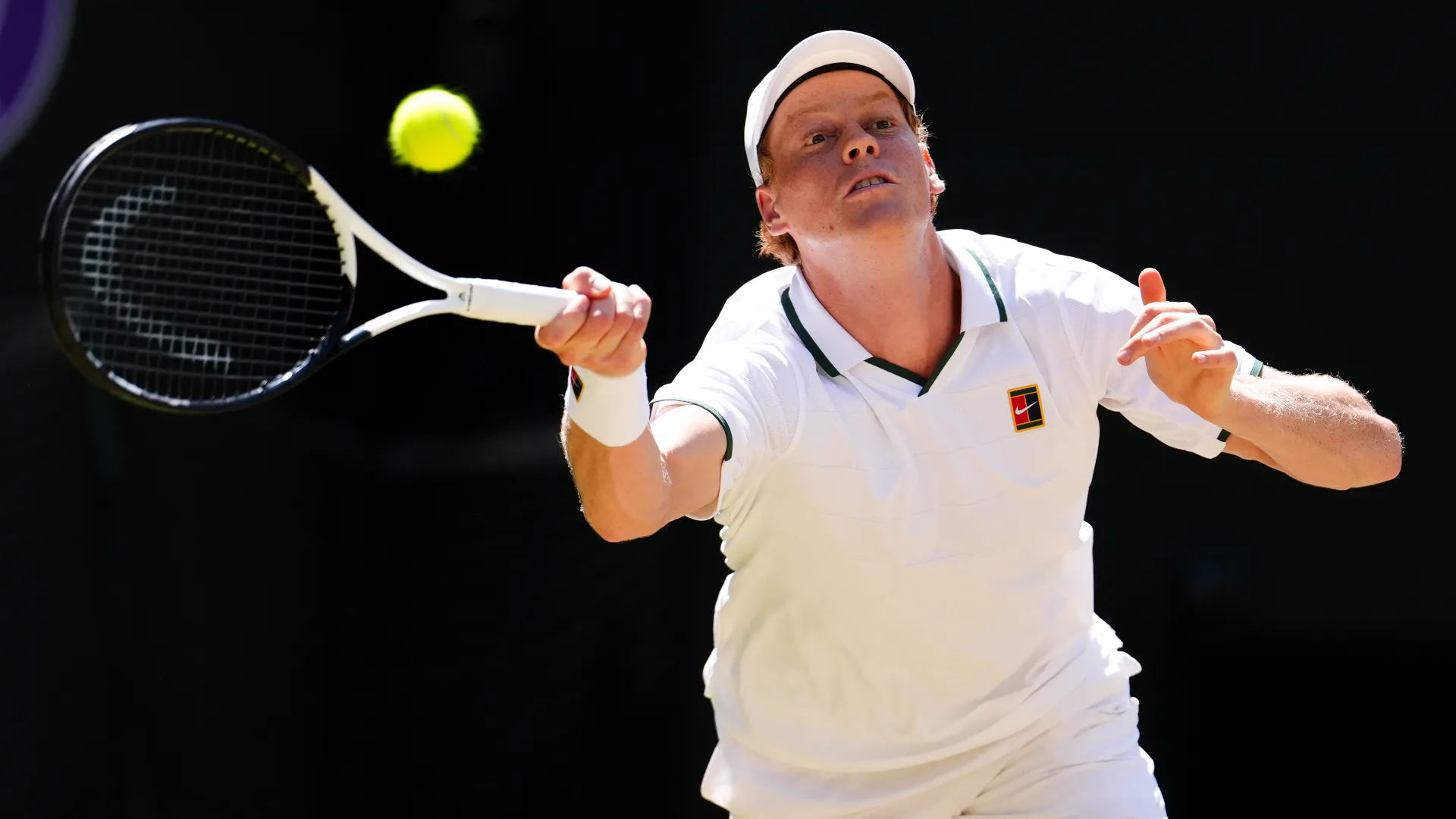
Jannik Sinner is already looking ahead to the Wimbledon semifinals after his three-set victory over Germany’s Jan-Lennard Struff in the men’s singles quarterfinals. The Italian is pleased with his performance so far, but he knows he’ll have to raise his game even further to secure a spot in the tournament’s final.
“I think that if I want to have a chance in the semifinals, I’ll have to raise my level a bit. I’m playing pretty well; every day it’s getting a little better. I’m trying to serve better and be more focused on my service games, and then on my return games, I try to stay in the moment. Today was a tough match; he started off strong, pushing hard from the beginning. I tried to hold my ground, then I loosened up and things went a little better, but there’s definitely room for improvement—and I’m pretty confident I can do it. I usually enjoy the big matches even more. I can’t predict the future, but I’m definitely serving better than last year, and that’s why I’m in the semifinals—on this surface, that’s important.”
Sinner then elaborated on the work he’s done in recent years on his serve, one of the fundamentals he considers crucial on the London grass. “If you get stronger, you feel more stable; we’ve worked a lot over the past two years. We’ve changed the motion, the ball toss, the timing—we’ve changed a lot of things, though not always in terms of speed. We’ve tried to use the right serve at the right moment; so far, I’m serving pretty well. Plus, it’s warmer this year, so the ball travels a bit farther. Still, I can be happy with my serve, even though on this surface the most important thing is the first-serve percentage—that can really help you build the confidence you need for your return games. We’ve had long discussions within the team about the serve, and we all agreed—not so much on the quantity but on the quality of the training sessions.”
Finally, the world No. 1 reflected on his relationship with pressure and the emotions that accompany the decisive moments of a Grand Slam. “I’m having fun; I’m 24 years old and I love playing tennis—otherwise I wouldn’t be here. There’s pressure, of course, and there are things I don’t enjoy as much, like press conferences, but I can’t change that, so I’m staying here to talk with you. As for everything else—going out on the court, the pressure—I train hard to step onto the court and try to give my best. Some days you’re happier, others less so, because you don’t sleep well or have some problems at home. But the further the tournament goes, the more I enjoy it, because playing in the quarterfinals of a Grand Slam might seem normal, but it isn’t—you have to beat strong players. It’s also important to enjoy the moment on the court; my team helps me out, but don’t worry—I still love playing.”