2026 World Cup, Spain Advances to the Final: France Falls Apart in Dallas
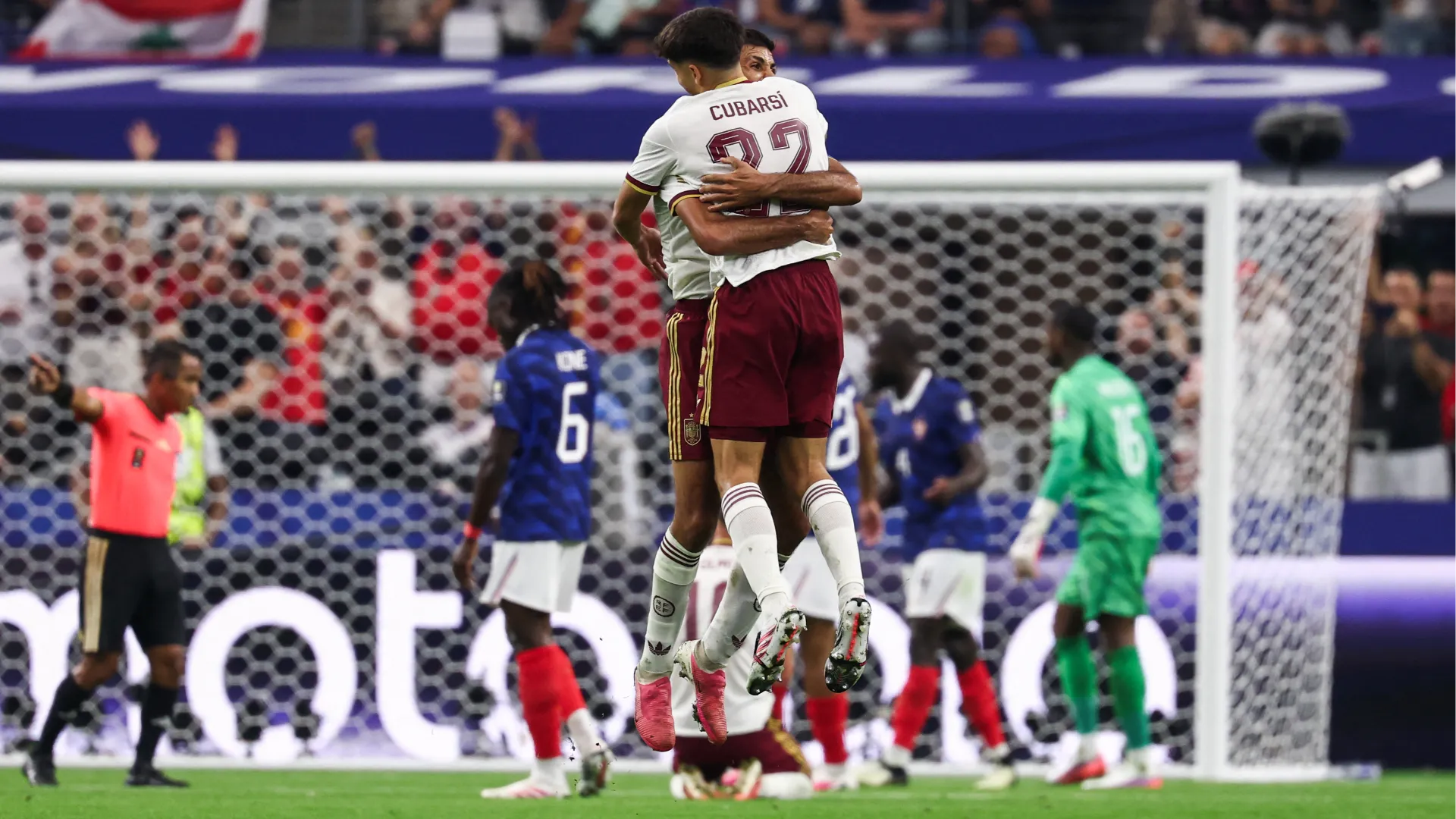
Spain is the first finalist in the 2026 World Cup. The Spanish team, which had already defeated France in the semifinals of Euro 2024, repeated the feat tonight in Dallas against Les Bleus once again and will return to the World Cup final for the first time since 2010 (when they were crowned champions). Coach Luis De La Fuente’s team won 2-0 with a goal in each half, following an absolutely dominant performance against the team led by Didier Deschamps. The French team, after having dazzled for much of their American campaign, suddenly fell apart and never really managed to respond to the goals by Mikel Oyarzabal and Pedro Porro. The highly anticipated Kylian Mbappé was particularly subdued.
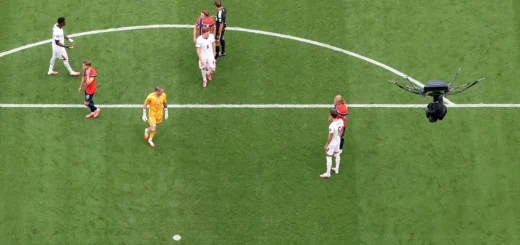
After a rather tense start to the match—in which Barcola and Koundé did stand out, however—the game turned in the 22nd minute: a wild mistake by Digne gifted Spain a penalty, which Oyarzabal converted without any trouble. Never before had Les Bleus found themselves trailing in the 2026 World Cup. France’s troubles only grew when, before the half-hour mark, Deschamps also lost Saliba to injury. Before halftime, Baena—on a direct pass from goalkeeper Unai Simon—and then Fabian Ruiz, following a sweeping attack, both came close to doubling the lead (in the latter case, Upemecano made a timely intervention). As time ran out, Mbappé produced a rare burst of speed, but his run onto Koundé’s long through ball was thwarted by a perfect and courageous rush off his line by the opposing goalkeeper.
One would expect a reaction from France in the second half, but it opened with a great chance for Yamal. In the 58th minute, Porro sealed the victory for good, collecting the ball from Olmo after a great team play and finding himself one-on-one with Maignan, who could do nothing to prevent the 2-0 score. Less than five minutes later, only an offside call prevented Yamal from scoring a third goal. The French were unable to cut the deficit in any way, not even when Mbappé tried his luck from distance: Cucurella thwarted the threat. Then, when the captain of Les Bleus forced Unai Simon into a reckless rush off his line, a lackadaisical Doué effectively blasted the ball right into him, squandering the biggest chance of the match for his team. It was a sign that nothing would change: France fell, and Spain returned to the World Cup final for the first time in 16 years. The French, for the first time since their back-to-back titles in 2018 and 2022, will not make it.
A bitter night for Les Bleus, who paid dearly for Lucas Digne’s carelessness: the Aston Villa fullback, in an attempt to stop Lamine Yamal in the box, committed the foul that awarded Spain the penalty, shattering the dream of a national team that had reached the semifinals as the only one in the tournament to have won all its matches in regulation time. On their way to Dallas, France had defeated Senegal, Iraq, and Norway in the group stage, before eliminating Sweden, Paraguay, and Morocco in the knockout rounds. An almost perfect run, ruined by a single incident and a team performance that never lived up to expectations.
The match was broadcast live on Rai1 by the commentary duo of Stefano Bizzotto and Andrea Stramaccioni. For Bizzotto, it was an occasion that felt both special and bittersweet: it was his final World Cup broadcast, marking his ninth World Cup covered for Italian public television. An extraordinary career, though it ended with a gaffe that quickly went viral on social media: right at the moment of the penalty kick, the Bolzano-born commentator had said, “A great opportunity for France and for Mbappé,” when in fact it was Spain that was about to take the lead. Among those who pointed out the incident with a touch of humor was Roberto Burioni, who wrote on Facebook: “Penalty for Spain, and the RAI commentator, at around the 20:27 mark of the game, says, ‘A great opportunity for France and for Mbappé.’ I double-checked on RaiPlay. Unbelievable.” The July 19 final in New York will be called by Alberto Rimedio and Lele Adani.
But it wasn’t just about the soccer on the field: in the stands at AT&T Stadium in Arlington, another chapter in the saga surrounding this World Cup unfolded. Gianni Infantino, who was in person at the semifinal in the stands of the Texas stadium, was greeted by a barrage of boos as soon as he appeared on the giant screens. The shadow of the Balogun case—the suspension of the Monaco forward, which was lifted under circumstances that have never been fully clarified, with the FIFA Disciplinary Committee applying Article 27 of its Disciplinary Code in an unprecedented manner—continues to weigh on the entire tournament. The controversy was further fueled when both England and France attempted to follow the same path, only to be unsuccessful: this unequal treatment led to claims that the “competition had become a farce.” Even Sepp Blatter, Infantino’s predecessor as FIFA president, had used very harsh words: “Red cards are not overturned by political phone calls. If a U.S. president intervenes with the FIFA president, and a player is suddenly cleared before a World Cup knockout match, the question is inevitable: Quo vadis, FIFA?”
The eve of the match had also been marked by a political-diplomatic incident sparked by former Spanish Prime Minister Mariano Rajoy, who had called France “a team without French players” in reference to the African origins of many players on Les Bleus. The reactions were immediate and widespread: French government spokesperson Maud Bregeon called the remarks “clearly racist,” while Spanish Prime Minister Pedro Sánchez distanced himself with a clear message on X: “Spain belongs to those who love it and work for it, not to those who dishonor it with xenophobic statements. We hope that in the match between France and Spain, the best team wins—but above all, that racism loses.” On the field, Spain itself provided the most eloquent response, dominating with authority and silencing all controversy through their play.