From the Olympics to a Dream Future: Marina Rigamonti, Between Dance and Psychology
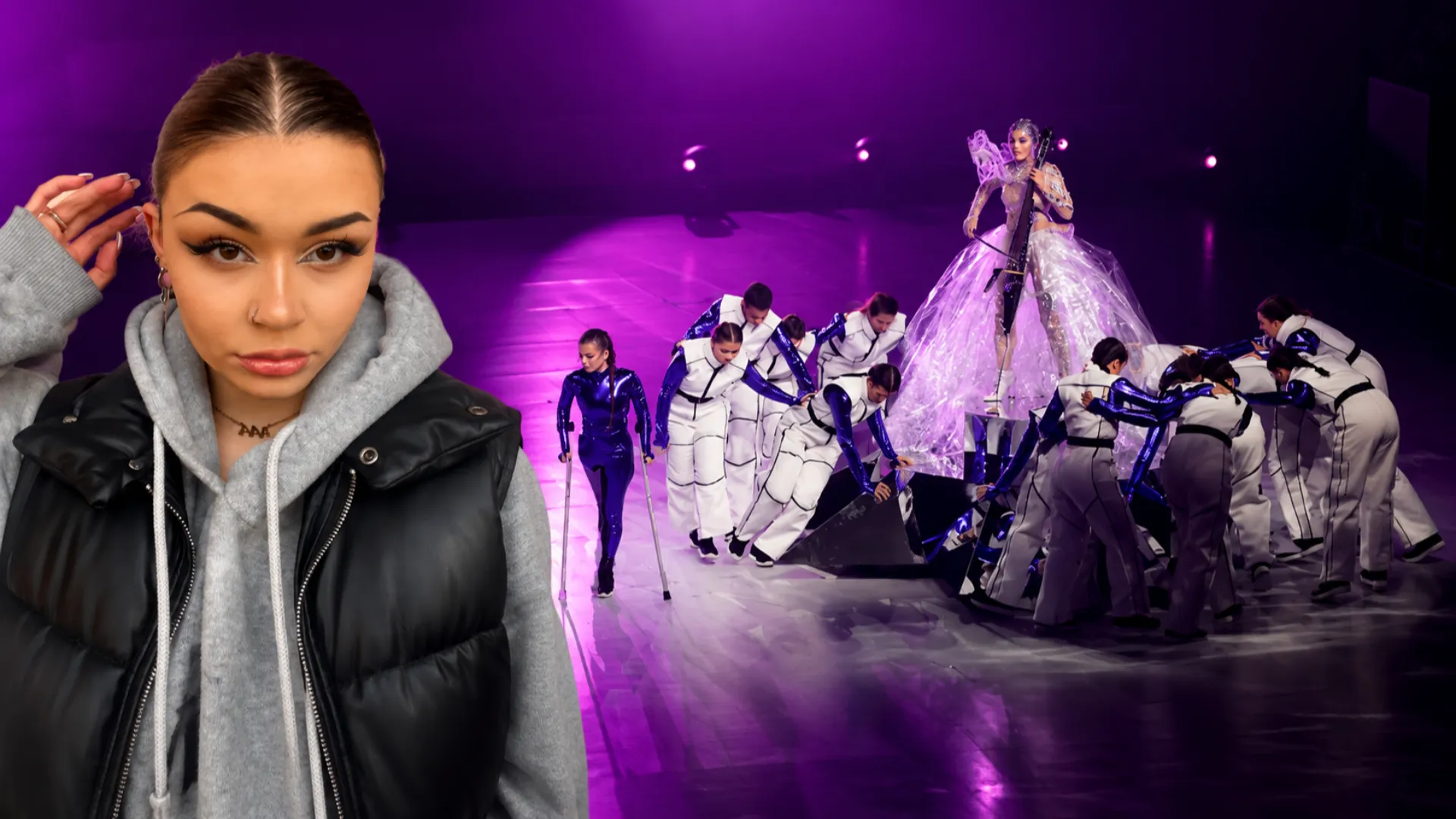
23 years old, with clear goals and many dreams up her sleeve. Marina Rigamonti, from Villasanta in Brianza—a charming town just outside Monza—has always pursued her great passion for dance. She does this alongside her studies: after earning her diploma in tourism, she enrolled in the bachelor’s degree program in Psychological Sciences and Techniques at eCampus University. On her toes—but not only there—she began her journey at the local NG Dance studio, where she danced for several years. She then attended Sogni di Danza in nearby Concorezzo for a year before impressively passing an audition and embarking on her current training program at OrmarsLab. She is currently pursuing two paths—psychology and dance—simultaneously, with the goal of eventually bringing them together professionally as well. Meanwhile, during the Milan-Cortina 2026 Winter Olympics and Paralympics, she was the star of a true fairy tale: she performed at both the opening and closing ceremonies. Sportal.it interviewed her.
When you performed at an event watched by so many people, did you realize the magnitude of what you were doing?
Actually, I knew it would be broadcast worldwide, so I was aware that there would be a huge audience watching. But when you’re actually there, you don’t really realize it. With the stage lights, you can’t see very well what’s around you, and—at least for me personally—I didn’t feel all that pressure of eyes being on me. I only truly realized the magnitude of the event afterward, when I saw myself on TV.
Maybe the very fact that you couldn’t see the audience helped you manage your emotions better?
Yes, I think in a way I almost distanced myself from the situation. It was probably a coping mechanism that allowed me to focus on what I had to do, because otherwise I might have panicked. Of course, I was nervous, but since I couldn’t clearly see who was in front of me, it was easier to manage those feelings.
At the Paralympics, on the other hand, did you feel the audience’s presence more strongly?
Yes, a little more. The stage setup was different, and the athletes were practically right at the edge of the stage. So while you were dancing, you could see them and feel their presence more strongly. It was a different experience.
What was the difference between the two performances?
The first time, I was part of Ghali’s act. We were in a warehouse outside San Siro, and they only brought us near the stadium when it was time for our performance. Right after, we went back to the warehouse. At the Paralympics, on the other hand, we were the only dance troupe, so it was a constant cycle of going in and out, changing quickly, and getting ready for one routine and then the next. It was a much more intense experience from that perspective.
Let’s take a step back. You started dancing very early, at age three. When did you realize that dance could become more than just a hobby?
Actually, quite late. I’ve always enjoyed studying as well, and for a long time I wasn’t sure which path to follow. After middle school, they pointed out several possibilities to me, and rather than helping me, this left me even more undecided. So in high school, I chose to study languages. Around my junior year, I discovered the existence of schools and academies that allowed you to study dance professionally, and I started thinking: “What if I really tried to turn this into my career?” Then COVID hit and everything came to a halt, so I continued with my studies. After graduating from high school, still without a clear idea of what to do, I decided to give it a serious try. I looked into various academies in Milan, auditioned, and was accepted. At that moment, I thought that maybe this really was the path for me. That’s where it all began.
Dance is passion and fun, but it also requires a lot of sacrifice. Have you ever thought, “Why am I doing this?”
Yes, especially when I also started college. I suddenly found myself having to manage a workload I hadn’t imagined. There are moments of discouragement—maybe an hour when you think you can’t make it. But then I remind myself that this was my choice, and I see that what I’m doing is paying off. At that point, I think: Why should I stop right now? It would be like throwing away everything I’ve accomplished so far.
How do you balance college and dance?
The workload definitely doubles, but choosing an online university wasn’t a random decision. If I’d had to attend in person, I probably wouldn’t have been able to manage everything. This way, I can organize my time: I study early in the morning when my classes are later, or in the evening when my dance commitments are in the morning.
What are you studying?
Psychology.
What would you say to a five-year-old girl who wants to start dancing?
First of all, I’d tell her she has to really love it. She shouldn’t do it just because all the other girls are doing it or because her mom wants her to. You can tell right away when a little girl is dancing because she feels she has to, rather than because she wants to. Dancing should be something that makes you feel good. Then it can become a career, of course, but it doesn’t necessarily have to be. It’s the same in my family: I have an eleven-year-old cousin, and sometimes I’ve asked her why she doesn’t try dancing. She simply replied that she doesn’t like it. And that’s perfectly fine. You can’t force passion. It can develop later in life, and even if it never becomes a career, dance is still a wonderful activity.
Is there anything you feel you can still improve on?
Definitely my technique, because you never stop perfecting it. Even after many years, a different teacher might come along—perhaps for a special class—and suddenly you’re faced with something that challenges you. So technically, there’s always something new to learn. I’d also like to improve my ability to convey emotions through dance. It’s something they teach you from a young age, but you never really know how what you do comes across to people. One audience member might be deeply moved—maybe even moved to tears—while another might feel nothing at all.
On the other hand, dance is an art form, and every audience member can react differently.
Exactly. There’s no standard reaction, and you can’t force someone to feel a certain emotion. That’s precisely one of the characteristics of art.
What are your plans for the future?
My immediate goal is to finish the academy. Due to an injury, I had to postpone some projects; otherwise, I would have already earned my dance diploma and would probably be looking for teaching opportunities as well. At the same time, I hope to dance as much as possible—in theaters, with dance companies, and wherever opportunities arise. But I also have a very concrete plan related to my studies: I’d like to become a dance therapist. After earning my bachelor’s degree in Psychology, I’d like to pursue a master’s degree in dance therapy, so I can finally combine my two paths—my academic and my artistic ones.
Where do you see yourself in ten years?
I certainly hope to have become a dance therapist. If everything goes according to plan, that’s my main goal. At the same time, though, I’d like to keep dancing and maybe travel around Italy or Europe, wherever this work might take me. I’ve devoted so many years to dance, and I want to make the most of everything I’ve learned. In ten years, I’ll be 33, and I know that for a dancer, age can start to become a factor, but as long as I can, I’ll keep trying. After all, hope is the last thing to die.