Italy is in mourning, and so is Germany: Defeat against Greece, “We’re no longer a powerhouse”
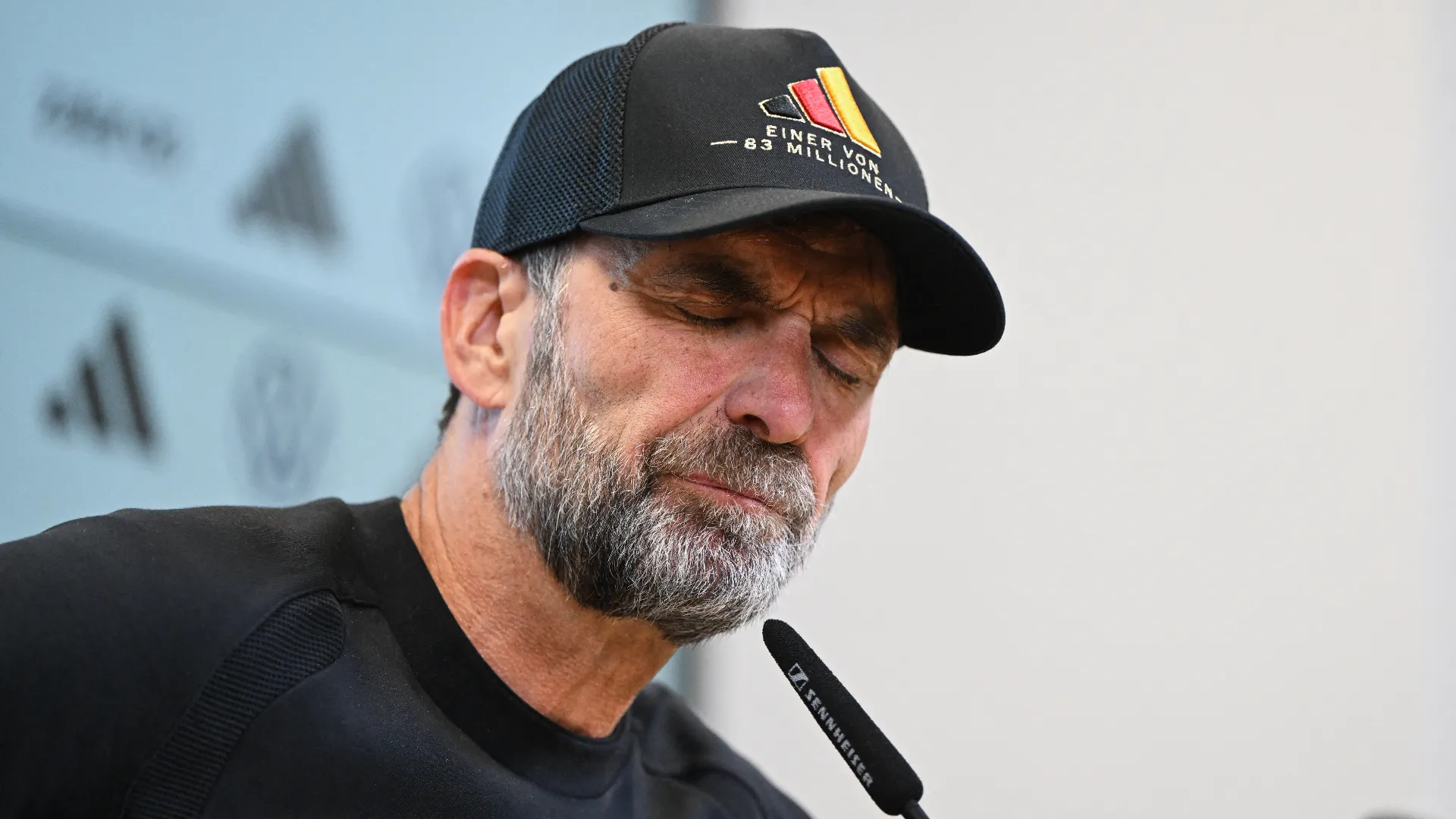
If Italy is in tears, Germany certainly isn’t faring any better. While the Azzurri are preparing for Monday’s match against Turkey, hoping to put last Friday’s crushing home loss to Belgium behind them, the German national team has seen fit to follow in the footsteps of its eternal rivals. Jürgen Klopp watched as his team dominated but ultimately lost in Augsburg to a cynical, highly organized, and lethal Greek side. Dimitrios Kourbelis’s goal in the 74th minute proved decisive, sealing the 0-1 final score. And after a 2026 World Cup that was lackluster at best (with elimination in the round of 16), now even the country that was crowned world champion as recently as 2014 is beginning to seriously question the state of its soccer.
Germany, after all, has struggled considerably on the international stage ever since winning the final at the 2014 World Cup in Brazil (a tournament in which, incidentally, it defeated the host nation, Brazil, by a score of 7-1). It reached the semifinals at Euro 2020 but was eliminated from the 2018 and 2022 World Cups in the group stage, before putting in a performance in the U.S. that was far from impressive. The subsequent European Championships were also rather lackluster, marked by elimination in the round of 16 in 2021 and in the quarterfinals in 2024. And after the home loss to Greece—the first in history—legend Bastian Schweinsteiger delivered a scathing verdict: “We’re no longer a top-tier national team. Far from being a powerhouse, we’ve become a mediocre national team. We don’t have anyone who can make a difference, while players like Karetsas, Tzolis, and Pavlidis can.” The process has begun, and one aspect that the Germans are certainly unlikely to appreciate is that they’re starting to resemble Italy quite closely.
It must be said that the Greek team capable of conquering Augsburg certainly didn’t get there by chance. The Greeks, led by coach Ivan Jovanovic, had already sent out very important signals on the first matchday of the group stage, winning in dramatic but well-deserved fashion at the Marakana in Belgrade against Serbia. On that occasion, after falling behind on a goal by Zivkovic, the Greeks turned the game around with goals from Tzolis and a game-winning header in the 95th minute by Tasos Douvikas, a Como forward who is having an extraordinary season. That comeback had already demonstrated the caliber of this Greek team, capable of weathering pressure, fighting back, and striking with lethal precision at decisive moments—exactly what they did against Germany as well.
From Germany’s perspective, the loss to Greece weighs even heavier when considering the context in which Klopp began his tenure as coach of the Mannschaft. The Stuttgart coach, appointed after Julian Nagelsmann’s resignation following Germany’s elimination in the Round of 16 of the 2026 World Cup against Paraguay, had opted for an exceptionally ambitious approach: a double roster of 44 players called up for the first four Nations League matches, with the stated goal of broadening the squad and testing as many players as possible. This strategy reflected a desire to rebuild from the ground up, but so far it has not yielded the hoped-for results. Even the opening-match draw against the Netherlands—another national team coming off a disappointing World Cup that ended in a Round of 16 exit—had raised some doubts. Now the home loss to Greece has turned those doubts into alarm.
Among Klopp’s controversial decisions was the exclusion of Nicolò Tresoldi, the Club Brugge forward who had publicly stated in recent months that he wanted to represent Germany rather than Italy. His name was considered among the most likely candidates to be included in the Mannschaft’s new era, yet the coach had decided not to call him up for either squad. A decision that now, in light of the offensive problems that emerged against Greece—with Musiala and Havertz forced to sit out Sunday night’s match—appears even more questionable in the eyes of German critics, who are growing increasingly impatient.