"PSG and Bayern do another sport": Italian soccer still ends up in the crosshairs of criticism
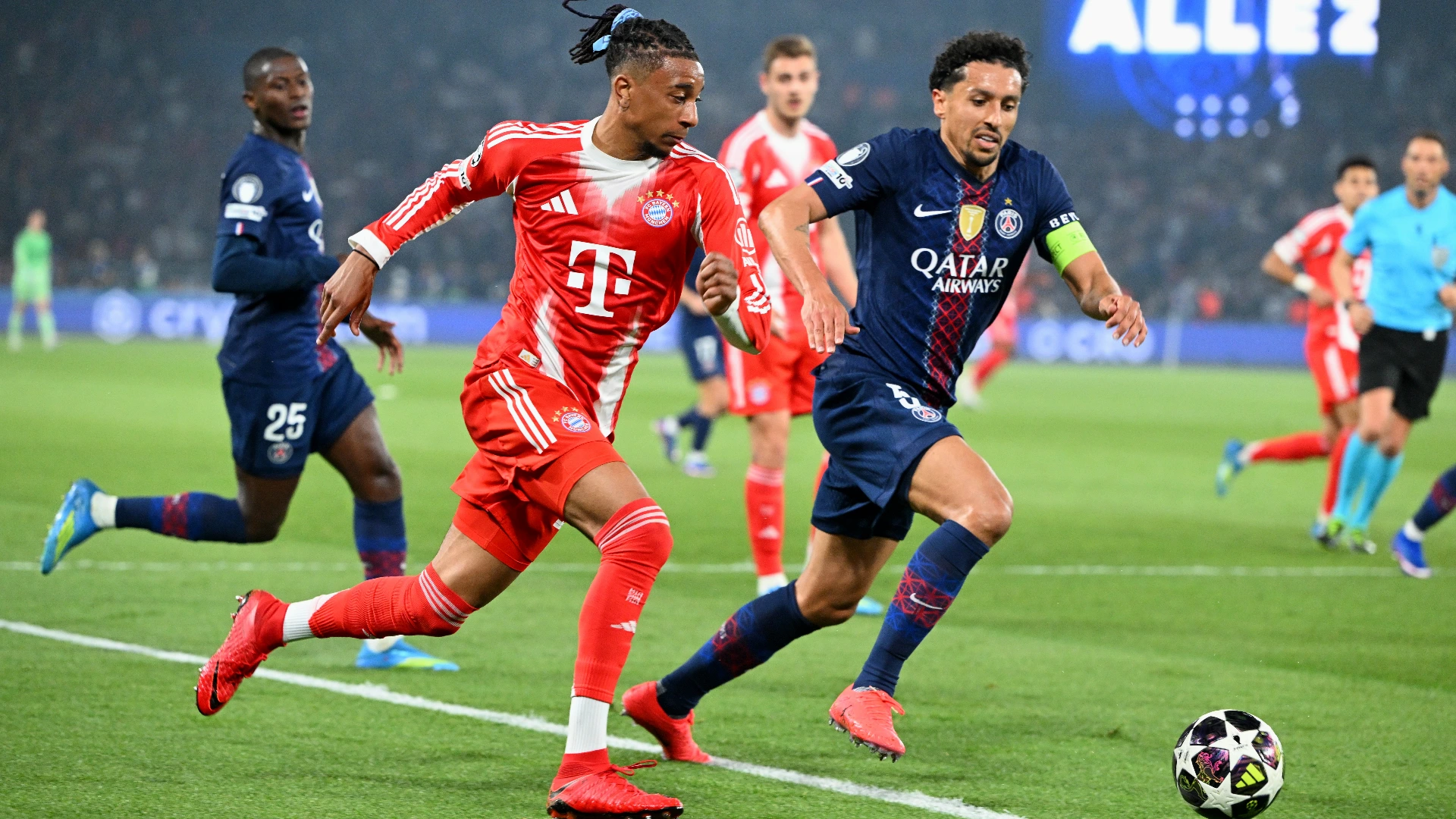
The night at the Parc des Princes left a deep mark not only in the history of the Champions League, but also in the mood of Italian fans. Because while PSG and Bayern Munich gave birth to a 5‑4 that seemed to come out of a video game, in Serie A the most anticipated match of last day, Milan‑Juventus, had ended with a 0‑0 poor of emotions. And so, on social media, the comparison became inevitable. And merciless.
The numbers speak for themselves, as far as the pace and intensity of the game is concerned. According to statistics recorded by UEFA, PSG’s players attempted 28 dribbles, succeeding on 11 occasions, while Bayern’s players tried 27 times to jump a man, with 17 attempts materialized. In Serie A, the average per team is 14.4 dribbles attempted and 6.2 successful per game. Similar discourse with regard to touches of the ball in the opponent’s area: 72 in total at the Parc des Princes (as many as 52 by Bayern), 43.7 on average in Serie A.
In Paris there were continuous overturns, accelerations, individual plays and a very high technical level; at San Siro, on the other hand, we had seen cautious, blocked soccer, almost afraid of making mistakes. “Look what they do abroad,” one reads on social media. “They make 5‑4, we don’t shoot on goal for 90 minutes.” “In Champions you play a different sport. In Italy you play not to lose.”
The Italian public disputes not only the result, but the attitude: the feeling that the big Serie A matches, with few exceptions, have become exercises in caution, where the first goal is to avoid mistakes rather than to create something. The Paris semifinal was the exact opposite: nine goals, two comebacks, individual plays, teams seeking and accepting one-on-one, high pace for 90 minutes. Kvaratskhelia, Dembelé, Olise, Kane, Luis Diaz: everyone tried to win it, no one was afraid to lose it.
“The point is not to ask Serie A to have a 5‑4 every week,” explained one fan in the comments of the official post published on the Champions League profile. “The point is another: why can’t our big teams produce lively, intense, technical, spectacular matches anymore? They lack courage, quality in their choices, freedom to take risks.”
PSG‑Bayern, in short, stands as a manifesto of modern soccer, marked by speed, talent and unpredictability. A unicum, perhaps, but one that ends up raising increasingly pressing questions in the context of Italian soccer.