"Jannik Sinner looks like a robot": his answer surprises everyone
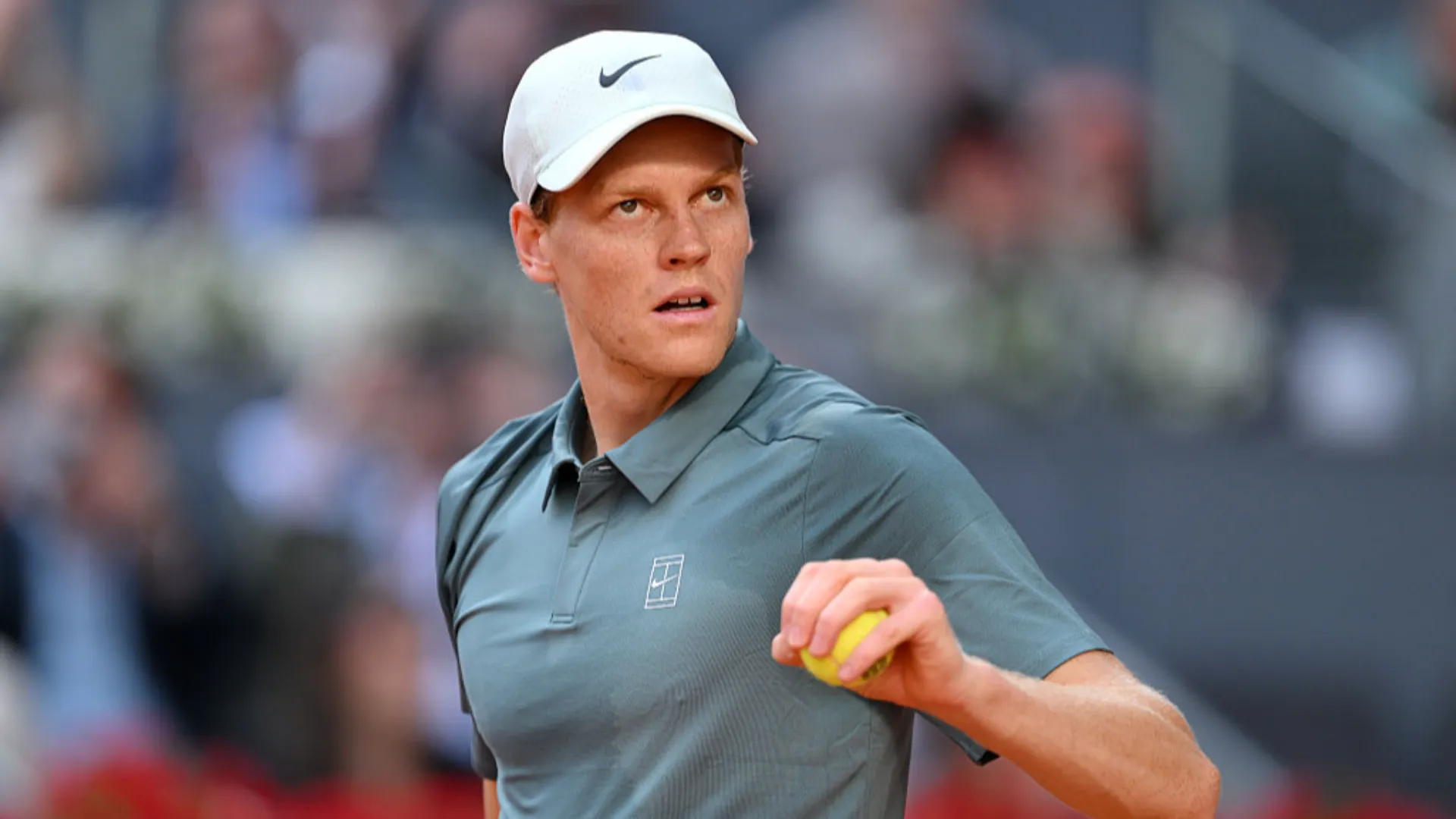
Jannik Sinner continues to win and rewrite the almanacs of tennis history, with his success at the Rome Internationals putting him on a par with Novak Djokovic at a much younger age than when the great Nole crossed the same finish line. This trail of success, coupled with his calm, placid character that is hard to shake off tension, has drawn comparisons to him as a robot from some detractors. In the meantime, however, the ATP number 1 ranking himself has commented on this, giving an answer that will certainly surprise both those who detest him and those who love him.
“I don’t think the term ‘robot’ is derogatory,” Sinner revealed to ‘L’Équipe.’ “I work like this, always trying to be as precise as possible by choosing to use the right shot at the perfect moment. To be able to do that, you always have to be in a very good state of shape both physically and mentally. I train like this precisely because I want to reach the highest possible level of preparation when a match comes to its climaxes. And if I give the image of a player without emotions, it is because I am very focused on what I have to do.”
And yet, to those who accuse him of being a machine without feelings, the numbers tell a very different story: that of an athlete who has made sacrifice his religion. From Jan. 1, 2026 to the final at the Foro Italico on May 17, Sinner went without playing or training only 14 days out of 136 total. In practice, he worked nine out of ten days for four and a half months straight, a work ethic that explains better than any other analysis why his tennis seems so automatic and infallible in the eyes of his opponents.
The results of this absolute dedication speak for themselves. The triumph at the Internazionali d’Italia – won by a clear 6-4, 6-4 over Casper Ruud in one hour and forty-five minutes – was the sixth consecutive Masters 1000 for the South Tyrolean, after Paris 2025, Indian Wells, Miami, Monte Carlo and Madrid. It was an unprecedented streak that earned him a new term that has already entered tennis history: the “Sinner Sweep,” or winning the first five Masters 1000s of the year. With his success in Rome, Sinner also became the first tennis player since Rafael Nadal, who did it in 2010, to win all three Masters 1000s on clay in the same year.
On the ATP ranking level, the dominance is just as overwhelming: Sinner leads the world ranking with 14,700 points, with an overall lead of 2,740 points over Carlos Alcaraz – absent in Rome due to a wrist injury – and a whopping 8,995 over Alexander Zverev, third with 5,705 points. A record that is also reflected in the depth of Italian tennis: there are sixteen Italians in the top 200 in the world, with Musetti 11th, Cobolli 12th and Darderi 16th leading the pack behind the number one.
Not everyone, however, joined the chorus of praise. Philosopher Massimo Cacciari, speaking at the microphones of Radio 1, raised a heated debate by arguing that Sinner wins “mainly because he has ten thousand times more heads than his opponents,” but that against Federer, Nadal and Djokovic at the top of their level “he would lose, because they were more complete.” Words destined to cause debate, but which basically confirm-even in criticism-that extraordinary mental ability that Sinner himself recognizes as the heart of his game.
Now, after a few days of well-deserved rest, the next goal is Roland Garros, the only Grand Slam still missing from his trophy case. The main draw of the Paris Slam will kick off on May 24, and Sinner, the number one seed and big favorite after Alcaraz’s forfeit, will make his debut between May 24 and 26. Conquering Paris would mean completing the Career Grand Slam: yet another chapter in a story that is apparently still far from over.