Silver Score: great success for Vitea wineries
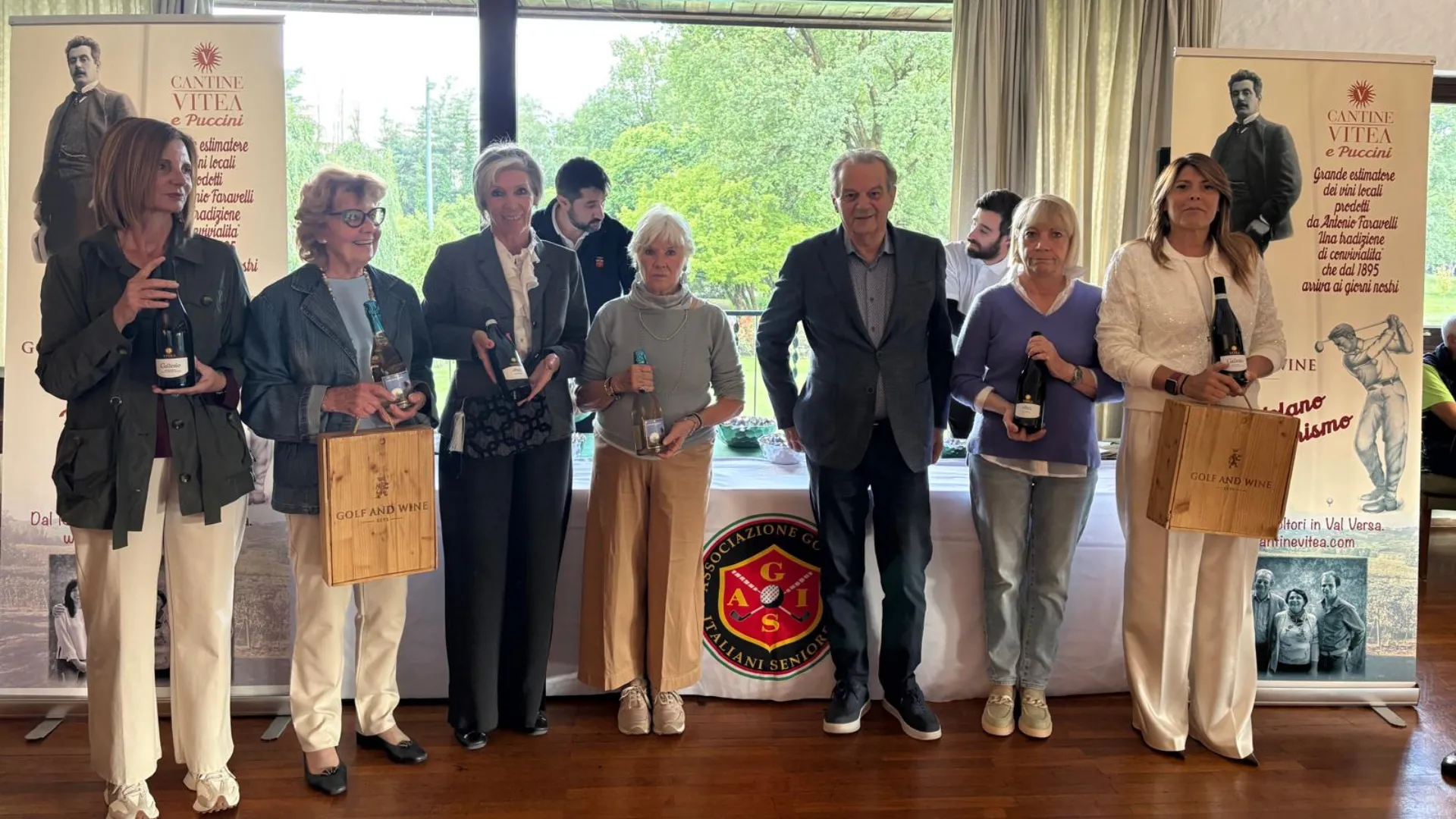
The indefatigable Antonio Faravelli, winemaker and golfer from Montù Beccaria, in Oltrepò Pavese, as well as owner of Cantine Vitea and promoter of the “Golf and Wine 1895” project, was the exclusive protagonist at the AGIS event, the Italian Association of Senior Golfers, during the Score d’Argento hosted at the prestigious Barlassina Country Club. The event was very well attended: numerous guests enthusiastically tasted and purchased the wines offered by Faravelli, including some historic labels that in the past also won over the famous composer Giacomo Puccini.
During the award ceremony, Faravelli illustrated the philosophy of the “Golf and Wine 1895” project, created with the aim of enhancing golf, tourism and Italian territorial excellence, creating a strong link between sport, traditions and local productions to best promote Made in Italy in the world. His vision and message were definitely appreciated, so much so that the organizers have already enthusiastically renewed their invitation to participate in the next AGIS Lombardia events.
Among the winery’s top labels are Bonarda Gallesio and sparkling wines made with selected Pinot Noir grapes, as well as the famous Buttafuoco Cà del Cervo, the only one to receive the Crown, an award that adds to the numerous prizes won in international competitions, including two gold medals in Asia and several medals from Decanter worldwide. The winery also received the certificate from the Italian Touring Club’s Vini Buoni d’Italia, cementing a reputation built over more than a century of history, beginning with its founding in 1895 by great-grandfather Antonio Faravelli. “Five generations of winemakers, more than 100 years of history. Fathers and sons united by the same passion for viticulture and oenology,” the Pavia entrepreneur proudly points out.
Making Cantine Vitea’s identity even more distinctive is a production philosophy focused on sustainability and respect for the land. The winery adopts Integrated Pest Management, a crop defense practice recognized and regulated by the European Union’s Rural Development Plan, excluding phytosanitary products of harmful and toxic classes and limiting treatments to cases of actual need. The vineyards, located between 230 and 275 meters above sea level, enjoy excellent sun exposure and are developed on clay-limestone soils, ideal conditions for obtaining grapes of great value.