Franco Baresi: Fabio Capello’s proposal is well-received; unanimous support
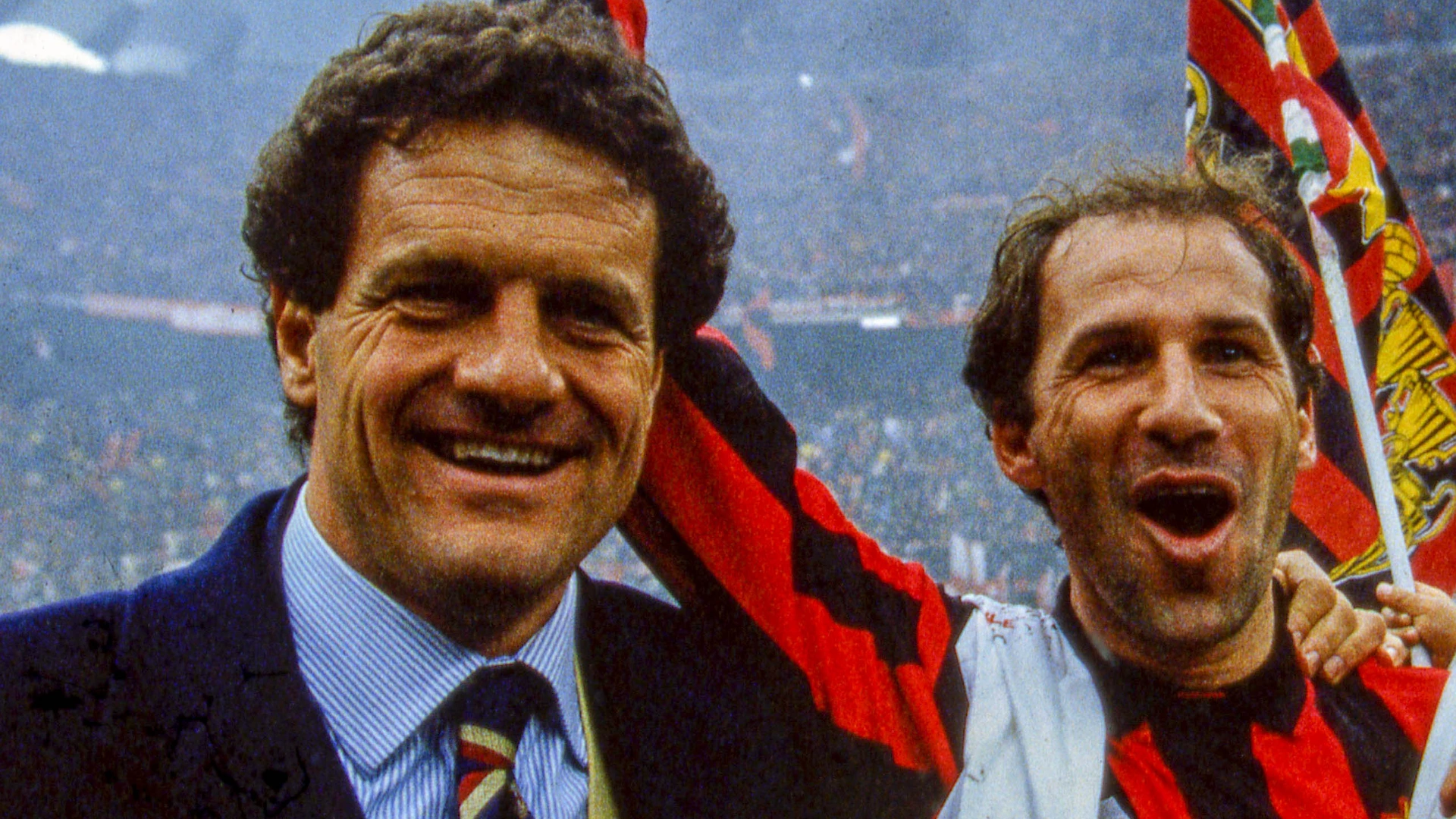
The passing of Franco Baresi continues to stir a wave of emotion throughout the world of soccer. The void left by the legendary Milan captain was immediate and profound: hundreds of messages, tributes, and memories have poured in from fans, clubs, and players of every era, including many rivals from his generation. Amid this outpouring of emotion, one proposal has begun to gain significant traction: that of Fabio Capello, who suggested in *La Gazzetta dello Sport* that Baresi be posthumously awarded the Ballon d’Or.
Capello knows Baresi like few others, having coached him during two distinct phases of his Rossoneri career: in 1987, when he took over from Nils Liedholm, and then during the long tenure from 1991 to 1996. It was Capello himself who confirmed Baresi as the locker-room leader following the Sacchi era, once again entrusting him with the captain’s armband and guiding him toward further triumphs: one European Cup, four Serie A titles, three Italian Super Cups, and one UEFA Super Cup.
In this context, the former coach’s words carry particular weight: “Let’s give him a posthumous Ballon d’Or. Things are different now; given his personality, Franco probably wouldn’t have been very active on social media. But I believe he deserves an international posthumous award—for who he was and how he conducted himself.” This statement is not merely a tribute but a testament to Baresi’s human and athletic values, his modesty, his quiet leadership, and his ability to embody a vision of soccer that seems distant today.
During his career, Baresi was nominated for the Ballon d’Or seven times, without ever winning it. He came very close in 1989, when he finished second behind his teammate Marco van Basten. Capello’s proposal is not merely symbolic: it is a call to fill a historical void and to recognize what Baresi represented for Milan, for the national team, and for world soccer.
The idea of a posthumous Ballon d’Or has begun to circulate rapidly, gaining support among industry insiders, former players, and fans. At a time of collective grief, the proposal appears to be a way to transform mourning into an active remembrance, to enshrine in history a legacy that already lives on in the hearts of millions of fans.