Jannik Sinner or a surprise? The'artificial intelligence gets off the hook on Roland Garros.
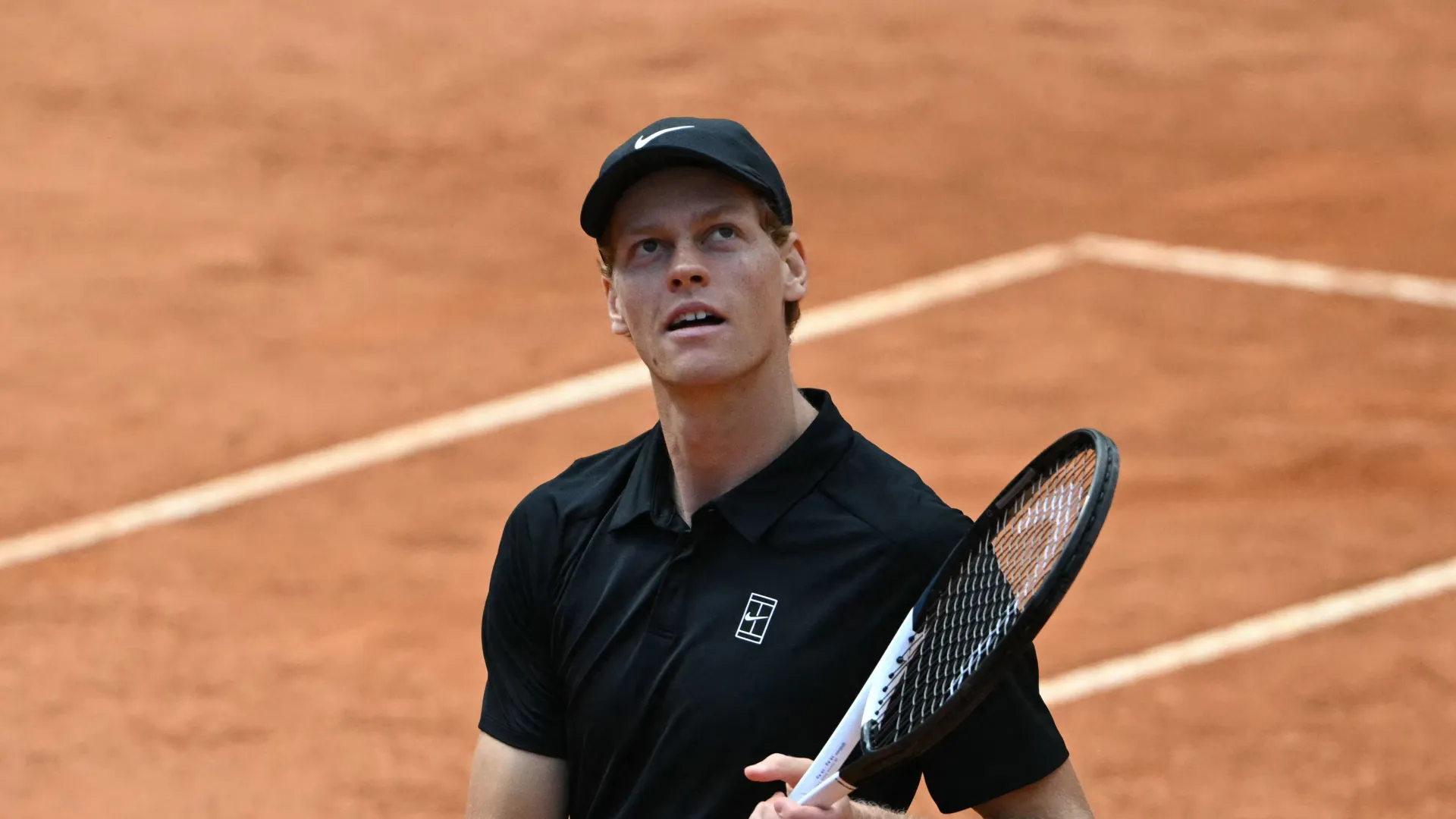
Everything is ready in Paris for the 2026 edition of Roland Garros, the second Grand Slam tournament of the season. Never as much as this year, also due to the injury that has stranded Carlos Alcaraz, there is a must-win favorite and that is Jannik Sinner, undisputed ruler of the scene this spring, but there is no doubt that the other top seeds will not be watching and will try to take advantage of every opportunity to interrupt the positive streak of the Italian outfielder.
But who can get to thwart Sinner and how can Roland Garros end, as far as the men’s tournament is concerned? We tried to ask the artificial intelligence for its opinion, cross-referencing ATP rankings updated as of May 18, the state of form in recent months and the structure of the scoreboard, to try to imagine what the path of the Paris tournament might be. The result is a reading that mixes logic, numbers and sensations, capable of at least tickling the debate among fans.
The top section of the draw seems built to accompany Jannik Sinner into the second week without any particular jolt. The other top seeds in the same section are Corentin Moutet, Arthur Rinderknech and Luciano Darderi, all opponents largely within the reach of the South Tyrolean. The quarterfinal could be tricky: AI predicts a showdown with Ben Shelton, which, however, should reward Sinner over the five-set distance.
Felix Auger-Aliassime, who won in Montpellier this year but has not yet reached his peak on clay, should also make it past the fourth round: for the algorithms, his opponent in the quarters will be Daniil Medvedev, who after a few too many blunders is finding continuity in his game and results, but who still does not convince the AI, which gives the Canadian as the winner of the direct clash.
As for the pass side of the scoreboard, Andrey Rublev, a tennis player of sure talent but never capable of the ultimate leap forward, is expected to make it to the quarterfinals of Roland Garros for the third time in his career: the AI is predicting as his quarterfinal opponent the eternal Novak Djokovic, who despite turning 39 on May 22 should still manage, at least as far as this virtual prediction is concerned, to prevent the Russian from once again accessing a Slam semifinal.
The last quarter will instead see, according to AI, U.S. Taylor Fritz attempt a breakthrough against Alexander Zverev. The algorithms predict a tight match in which the German, also on the strength of better physical fitness over distance thanks to rather favorable previous rounds, should prevail by qualifying for the semifinals.
In the penultimate act, the AI predicts a rather agile victory of Jannik Sinner over Felix Auger-Aliassime and a more suffered success of Alexander Zverev over Novak Djokovic. The most likely final, according to the intersection of the data, is therefore Sinner-Zverev, a challenge that pits the number one’s precision, neatness and continuity against the German’s desire for revenge.
In best-of-five-set matches, especially in a setting like the Philippe-Chatrier, Sinner has shown a technical and mental edge that makes him the natural favorite. If the tournament follows the logic of the season, Roland Garros 2026 could be the one in which Jannik Sinner completes his Career Grand Slam and definitively solidifies his role as the benchmark of contemporary tennis.