Autosprint, a collector’s issue on the “Year Zero” of Formula 1
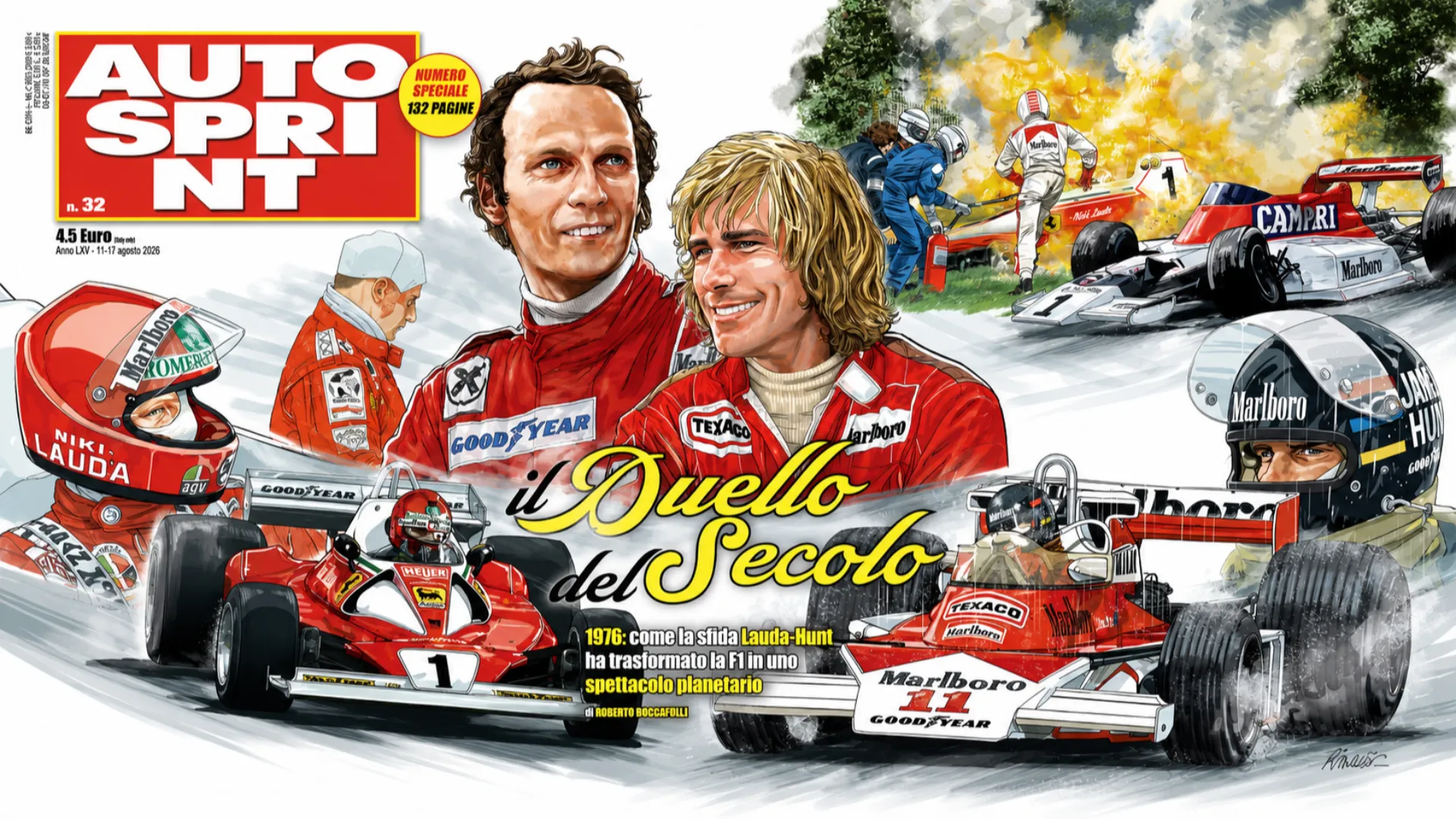
This week’s issue of Autosprint (on newsstands starting Tuesday, August 11) is, in fact, a book. It has 132 pages, opening with a special cover illustrated by the magical pencil of Alberto Rinaldi. A painting depicting a gateway to a year that refuses to fade away, because it still lingers far beyond the memories of those who lived through it and the accounts gathered by those who weren’t there.
Autosprint recounts—largely through the pen of Roberto Boccafogli, a longtime contributor to the weekly—the 1976 Formula One World Championship, which—as editor Andrea Cordovani recalls
in his editorial – “was not just a championship but a scar etched into history.” This issue of Autosprint is not just a book about car racing, the duel between Niki Lauda and James Hunt, or near-tragedies; it recounts a glorious and very special era in our country’s history. And much more besides.
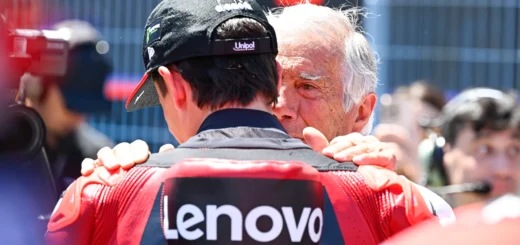
Like most high-quality books, it features an equally enlightening foreword, such as the one by Piero Ferrari. Then there are contributions from many of those who experienced those emotions firsthand, from Bernie Ecclestone to Toto Wolff, from Mario Andretti to Arturo Merzario.
1976 is not just a date to celebrate as a milestone anniversary. It represents a scar, a clean break. Before that, Formula One was a circus for trapeze artists without a safety net, a club for men with souls ablaze and little fear of the dark. Afterward, it became a saga, a serialized novel, global fodder.
That year, fate played dice with nature. Let’s borrow the words of Andrea Cordovani, editor-in-chief of Autosprint: “The fire, first. August 1. Nürburgring. The Green Hell truly goes up in flames. The No. 1 Ferrari swerves, crashes, and becomes a blaze. A funeral pyre of steel. Lauda is inside. Trapped by the twisted metal and the heat. Arturo Merzario doesn’t hesitate; he plunges his bare hands into the furnace to pull him out, along with Lunger and Ertl. Angels smudged with soot. Flesh sizzles; lungs fill with black death. They administer last rites to Lauda. But Niki refuses to be reduced to ashes. He is a survivor. Forty days later, he’s at Monza. His head is wrapped in gauze, wounds bleeding beneath his helmet, his skin raw. Pain is his guide. A secular, ferocious miracle. And finally, the water. Relentless. In Japan, at the foot of Mount Fuji. A biblical deluge. The sky pouring down onto the asphalt in icy buckets. The water extinguishes the flames of August, but drowns out the gaze. And there, Lauda gives in. He stops. He chooses not to drown. “My life is worth more than a world championship.” He chooses to remain human; he admits his fear. An act of supreme courage from a machine programmed to win. Not Hunt. Hunt navigates blindly through that疯狂 aquarium, dances over the puddles, risks breaking his neck, gets a flat tire, recovers, and finishes third. World champion by a single point. An insignificant, yet incredibly weighty point separating those who chose to breathe from those who chose not to look down.”
In these 132 monographic pages, time wasn’t merely frozen. It was squeezed, to let the rain and gasoline pour out. And much more besides, as in the closing story of this Autosprint “book,” penned by Stefano Tamburini. In effect, an “X-ray” of 1976 that goes beyond the emotional rollercoaster of F1. Here, we see Italy grappling with a severe inflation crisis and wages under threat. An Italy that, at a certain point, discovers the fragility of environmental safety (the Seveso toxic cloud) and the tragedy of a devastating earthquake in Friuli. That was also the era when the push for gender equality began: for the first time, the government entrusted a ministry to a woman, Tina Anselmi. And in a garage in California, Steve Jobs founded Apple… In short, the world was beginning to change, and we didn’t know it. But above all, looking back at the mistakes of that time, we can say today that we failed to learn the lesson.