Jonas Vingegaard makes it five in Piancavallo and puts the seal on Giro d'Italia 2026
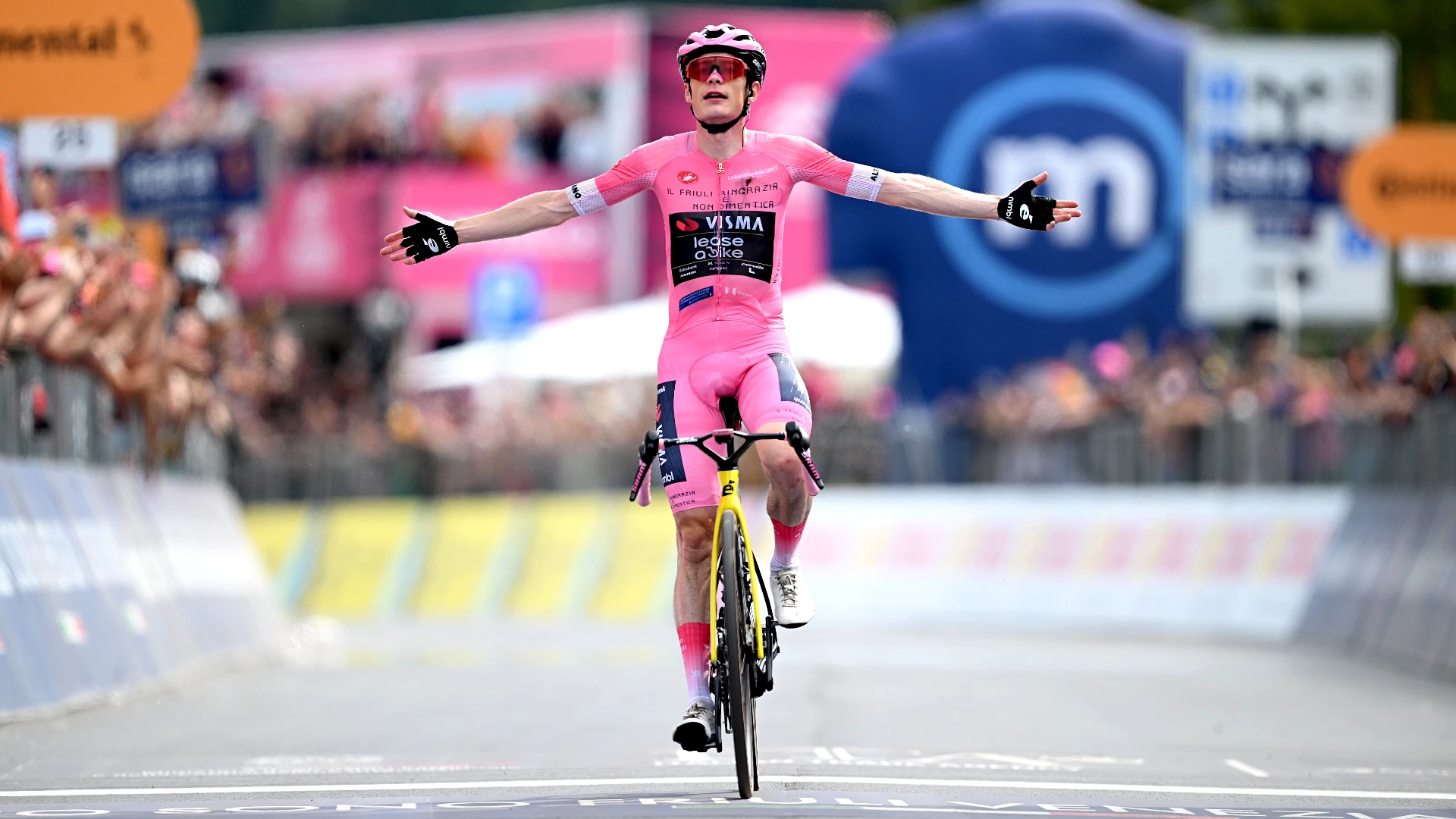
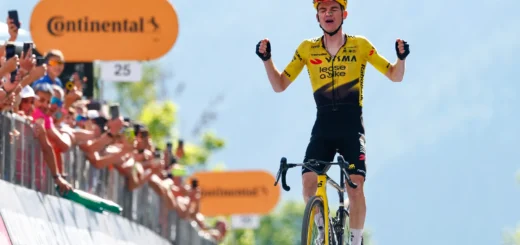
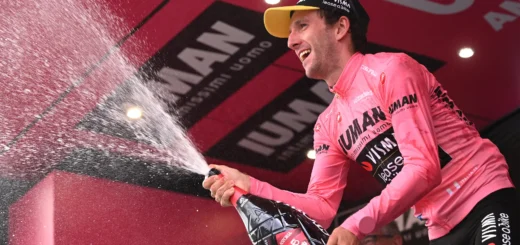
Unless there are sensational developments in the next twenty-four hours, it will be Jonas Vingegaard who will carry the pink jersey of the Giro d’Italia 2026 to the podium in Rome and lift the Trofeo Senza Fine. The Danish rider from Team Visma-Lease a Bike reaffirmed his dominance over the Corsa Rosa by also winning the penultimate stage, which took the caravan from Gemona del Friuli to Piancavallo (a stage dedicated to the victims of the 1976 Friuli earthquake) after a course of exactly 200 kilometers.
Vingegaard, who had already won on Blockhaus, Corno alle Scale, in Pila and Carì, also dominated today’s stage, inflicting 1’15” on the second place finisher, Austrian Felix Gall (Decathlon CMA CGM Team), who ruled a small group of three chasers that also saw in their ranks Australian Jai Hindley (Red Bull-Bora-Hansgrohe) and Canadian Derek Gee-West (Lidl-Trek).
Discreet eighth place for Damiano Caruso (Bahrain Victorious), first of the Italians at 2’13” from Vingegaard, in the Top 10 there is also the Danish rider’s domestique, Davide Piganzoli, who finished in 10th position in the same small group as the Sicilian, which also included Australian Michael Storer of the Tudor Pro Cycling Team.
In the general classification, therefore, Vingegaard dominates with a more than reassuring lead of 5’22” over Gall and 6’25” over Hindley. There are two Italians in the Top 10: Piganzoli is in eighth position with a delay of 10’52” from his teammate, while Caruso is ninth with a gap of 11’24” on the Danish champion.
Between Vingegaard and his first victory of a Giro d’Italia (at his first participation, by the way) there are now only the 131 kilometers of the last stage, which will be run entirely in Rome and includes a circuit in the center of the Capital after the start at EUR, without any roughness. The Team Visma-Lease a Bike rider, already a winner of the Tour in 2022 and 2023 and the Vuelta in 2025, will be the first Dane to win the Corsa Rosa in its 117-year history.