2026 World Cup: Jude Bellingham Stuns Norway; England Advances to the Semifinals
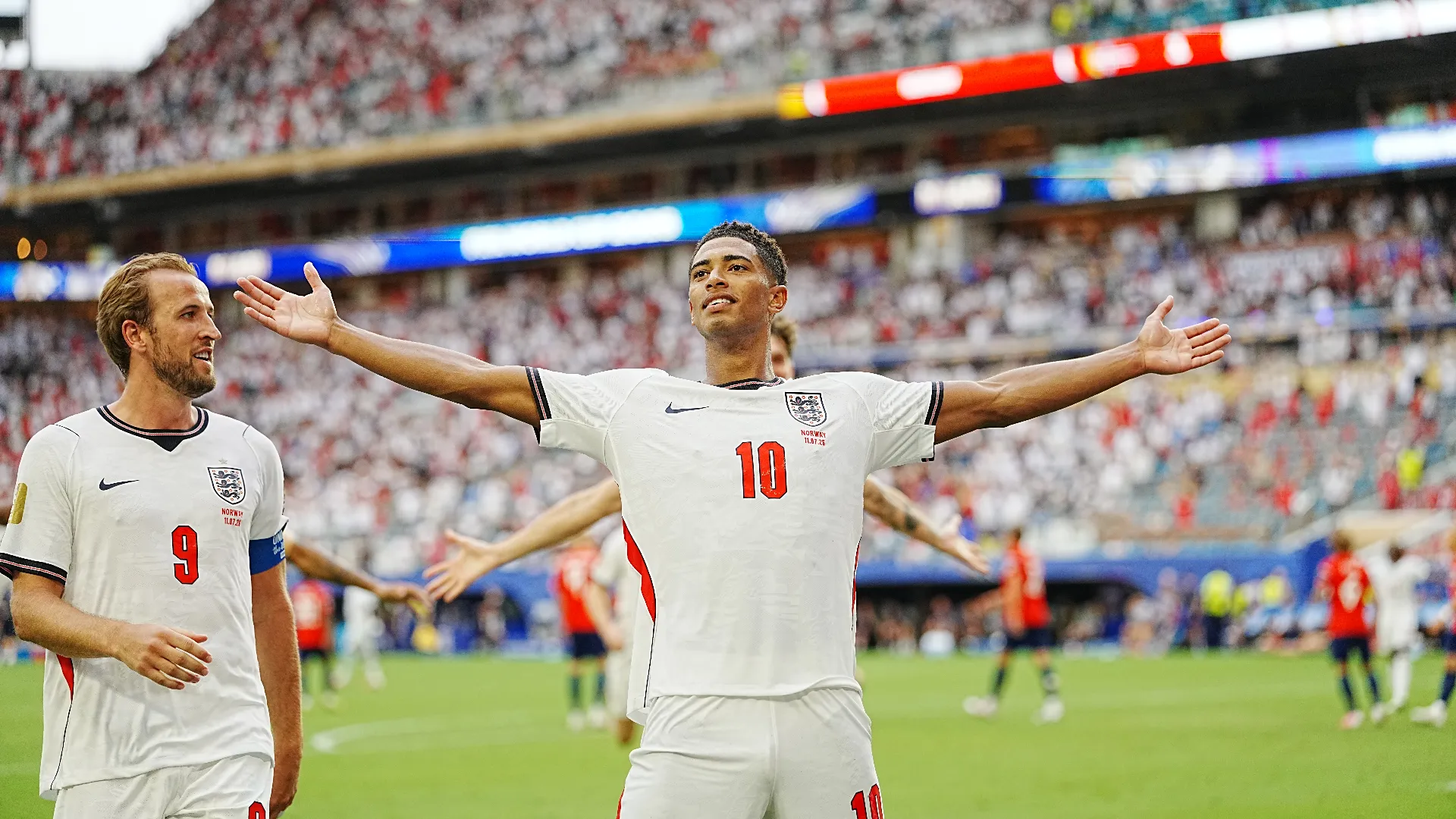
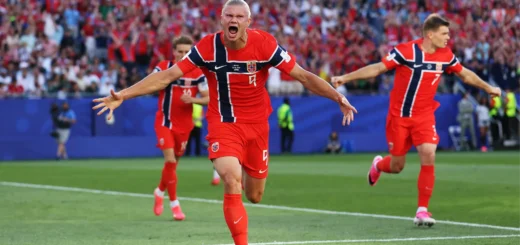
Norway’s dream of reaching a historic semifinal at the 2026 World Cup lasted just a few minutes. England emerged victorious in Miami, winning 2-1 after extra time on a sweltering evening at Hard Rock Stadium. The Scandinavians had taken the lead, however, thanks to a controversial goal by Andreas Schjelderup in the 36th minute. But Jude Bellingham—as usual—equalized in stoppage time of the first half, and then scored the go-ahead goal to secure England’s advancement in the 3rd minute of the first extra-time period. For once, Erling Haaland’s performance was lackluster, and he was even forced to leave the game in the final quarter-hour.
The match pitted two of the teams that have impressed the most so far at the 2026 World Cup against each other, though they largely canceled each other out for long stretches early in the game. The first real chance came from Bellingham, but it was nothing to write home about. After the first cooling break, Kane tried his luck on a free kick. Then, for the first time, Haaland caused panic twice in England’s penalty area. And Norway’s goal finally comes, but it’s scored by Schjelderup in the 36th minute—not without controversy: his powerful left-footed shot off an assist from Odegaard comes after a rough collision between Berg and Kane that referee Clément Turpin does not call a foul.
Riding a wave of enthusiasm, Norway could have even doubled their lead, but Sorloth missed the target while Pickford denied Odegaard. After another colossal chance squandered by Sorloth—with Haaland completely unmarked beside him—England equalized. They did so in the third of four minutes of stoppage time thanks to a moment of brilliance from Bellingham, who received the ball from Gordon at the edge of the box and, after a sumptuous first touch, cut into the box, drove sharply to the left, and slotted the ball into the far corner. The Scandinavians try to regroup at the start of the second half: Pickford (who has set the record for World Cup appearances among English goalkeepers) does his best to stop Haaland, who is in the thick of the action again a few minutes later. In fact, a push by him in the box on a corner kick—reviewed by VAR—denied Heggem the goal that would have put Norway back in the lead: more controversy surrounding Turpin.
Norway continued to dominate, and Ajer even hit the crossbar with a header off a play set up by Aursnes. Then it was Konsa who saved the day, as the ball simply refused to leave the English penalty area. Pickford once again denied Nusa, and the match went into extra time, which began in the 93rd minute with Bellingham’s go-ahead goal—a tap-in that beat Nyland after a poor save on Rogers’ shot. Then, once again, VAR takes center stage: Turpin had no hesitation in awarding a penalty when Spence went down in the box after a challenge with Bobb, but changed his mind after an on-field review. Early in the second half of extra time, the Scandinavians also lost Haaland, who wasn’t in top physical condition. But the match remained precariously balanced, ready to tip at any moment: Nyland made up for his earlier mistake by stopping a triple chance by Saka-Spence-Saka, then Berg and Bobb squandered the chance to tie the game again.
This isn’t the first time Turpin has found himself in the eye of the storm in high-stakes matches. His track record includes controversial incidents involving Italian clubs: from the uncalled foul on Bennacer in the 2021–22 Champions League match between Porto and Milan—with VAR remaining silent—to the red card shown to Hummels in the second leg of the round of 16 between Athletic and Roma, a decision critics deemed questionable from the start. His appointment for the Bosnia-Italy match last March had already sparked debate: he was the referee for Italy vs. North Macedonia in 2022, the match that went down in history for the Azzurri’s sensational elimination from the World Cup.
The match was played under weather conditions that were barely tolerable. The heat index at Hard Rock Stadium reached nearly 44°C due to the extremely high humidity typical of southern Florida at this time of year, so much so that the Miami city government had issued an official advisory earlier that day urging residents to stay hydrated as much as possible and to limit outdoor activities. FIFPRO, the global players’ union, had in turn called for matches to be rescheduled if temperatures exceeded 28°C. Moreover, this is not an isolated incident in this tournament: in Philadelphia, during the Round of 16 match between France and Paraguay, the thermometer had already hit 38°C, with heat index readings nearing 46°.
To further complicate matters for Norway on the eve of the match, a stomach virus had struck several members of the squad following their historic victory over Brazil. Head coach Stale Solbakken himself was not at his best and could not hide the problem during the press conference; Marcus Holmgren Pedersen was among the hardest hit, so much so that he started on the bench. Haaland, who had scored seven goals in the five matches played in the tournament prior to kickoff, had fortunately avoided any symptoms. On the English side, Tuchel had to do without Jarell Quansah, who was suspended for two matches by FIFA following his red card against Mexico—a decision that infuriated British fans, especially in light of the treatment meted out to the American Balogun, who was spared after Donald Trump intervened directly with FIFA President Gianni Infantino. Jordan Henderson was also out; during the post-match celebrations at Azteca Stadium, he had slipped and fractured his left forearm, but chose to remain at the team’s training camp to support his teammates.