F1 with crumbling asphalt: the precedents that would have saved Charles Leclerc
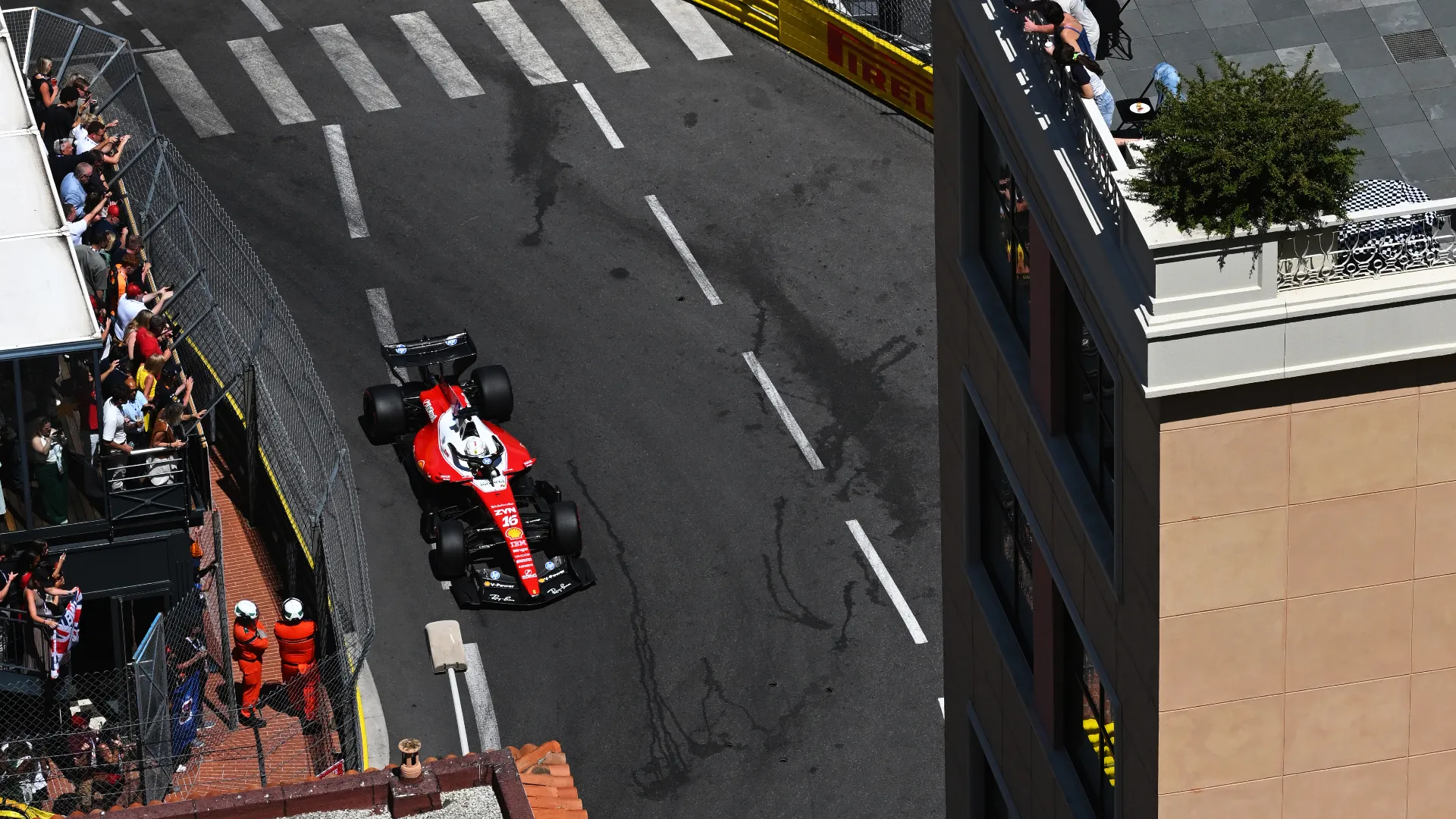
Charles Leclerc had to say goodbye to the 2026 Monaco Grand Prix while in third position due to a bitter retirement, which occurred due to a “long” at the Anthony Noghés corner caused by a fault in his Ferrari’s braking system (according to statements he himself provided at the end of the race), but also due to the poor track conditions at that point on the track. In fact, previously Lance Stroll had also sent his Aston Martin into the wall at the same corner, where the asphalt had crumbled. And it was precisely this problem (caused by the application of resin to the track before the start) that prompted race management to show the red flag. A detail that, almanacs in hand, could have saved the driver of the Rossa.
In fact, there are several precedents of Formula 1 races being suspended, interrupted or postponed when the asphalt conditions turned out to be bad if not downright dangerous for the drivers’ safety. The most famous case is that of the 1985 Belgian Grand Prix, scheduled for June 2 and then held on September 15 after fresh asphalt began to peel away as early as Friday practice. It was Niki Lauda and the Ferrari drivers who asked for and obtained the postponement of the race for safety reasons.
Huge problems on asphalt grip also occurred at the 1984 U.S. Grand Prix, held for that season only in Dallas. In that case, also aided by the scorching heat in Texas, it was decided to reduce the race from 78 to 68 laps. A solution that, if adopted in Monaco in 2026 after Stroll’s accident, would have “saved” Leclerc (the Monte Carlo red flag was shown, ironically, on lap 68 out of 78 total). But there are also precedents against Ferrari’s Monegasque: in 1982 it was raced equally in Detroit despite the drivers’ vibrant protests, as in the chaotic 2008 Canadian Grand Prix in Montreal. More recent case is that of Miami 2022, which had no consequences after accidents occurred to Esteban Ocon and another Ferrari: that of Carlos Sainz.
The dynamics of Leclerc’s accident were reconstructed accurately in the post-race. The Monegasque, who was currently in third position behind Kimi Antonelli and Lewis Hamilton, had signaled over the radio a brake problem before going slightly wide at the Anthony Noghés corner during the restart following the Safety Car. He ended up on the dirty part of the already deteriorated asphalt, failed to correct his trajectory and impacted against the barriers. The impact damaged the guards, making it necessary to show the red flag to restore the safe conditions of the track. The race then resumed for the last nine laps on the original schedule, with two laps behind the Safety Car and a new standing start.
At the microphones of Sky Sports, Leclerc explained precisely the nature of the problem he had experienced, sparing no criticism of his SF-26’s braking system: “I’m not the type to make excuses or hide behind alibis. Even reviewing the data, it is clear that there was nothing I could have done. When I was braking, the behavior of the car was abnormal: at the rear there seemed to be no braking, while at the front the response was excessive. The temperatures were not correct and the brakes were not working as they should. A dangerous situation.” However, the Ferrarista stressed that the team has already identified a way forward: from the next race it will adopt the same braking configuration chosen by Lewis Hamilton in the last three outings. Moreover, this is not the first time Leclerc has had to deal with anomalies in the braking system on his Ferrari: he had already complained of a similar problem in the Bahrain Grand Prix in 2024, complaining of a colossal temperature difference between the two front discs, measurable at as much as 100 degrees Celsius.
Leclerc’s statements, however, generated an immediate and prickly reaction from Brembo, Ferrari’s braking system supplier. In an official statement, the Bergamo-based company expressed “great astonishment at what happened” and said it was “very surprised by the statements made by the driver after the race,” specifying that it did not “currently know the causes of the problems encountered” and that it considered it “premature to make definitive technical evaluations before the analysis of the available data.” Brembo then recalled in a solemn tone its history in Formula 1: “Brembo is now a reference point for Formula 1 and is present on all single-seaters with its own braking technologies. Over the years, World Championship teams have continued to choose Brembo solutions, recognizing their reliability, innovation and performance at the highest levels.” A stance that leaves open the technical question, destined to be clarified only after the joint analysis of telemetry data.